
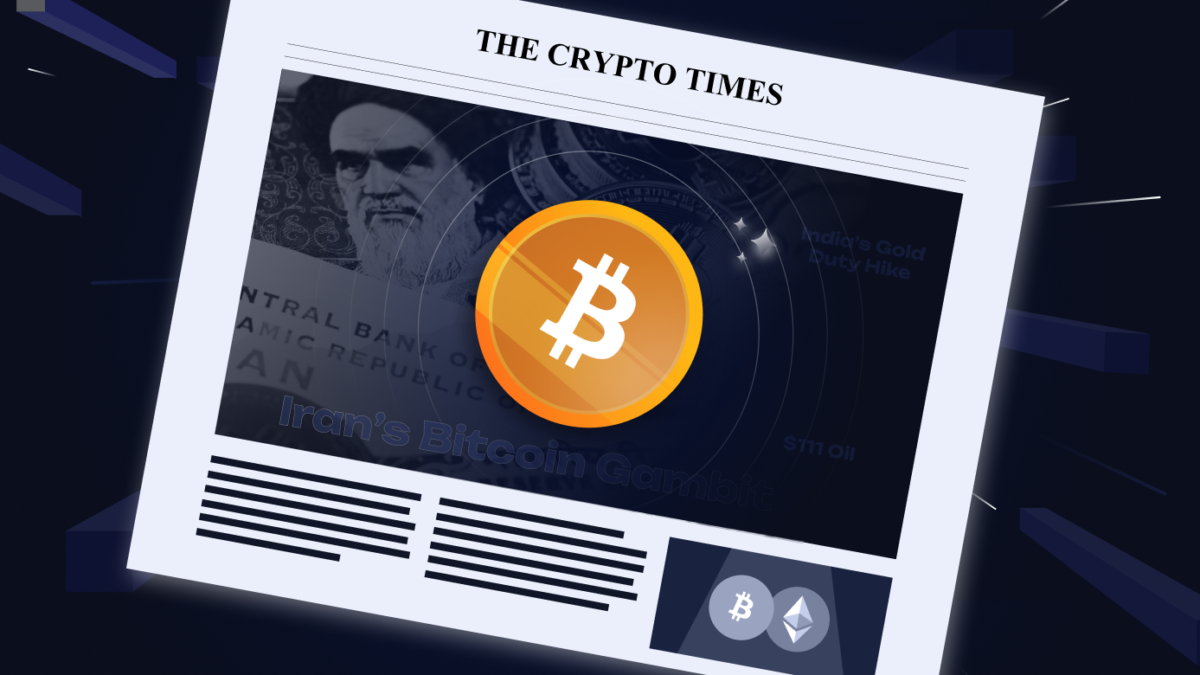

Iran launched a Bitcoin-powered maritime insurance platform for ships transiting the Strait of Hormuz on May 16. The following day, US President Donald Trump warned Tehran the “clock is ticking” after talks stalled, following a drone strike on a UAE nuclear plant. Days earlier, on May 13, India had quietly doubled its gold import duty to 15%, the hard policy response to PM Modi’s appeal that markets had been bracing for.
Together, these three events tell a single story: the Hormuz crisis is now actively reshaping how global trade is financed, and what role Bitcoin plays in geopolitics. Traders in gold, crude oil, and silver need to understand all three threads before the week begins.
Trump’s Warning and What It Did to Markets This Morning
Asian stocks mostly retreated and oil prices jumped on Monday after US President Donald Trump warned Tehran that the “clock is ticking” as US-Iran negotiations over a permanent end to the war stalled.
Following the warning, Brent crude surged 1.9% to $111.31 per barrel. It was trading at roughly $70 a barrel in late February before the start of the Iran war. That is a 59% rise in under three months, driven entirely by the Strait of Hormuz blockade.
On the other hand, US futures fell more than 0.6%. Tokyo’s Nikkei 225 fell 0.9% to 60,843.09, a decline led by technology-related stocks. The yield on the 10-year Japanese government bond, surged to 2.8%, its highest level since the late 1990s, part of a shift toward higher yields as the Bank of Japan gradually raises interest rates and higher energy costs raise expectations of rising inflation.
On top of that, a drone strike on the UAE nuclear plant, even unsuccessful, signals that the conflict has escalated beyond oil tankers. That is a new risk premium the market hasn’t fully priced yet.
Iran’s Hormuz Safe, What It Actually Is and How It Works
While Trump was issuing several warnings, Iran is reportedly building an alternative financial architecture around the very chokepoint being threatened.
For those new, the Strait of Hormuz is the single most important chokepoint in the global energy trade. Roughly 20% of the world’s daily oil supply passes through the narrow channel between Iran and Oman. Every tanker and cargo vessel navigating that corridor requires marine insurance, coverage that has traditionally been underwritten and settled through Western financial institutions from which Iran, under years of international sanctions, is largely locked out.
In view of this, Iran’s Ministry of Economy reportedly launched Hormuz Safe on May 16, 2026, targeting $10 billion in annual revenue. The platform will ostensibly settle maritime insurance policies in Bitcoin, raising US sanctions compliance concerns for cargo operators.
Here is how it works in practice: a vessel operator selects a custom risk tier and transmits the designated premium in Bitcoin to a state-controlled wallet ecosystem. The moment the transaction receives blockchain validation, the maritime cargo is considered active and insured. The vessel owner is immediately issued a digitally signed, cryptographically verifiable receipt to serve as proof of coverage.
What Hormuz Safe Means for Global Shipping
Experts noted that Iran may be trying to turn the Strait of Hormuz into an insurance market. The state-linked proposal would let cargo owners buy cryptographically verified insurance and financial responsibility certificates instead of paying explicit tolls for passage, potentially generating billions in revenue for Iran.
The model would allow Iran to retain control over the Strait, while also being acceptable to other nations during peacetime. Under the proposed plan, the critical waterway would be managed through an insurance framework, with payments settled in Bitcoin.
It is still unclear whether Hormuz Safe is fully operational or whether cargo owners have used it. However, Iran’s reported interest in Bitcoin payments highlights how digital assets are increasingly being discussed in geopolitical contexts.
Trade Bitcoin in INR on 
Deposit and withdraw in INR (₹).
No Conversion to Crypto Required.

India’s Gold Import Duty Hike After Modi’s Appeal
While Iran was building financial infrastructure to monetise the crisis, India was using the same crisis to reshape its own commodity imports. India has more than doubled the import duty on gold and silver, raising it to 15% from 6% in a move designed to reduce the country’s dependence on overseas metal purchases and ease pressure on its foreign exchange reserves.
From May 13, 2026, the total duty has gone up from 6% to 15%. Soon after the announcement, gold prices jumped nearly 6%, and gold ETFs also started trading higher as markets reacted to the sharp duty hike.
The hike follows Prime Minister Narendra Modi’s appeal , urging Indians to avoid buying gold for a year, a rare public call that emphasised just how seriously the government is treating the pressure on reserves.
What the Duty Hike Means in Numbers
This is a sharp reversal from 2024, when the government had reduced gold import duty from 15% to 6%. At that time, the goal was to support the jewellery sector and reduce illegal imports. Industry reaction was immediate and split. Bullion dealers said imports are now likely to fall sharply following the latest duty increase.
Additionally, the import duty becomes too high, smuggling can increase because illegal imports become more profitable. In fact, reducing smuggling was one of the reasons the government had cut duty sharply in 2024 before increasing it again now.
What this means for gold traders: The duty hike is structurally bearish for domestic gold demand in the short term, higher landed cost, lower volumes. But it is simultaneously bullish for gold prices on the MCX because the duty increases the rupee cost of every gram imported. Those two forces are pulling in opposite directions.
Watch MCX Gold levels closely, see our Gold Price Prediction for current support and resistance targets.
What this means for silver traders: Silver was included in the same duty hike, from 6% to 15%. The same 10% basic customs duty plus 5% Agriculture Infrastructure and Development Cess applies. Silver’s industrial demand profile makes it less sensitive to cultural buying patterns than gold, but the duty increase still raises the cost floor for Indian buyers.
Track silver levels in our Silver Price Prediction
The Crude Oil Picture — $111 and What Comes Next
Brent crude gained 1.9% to $111.31 per barrel on Monday. It was trading at roughly $70 a barrel in late February before the start of the Iran war.
The Strait of Hormuz, a critical waterway for global oil shipments, has been a focal point of global concern. The closure has led to higher oil prices and a wave of global inflation. The conflict began in late February following a sharp escalation in West Asia, triggering Iran’s blockade of the Strait.
Treasury Secretary Scott Bessent stated that China would work behind the scenes to help reopen the Strait of Hormuz. China, being the world’s largest oil importer and the main buyer of sanctioned Iranian crude, has a vested interest in the reopening of the Strait.
China’s role is the overlooked variable in almost all Western coverage of this crisis. Beijing has every economic incentive to broker a resolution, its manufacturing sector runs on Gulf crude. Any credible China-mediated ceasefire signal would move oil faster than Trump’s social media posts.
For current crude oil price levels, breakout targets, and technical analysis, read our Crude Oil Price Prediction
The Numbers Every Trader Is Watching This Week
Here is a snapshot of where the key market indicators stand as the Hormuz crisis enters a new phase.
| Indicator | Level | Change | What to Watch |
|---|---|---|---|
| Brent Crude | $111.31/barrel | +1.9% today, +59% since Feb | Trump-Iran negotiation deadline |
| Gold (India, 24K) | ₹15,213/gram* | Under duty pressure | MCX reaction to 15% duty hike |
| Silver (India) | ₹2,75,000/kg* | Duty hike applies | Industrial demand signals |
| USD/INR | ~94–95 | Rupee at decade low | Central bank intervention signals |
| India forex reserves | $690.69 billion | -$12.6B in 2 weeks | Weekly data release every Friday |
| Nikkei 225 | 60,843 | -0.9% today | Risk-off signal for Asia markets |
| US Futures | Down 0.6%+ | Pre-market | Iran ceasefire or escalation news |
Prices as of May 11–12, 2026. Verify live rates before trading, all market data reflects information available at time of writing.
What Connects Oil, Gold, and Bitcoin This Week
The Hormuz blockade appears to be the major catalyst driving markets today. It pushed oil from $70 to $111, widened India’s import bill, pressured the rupee, drained forex reserves, and triggered the duty hike, all in under three months. Meanwhile Iran, cut off from Western financial infrastructure by the same conflict, launched a Bitcoin-settled insurance platform to monetise the very chokepoint causing the crisis.
A ceasefire that reopens Hormuz reverses all of it. Oil falls, India’s import pressure eases, and the emergency logic behind the 15% gold duty disappears. Whether Trump’s latest ultimatum accelerates that resolution, or delays it further , is the question markets are pricing this week.
Additional Read:
1. What Is Global Digital Oil Reserve (GDOR)?
2. What Is OSOR Coin? Official Saudi Oil Reserve Explained
3. What Is WCOR Coin?
FAQs
1. What is Iran's Hormuz Safe platform?
Hormuz Safe is a state-backed digital maritime insurance platform launched by Iran's Ministry of Economy on May 16, 2026. It issues insurance policies for vessels transiting the Persian Gulf and Strait of Hormuz, with premiums settled in Bitcoin. Iran estimates it could generate over $10 billion in annual revenue. Its operational status remains unverified, and any interaction with the platform could trigger US sanctions under OFAC.
2. Why did India hike gold import duty to 15%?
India raised gold and silver import duty from 6% to 15% on May 13, 2026, combining a 10% basic customs duty with a 5% Agriculture Infrastructure and Development Cess. The move follows PM Modi's appeal to avoid gold purchases and aims to reduce dollar outflows from India's foreign exchange reserves, which have fallen by $12.6 billion in two weeks.
3. Why is oil at $111 per barrel?
Brent crude rose to $111.31 on May 18, 2026, after Trump warned Iran that the "clock is ticking" following stalled ceasefire negotiations. Crude was trading around $70 in late February before the Iran war began. The Strait of Hormuz blockade, which handles approximately 20% of global daily oil supply, has reduced tanker transits by approximately 95%.
4. How does the Hormuz crisis affect Indian traders?
India imports over 88% of its crude requirements and most of its gold using US dollars. The Hormuz blockade has pushed oil prices up 59%, increased India's import bill, weakened the rupee to 94–95 against the dollar, and triggered a gold import duty hike to 15%. All four of these effects directly impact the cost of living and investment returns for Indian traders.
5. What happens to gold prices if Hormuz reopens
A Hormuz reopening would ease oil prices, reduce India's import pressure, and likely prompt a reversal of emergency policy measures including the 15% gold duty. That scenario would be structurally bearish for MCX gold in the short term as the emergency premium unwinds. International gold prices would also face selling pressure as safe-haven demand eases.
Disclaimer
This article is for informational purposes only and does not constitute financial or investment advice on gold, silver, crude oil, foreign exchange, Bitcoin, or any other commodity or asset class. All market data reflects information available at the time of writing (May 18, 2026) and may not reflect current market conditions. The views of analysts and institutions quoted in this article are their own and do not represent the views of CoinDCX or its affiliates. Always verify live prices before making any trading or investment decisions. CoinDCX does not guarantee the accuracy of third-party data cited in this article.


