

Explore high-risk, high-reward Web3 assets through CoinDCX Okto wallet.
Web3 tokens pay fees, secure chains, grant governance rights and reward those supplying storage and compute. This Web3 crypto coins list covers ten of the largest across the main Web3 categories, using daily chart data verified on 16 September 2026.
What Are Web3 Crypto Coins?
Web3 coins operate inside blockchain networks where users own their assets and identity rather than renting access from a company. They pay for network usage, incentivise participants who provide resources, grant governance votes and enable peer-to-peer transactions. Much of the activity sits within DeFi.
The distinction that matters most is between tokens that buy something and tokens that only vote. A token paying for storage or compute has demand tied to usage. A pure governance token depends on holders believing governance is worth owning.
What the Charts Say in September 2026
Read side by side, the ten charts give a clearer picture than any one of them:
- Three have broken out: Uniswap, Ethereum and Solana all trade above their four key moving averages, though RSI has cooled off the extremes seen last month, all three now sit in the high-50s rather than above 80.
- Two are close behind: Chainlink is above its 50/100/200 EMAs but has slipped under its 20; Filecoin has reclaimed its 20/50/100 EMAs but remains under its 200.
- Two are mid-repair: Polkadot and Internet Computer are testing their mid-length averages after a genuine recovery from the deep discounts both were trading at in August.
- Three sit furthest below: The Graph is roughly 28% under its 200 EMA, Gram (formerly Toncoin) about 17%, and Render, now the weakest chart in the group, about 21%.
- Momentum has cooled everywhere: All ten tokens now show RSI trading below their own signal line, a more subdued read across the board than last month’s split between overbought leaders and deeply oversold laggards.
The picture has been flipped from August. Then, the two strongest charts (Chainlink and Ethereum) were also the two most overbought. This month the strongest chart, Uniswap, is comfortably clear of overbought territory, while Chainlink, last month’s leader, has dropped out of the top tier entirely on a short-term pullback below its 20-EMA.
Top 10 Web3 Crypto Coins List for September 2026
| Token | Category | Price | Chart position |
|---|---|---|---|
| Uniswap (UNI) | DEX | $6.284 | Above all four EMAs; RSI 58.78, cooled from last month’s overbought reading |
| Ethereum (ETH) | L1 settlement | $2,492.60 | Above all four EMAs; RSI 58.75, cooled from 82+ |
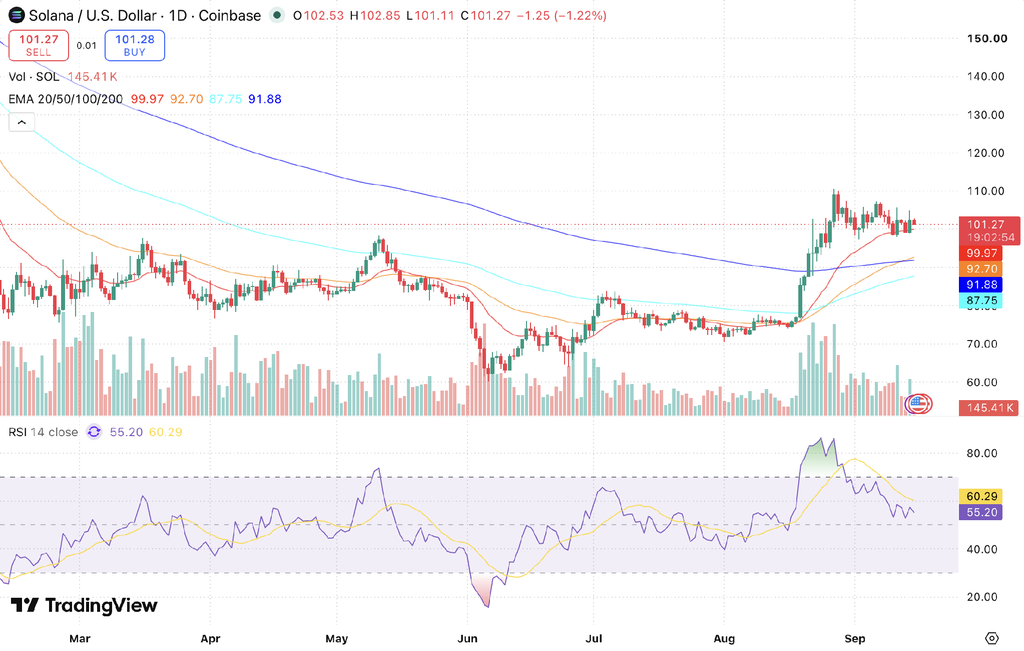
| Solana (SOL) | High-speed L1 | $101.27 | Above all four EMAs, barely clearing the 20 EMA; RSI 55.20 |
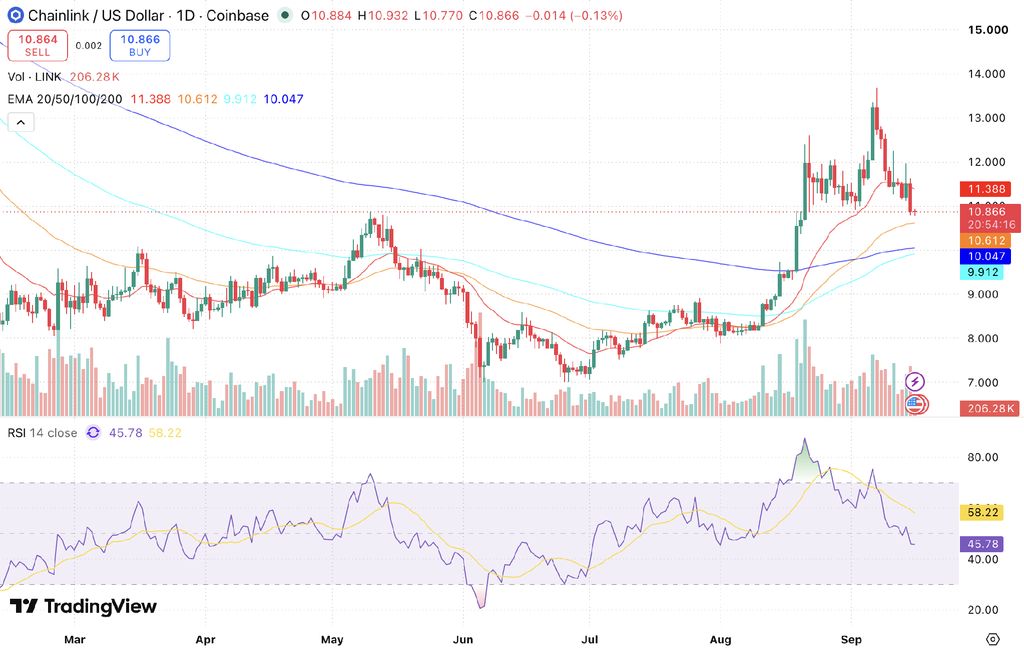
| Chainlink (LINK) | Oracle / data | $10.866 | Above 50/100/200 EMAs; below the 20; RSI 45.78 |
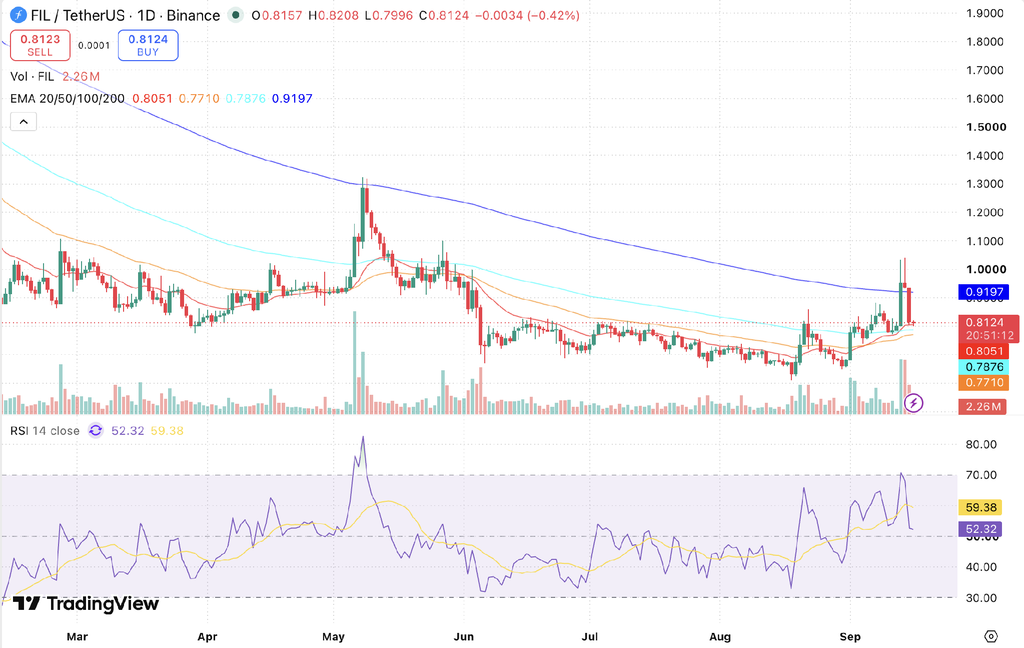
| Filecoin (FIL) | Decentralised storage | $0.8124 | Above 20/50/100 EMAs; 200 EMA ~13% above spot; RSI 52.32 |
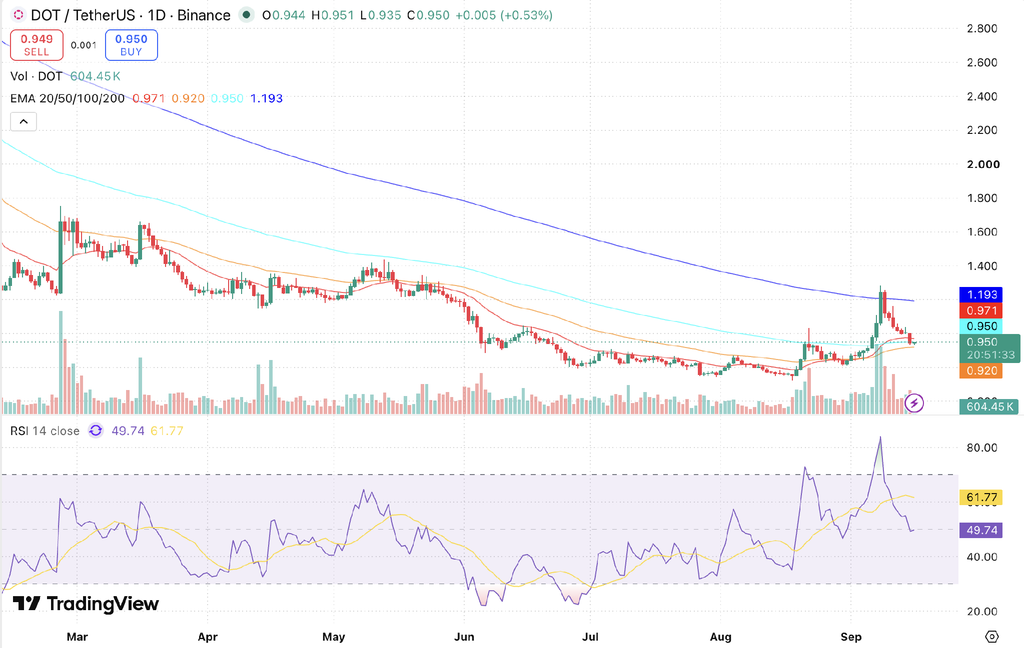
| Polkadot (DOT) | Interoperability | $0.950 | Above the 50 EMA, at the 100; below 20 and 200; RSI 49.74 |
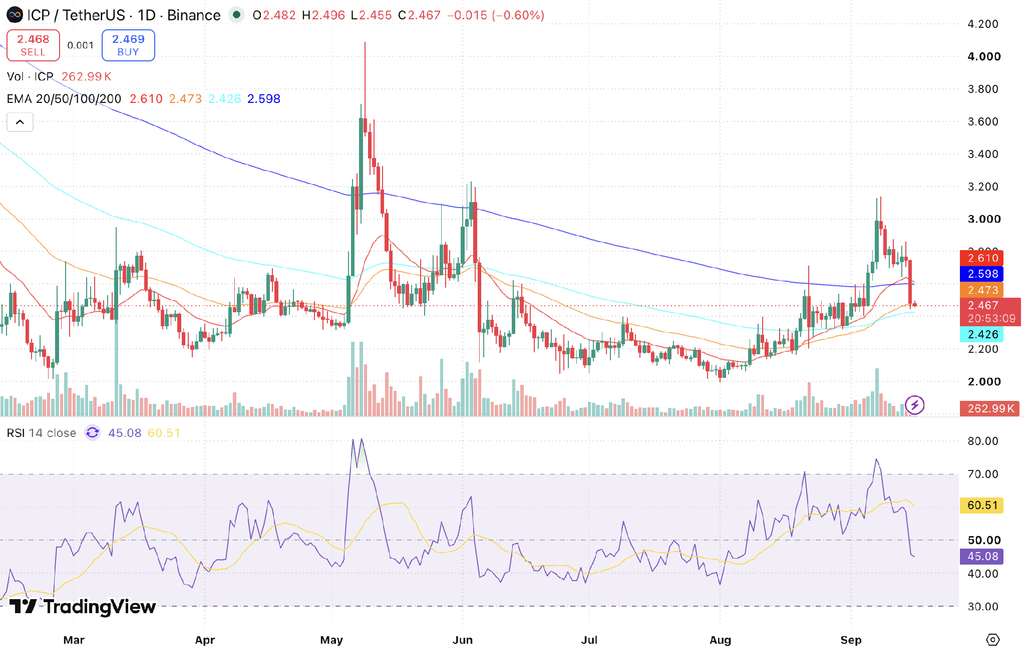
| Internet Computer (ICP) | Decentralised cloud | $2.467 | Above the 100 EMA; near the 50; below 20 and 200; RSI 45.08 |
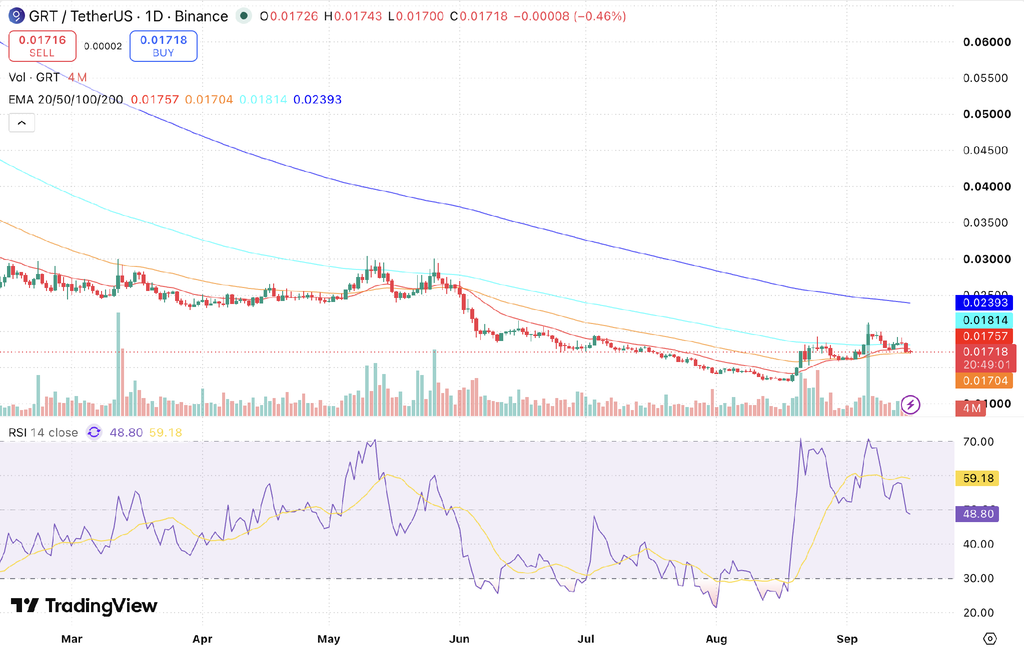
| The Graph (GRT) | Data indexing | $0.01718 | Above the 50 EMA only; below 20/100/200; RSI 48.80 |
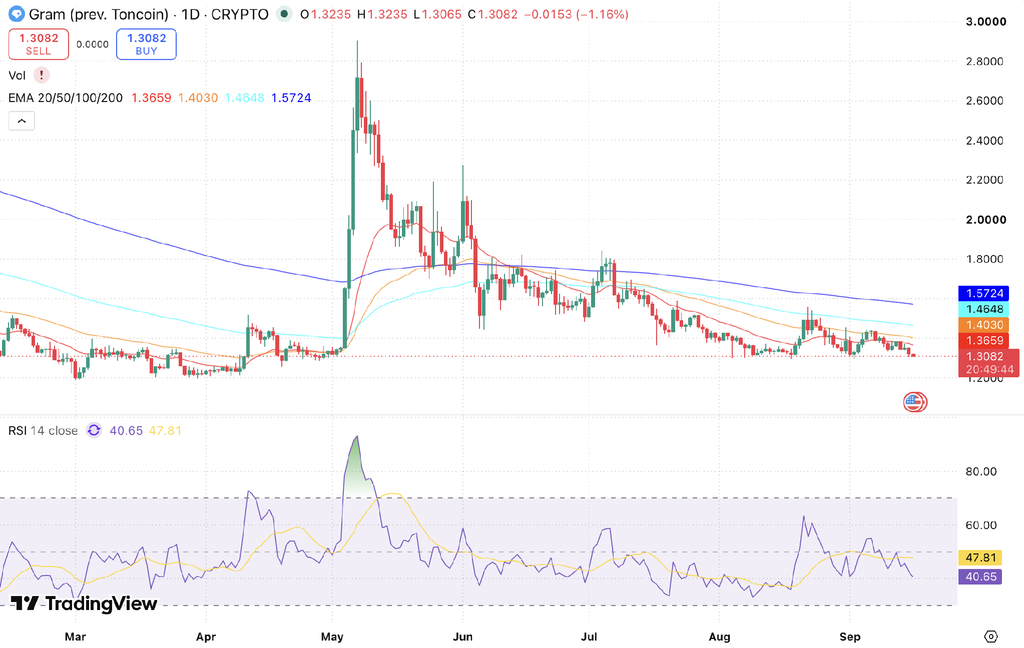
| Gram, prev. Toncoin (TON) | Telegram L1 | $1.3082 | Below all four EMAs; RSI 40.65 |
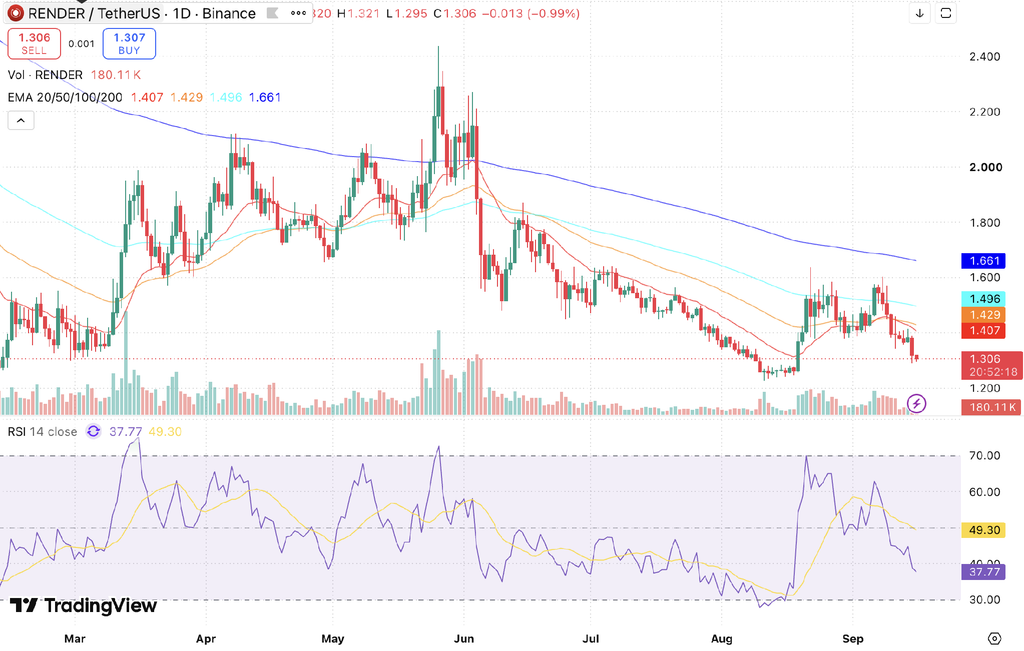
| Render (RENDER) | DePIN / GPU | $1.306 | Below all four EMAs; 21% below its 200; RSI 37.77, weakest chart here |
Web3 crypto coins price data reflects daily closes verified 16 September 2026. Chart positions refer to the 20, 50, 100 and 200-period EMAs below.
A Closer Look at Each Token
1. Uniswap (UNI)
Category: DEX | Price: $6.284
Uniswap is the largest decentralised exchange in DeFi, letting anyone swap tokens from a wallet through liquidity pools. A recently activated ‘UNIfication’ proposal has switched on protocol fees across Uniswap v2, v3 and v4 pools for the first time, routing revenue toward buybacks and burns, the clearest structural catalyst on this list this month.
Source: TradingView
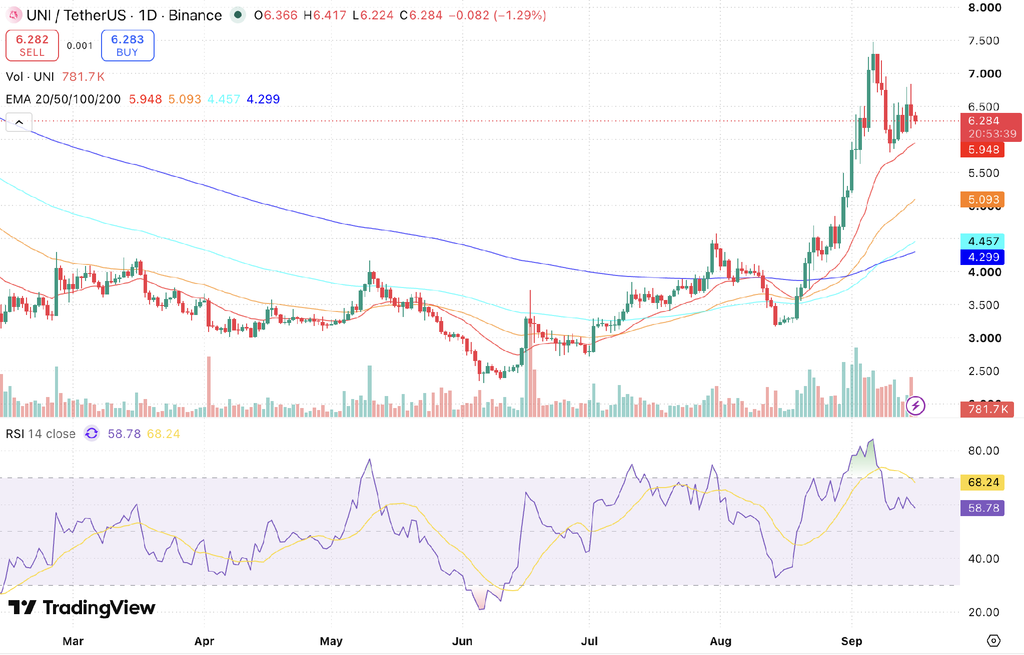
Technical read: UNI has gone from the most conflicted chart in this group last month to the strongest this month. Price at 6.284 trades above all four EMAs at 5.948, 5.093, 4.457 and 4.299, roughly 46% clear of its 200-day average. RSI at 58.78 sits below its 68.24 signal, easing back from a sharper overbought spike earlier in September rather than running unchecked.
Read more: UNI Price Prediction
2. Ethereum (ETH)
Category: L1 settlement | Price: $2,492.60
Ethereum is the settlement layer most of Web3 depends on. DeFi, NFT marketplaces, DAOs and the Layer 2 ecosystem root back to it for security and finality, and staking locks up a meaningful share of supply.
Source: TradingView
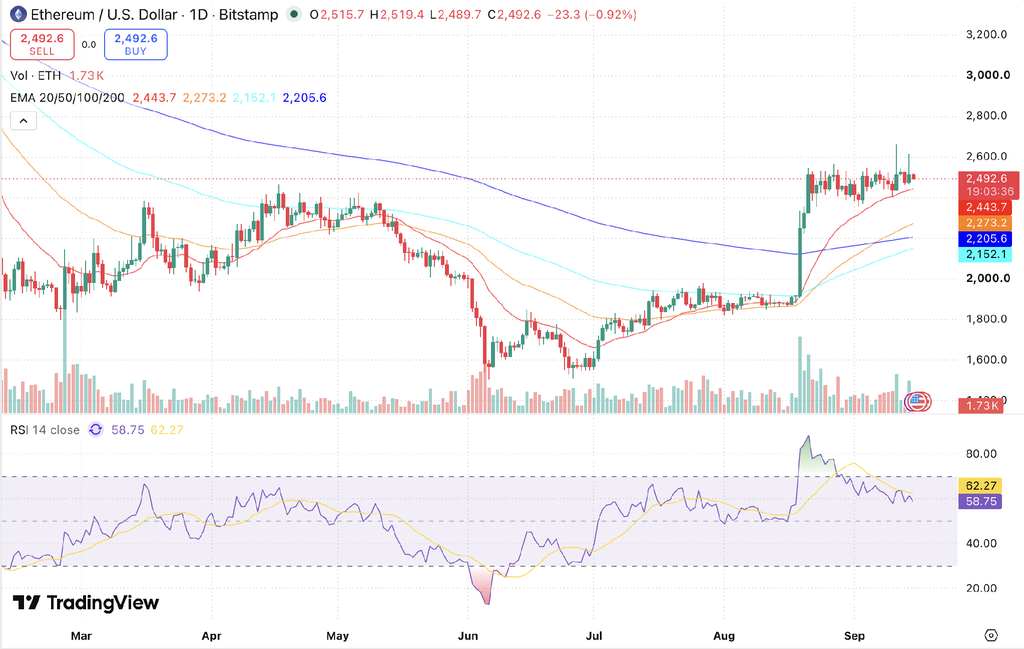
Technical read: Ethereum remains comfortably above all four EMAs at 2,443.7, 2,273.2, 2,152.1 and 2,205.6, holding the 200-EMA breakout it made last month. RSI at 58.75 sits below its 62.27 signal, well off the 82-plus reading that flagged it as overbought in August. The 2,205 area, its 200-EMA, is the level that matters if this pulls back further.
Read more: ETH Price Prediction
3. Solana (SOL)
Category: High-speed L1 | Price: $101.27
Solana processes thousands of transactions per second at fees under a cent, which makes consumer-facing Web3 applications viable. It carries the deepest NFT, DePIN and on-chain trading activity of any non-Ethereum network.
Source: TradingView
Technical read: Solana has cleared the resistance that capped it in August. Price at 101.27 now sits above all four EMAs, including the 200 at 91.88, though it is barely clearing its own 20-EMA at 99.97. RSI at 55.20 sits below its 60.29 signal, cooling from the overbought reading that flagged last month’s approach to this same level.
Read more: SOL Price Prediction
4. Chainlink (LINK)
Category: Oracle / data | Price: $10.866
Chainlink supplies the price feeds and cross-chain messaging most of DeFi runs on. It was the strongest chart in this group last month; it has since pulled back from that run but remains structurally intact.
Source: TradingView
Technical read: LINK has slipped from last month’s leader to fourth. Price at 10.866 has dropped below its 20-EMA at 11.388, but remains above the 50, 100 and 200 at 10.612, 9.912 and 10.047, keeping the broader uptrend technically intact. RSI at 45.78 sits well below its 58.22 signal, a sharp cool-down from the 80-plus overbought reading in August. Reclaiming 11.39 is the level that would repair the short-term picture.
Read more: LINK Price Prediction
5. Filecoin (FIL)
Category: Decentralised storage | Price: $0.8124
Filecoin is the largest decentralised storage network. Providers rent spare capacity and earn FIL, while users pay FIL to store data in a censorship-resistant way. AI generates enormous data volumes, strengthening its neutrality argument.
Source: TradingView
Technical read: Filecoin has repaired three of its four EMAs since last month. Price at 0.8124 now trades above the 20, 50 and 100 at 0.8051, 0.7710 and 0.7876, though the 200 at 0.9197 remains about 13% above spot. RSI at 52.32 sits below its 59.38 signal but is back above the midpoint, a clear improvement from August’s below-40 reading. Clearing 0.92 is the level that would confirm the long-term trend has turned.
6. Polkadot (DOT)
Category: Interoperability | Price: $0.950
Polkadot connects independent blockchains through a relay chain so they can share security and pass messages. It has the most ambitious interoperability design in the sector, and September has brought its best price recovery of the year.
Source: TradingView
Technical read: DOT has closed much of the gap that made it the weakest Layer 1 on this list last month. Price at 0.950 trades above its 50-EMA at 0.920 and sits almost exactly on its 100 at 0.950, though it remains below the 20 at 0.971 and well below the 200 at 1.193, about 20% off. RSI at 49.74, below its 61.77 signal, shows the sharp September rally cooling rather than reversing.
Read more: DOT Price Prediction
7. Internet Computer (ICP)
Category: Decentralised cloud | Price: $2.467
Internet Computers run application logic on-chain, so a contract can serve a website or run computation without a cloud provider. Few networks can host AI inference without a trusted intermediary, though the price has never reflected that.
Source: TradingView
Technical read: ICP is testing the same level it was testing last month, just higher up. Price at 2.467 sits just above its 100-EMA at 2.426 and essentially in line with its 50 at 2.473, while the 20 at 2.610 and the 200 at 2.598 remain overhead. RSI at 45.08, below its 60.51 signal, points to a pause after a real September rally rather than a fresh downtrend. Clearing 2.60 opens room toward the 200.
8. The Graph (GRT)
Category: Data indexing | Price: $0.01718
The Graph indexes blockchain data and makes it queryable, infrastructure most decentralised applications cannot function without. Its problem is monetisation: queries are worth fractions of a cent.
Source: TradingView
Technical read: GRT has stabilised but not yet turned. Price at 0.01718 sits just above its 50-EMA at 0.01704 while the 20 at 0.01757, the 100 at 0.01814 and the 200 at 0.02393 all remain overhead, the last still about 28% above spot, the widest gap on this list. RSI at 48.80 sits below its 59.18 signal, having lifted well off the deeply oversold reading that defined August. A base is forming; a trend reversal is not yet confirmed.
9. Gram (prev. Toncoin) (TON)
Category: Telegram L1 | Price: $1.3082
Toncoin has rebranded to Gram (GRAM) since our last update; TradingView and most trackers now list it under the new name, though the underlying network and token economics are unchanged. It remains the Telegram-linked Layer 1 with the deepest built-in distribution of any chain on this list.
Source: TradingView
Technical read: Gram, formerly Toncoin, is still trading below all four EMAs. Price at 1.3082 sits under the 20 at 1.3659, the 50 at 1.4030, the 100 at 1.4648 and the 200 at 1.5724, roughly 17% below the last. RSI at 40.65, below its 47.81 signal, is a smaller gap than Render’s, suggesting slightly less selling pressure even though neither chart has reclaimed a single EMA.
10. Render (RENDER)
Category: DePIN / GPU | Price: $1.306
Render connects idle GPUs with buyers needing rendering or AI training, using a burn-and-mint model tying demand to real usage. The original scarcity thesis weakened as GPU supply loosened.
Source: TradingView
Technical read: Render has gone from the sharpest reversal on this list last month to its weakest chart this month. Price at 1.306 sits below all four EMAs at 1.407, 1.429, 1.496 and 1.661, about 21% under its 200-day average. RSI at 37.77 is the lowest reading in this group and sits well below its 49.30 signal. First hurdle is reclaiming the 20-EMA at 1.407.
How to Buy Web3 Crypto Coins in India
CoinDCX is an FIU-IND registered exchange and lists most of the tokens above. Complete KYC with your PAN and Aadhaar, add INR by UPI or bank transfer, then search the token in Markets and confirm the pair. The how to buy guides walk through each asset individually.
September 2026 has reshuffled the Web3 leaderboard rather than simply extending August’s trends. Uniswap has taken over as the strongest chart in this group on the back of a genuine fee-switch catalyst, while Chainlink, last month’s leader, has cooled into fourth place on a short-term pullback. Filecoin and Polkadot have made the most convincing recoveries, both closing much of the gap to their long-term averages. Render and Gram (formerly Toncoin) remain the two weakest charts here.
CoinDCX’s Okto wallet gives direct access to the Web3 ecosystem, and our top AI crypto coins guide covers the sector that overlaps most with this one.
Disclaimer: This article is for informational purposes only and does not constitute financial advice. Crypto investments carry significant risk.
Related reads:
1. What is DeFi? Explained →
2. What is Web3? A Complete Guide →
3. Top AI Crypto Tokens to Watch →
FAQs
What are the tokens for Web3?
Web3 tokens are cryptocurrencies that power decentralized applications (dApps) and services built on blockchain networks. These tokens often provide utility, governance, and access within a Web3 ecosystem. Popular examples include ETH (Ethereum), DOT (Polkadot), LINK (Chainlink), and FIL (Filecoin).
Which crypto is considered Web3?
Several cryptos are considered foundational to Web3, including:
Ethereum (ETH) – for smart contracts and dApps
Polkadot (DOT) – for cross-chain interoperability
Chainlink (LINK) – for decentralized oracles
The Graph (GRT) – for blockchain indexing
Filecoin (FIL) – for decentralized storage
What are the top 3 cryptos right now in Web3?
As of now, the top 3 Web3-focused cryptos by market relevance and adoption are:
1. Ethereum (ETH)
2. Polkadot (DOT)
3. Chainlink (LINK)
These tokens enable various Web3 functions such as smart contracts, interoperability, and real-world data integration.
Does Web3 have a future?
Yes, Web3 is considered the next evolution of the internet—focusing on decentralization, user ownership, and transparency. While it’s still maturing, Web3 has strong backing from developers, investors, and major tech firms, suggesting a long-term future with real-world applications in finance, gaming, social media, and more.
Q5. What is the next big thing in Web3?
The next big wave in Web3 could come from:
Decentralized AI integrations
Web3 gaming and metaverse platforms
Tokenized real-world assets (RWA)
DePIN (Decentralized Physical Infrastructure Networks)
These innovations are gaining traction and could reshape digital ownership and interaction models.
Is Web3 profitable?
Yes, Web3 can be profitable, but it carries risks. Investors have earned profits through token appreciation, staking, airdrops, NFT trading, and play-to-earn games. However, success depends on careful research, timing, and understanding market dynamics.
Is Web3 just crypto?
No, Web3 is broader than just cryptocurrencies. While tokens are central to Web3 economics, the ecosystem includes decentralized applications, DAOs, smart contracts, identity systems, and storage protocols, all working toward a more user-controlled internet.
How can I earn from Web3?
There are several ways to earn from Web3:
Staking tokens on DeFi platforms
Participating in airdrops and bounty programs
Playing blockchain games (Play-to-Earn)
Contributing to DAOs or open-source projects
Running validator or node infrastructure
Selling NFTs or digital assets
What are the best Web3 tokens to invest in?
Top Web3 tokens worth watching or investing in (as of 2025) include:
Ethereum (ETH) – Smart contract leader
Polkadot (DOT) – Interoperability
Chainlink (LINK) – Oracle solutions
Arweave (AR) – Decentralized data storage
The Graph (GRT) – Indexing for dApps
Render (RNDR) – Decentralized GPU rendering
Always DYOR (Do Your Own Research) before investing.