


Asia is home to some of the world’s wealthiest individuals, shaped by decades of industrial expansion, digital adoption, and rising consumer demand. The region’s transformation from a manufacturing base into a hub for technology, infrastructure, and capital has created extraordinary wealth. The men who rank among the top 10 richest people in Asia built fortunes across energy, telecom, e-commerce, and real estate sectors which mirror the region’s broader economic rise. Their journeys reflect long-term ambition, the ability to scale across vast populations, and adaptation to changing markets.
Top 10 Richest Men in Asia (2026)
This list of Asia’s richest people reflects wealth concentrated across the region’s dominant growth sectors, including energy, infrastructure, technology, consumer platforms, and digital services. These numbers may be seen as broad indicators, not exact amounts, as net worth figures fluctuate due to market conditions and other financial factors.
| Name | Country | Estimated Net Worth (2026) | Industry |
|---|---|---|---|
| Gautam Adani | India | $117.4 billion | Infrastructure, Energy |
| Zhang Yiming | China | $92.8 billion | Technology, Social Media |
| Mukesh Ambani | India | $86.9 billion | Energy, Telecom, Retail |
| Zhong Shanshan | China | $68.2 billion | Consumer Goods, Pharma |
| Colin Huang | China | $53.8 billion | E-commerce |
| Tadashi Yanai | Japan | $48.7 billion | Apparel Retail |
| Ma Huateng | China | $44.5 billion | Technology |
| Li Ka-shing | Hong Kong | $39.2 billion | Real Estate, Ports |
| William Ding | China | $36.8 billion | Online Gaming |
| Jack Ma | China | $35.5 billion | E-commerce, Technology |
The net worth and rankings shown in the table are updated as of 22 June 2026 and may change over time.
Also Read: Top Youngest Billionaires in India (2026)
1) Gautam Adani ($100–117 billion)
Gautam Adani built one of India’s largest infrastructure groups. His businesses span ports, airports, power generation, and logistics. Much of his wealth comes from controlling critical infrastructure assets that support trade and energy supply. The group’s expansion into renewable energy increased its future relevance. Although market volatility affected valuations at times, core operations continued to operate. Adani’s position among Asia’s richest highlights the importance of infrastructure in emerging economies.
2) Zhang Yiming ($90–92 billion)
Zhang Yiming is the 7th richest man in Asia. He is the founder of ByteDance, the company behind TikTok and Douyin. ByteDance built its success around advanced recommendation algorithms that personalise content at scale. This technology-driven approach enabled TikTok to achieve global adoption more quickly than most social platforms. Short-form video became its defining format. The company operates in the areas of advertising, content creation tools, and media services. Regulatory scrutiny and geopolitical tensions affected operations in some regions. Despite this, ByteDance continues to grow in user base and revenue. Zhang’s wealth reflects the global reach of data-driven consumer platforms.
3) Mukesh Ambani ($85–87 billion)
Mukesh Ambani will remain the richest person in Asia in 2026. He leads Reliance Industries, a conglomerate with interests in energy, telecom, and retail. His wealth grew steadily as Reliance expanded beyond oil refining into consumer-focused sectors. The launch of Reliance Jio transformed India’s telecom market by making mobile data affordable and widely available. Retail operations under Reliance also scaled rapidly across urban and rural India. Recent focus on renewable energy signalled a long-term shift in business strategy. Ambani’s wealth reflects India’s growing consumption economy and digital adoption.
4) Zhong Shanshan ($60–68 billion)
Zhong Shanshan is the founder of Nongfu Spring, a leading bottled water brand in China. He also holds major stakes in pharmaceutical companies. His wealth comes from essential consumer products and healthcare, two sectors with stable demand. Unlike many billionaires, Zhong keeps a low public profile. His rise demonstrates how consumer staples and healthcare can generate substantial wealth in populous markets such as China. As the richest man in China, Zhong Shanshan’s estimated net worth stands at $60–65 billion.
5) Colin Huang ($50–53 billion)
Colin Huang founded Pinduoduo, an e-commerce platform built around value-driven shopping. The platform introduced social-buying models, encouraging users to shop together to obtain lower prices. This approach helped attract price-sensitive consumers in smaller cities. Rapid user growth supported strong platform engagement. Pinduoduo focuses on agricultural supply chains and direct sourcing. This reduces intermediary costs and improves pricing efficiency. Huang’s wealth highlights innovation within China’s competitive e-commerce market. His success reflects changing consumer behaviour and mobile-first commerce.
6) Tadashi Yanai ($45–50 billion)
Tadashi Yanai is the founder of Fast Retailing, the parent company of Uniqlo. He built Uniqlo into a global apparel brand focused on simple design, functional clothing, and affordable pricing. The company follows a vertically integrated model, controlling design, production, and distribution. This structure helps manage costs and maintain consistent quality across markets. Uniqlo expanded steadily across Asia, Europe, and North America over several decades. Its success relies on basics-driven fashion rather than seasonal trends. Currency movements and global retail cycles influence company performance and margins. Yanai’s wealth reflects Japan’s ability to build globally competitive consumer brands with a long-term vision.
7) Ma Huateng ($40–45 billion)
Ma Huateng, widely known as Pony Ma, is the co-founder of Tencent. The company operates one of China’s largest digital ecosystems, spanning social media, gaming, payments, and cloud services. WeChat has become central to daily life in China, integrating messaging, payments, and services within a single platform. This integration created strong user loyalty and recurring engagement. Tencent also holds strategic investments in global technology and gaming companies. Regulatory changes in China affected valuations across the technology sector in recent years. Despite these challenges, Tencent remains deeply embedded in China’s digital economy. Ma’s wealth reflects the power of platform-based business models at scale.
8) Li Ka-shing ($33–40 billion)
Li Ka-shing is one of Asia’s most established and respected business figures. His business empire spans real estate, ports, telecommunications, energy, and utilities. Wealth accumulation occurred gradually over several decades through disciplined capital allocation. His companies often focus on stable, cash-generating assets. Li diversified geographically to reduce regional risk exposure. This strategy provided resilience during economic downturns. His portfolio reflects traditional asset-based wealth creation. Li’s career reflects long-term business-building rather than rapid expansion.
9) William Lei Ding ($36–42 billion)
William Lei Ding founded NetEase, one of China’s early internet companies. Online gaming accounts for the majority of its revenue, with popular titles generating long-term user engagement. NetEase focuses on in-house game development rather than heavy reliance on external licenses. This approach allows greater control over content and monetisation. Beyond gaming, NetEase operates digital music platforms, education services, and online media. Demand for digital entertainment remained strong across Asia. Ding’s wealth highlights how intellectual property and digital content can create durable value over time.
10) Jack Ma ($30–35 billion)
Jack Ma co-founded Alibaba, one of the world’s largest e-commerce ecosystems. The group operates across online retail, cloud computing, logistics, and digital services. Alibaba enabled millions of small businesses to reach customers through digital marketplaces. Its cloud division became a key technology infrastructure provider in Asia. Jack Ma stepped back from active leadership in recent years. Regulatory developments and competition affected the company’s valuation relative to earlier peaks. Despite this, Alibaba remains a foundational player in Asia’s digital economy. Ma’s journey continues to influence entrepreneurship across the region.
Also Read: Top Bitcoin Billionaires in the World
Trade Crypto in INR on 
Deposit and withdraw in INR (₹).
No Conversion to Crypto Required.

Country-wise Share in Asia’s Top 10 Richest People List
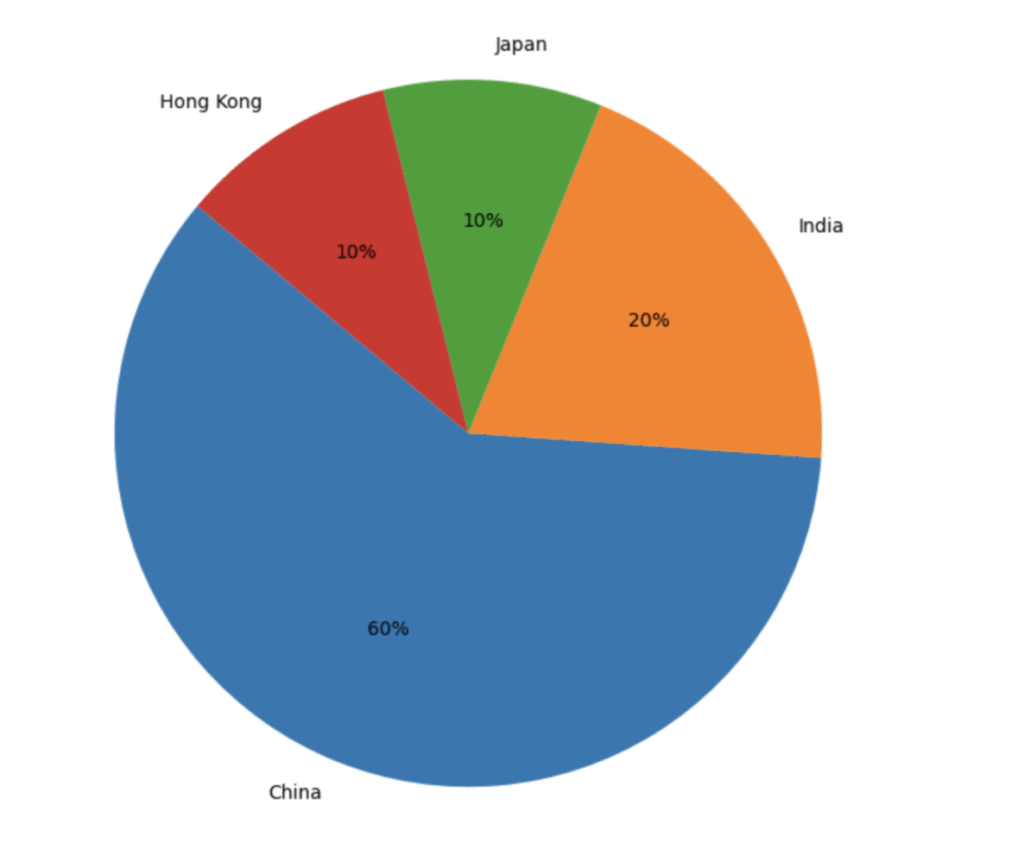
A country-by-country distribution shows that China holds the majority share among Asia’s top ten richest individuals. India ranks second, supported by infrastructure and consumer-driven growth. Japan and Hong Kong represent smaller but meaningful portions of the list. This distribution mirrors Asia’s economic scale, population dynamics, and market maturity. It also explains why wealth concentration varies across the region.
China’s Dominance in Asia’s Wealth Landscape
China leads Asia’s richest list with the highest number of entries among the top ten. Its large population creates massive domestic demand across technology, e-commerce, and consumer services. Strong digital platforms such as social media, gaming, and online marketplaces scale rapidly in this environment. Manufacturing strength and integrated supply chains further support business expansion. Together, these factors enable Chinese entrepreneurs to build large, high-value companies rapidly.
India’s Growing Representation Among the Wealthy
India ranks second to China in terms of its strong presence on Asia’s richest list. Rapid infrastructure development supports sectors like energy, logistics, and transportation. A young population and rising middle class drive consumption across telecom, retail, and digital services. Large-scale investments in technology and renewable energy also play an increasingly significant role. These conditions help Indian business leaders build wealth that is closely tied to long-term economic growth.
Japan’s Contribution Through Global Consumer Brands
Japan contributes to Asia’s wealth rankings through established global brands. Companies in apparel, electronics, and manufacturing maintain strong international demand. Japanese business leaders benefit from disciplined management and global supply networks. While population growth remains limited, brand loyalty and export strength support stable wealth creation. This reflects Japan’s mature but resilient economy.
Hong Kong’s Legacy Wealth and Financial Strength
Hong Kong’s presence reflects decades of wealth built through real estate, ports, and finance. Its role as a global financial hub attracts international capital. Business groups in the region often diversify across infrastructure and utilities. Long-term asset ownership supports steady wealth accumulation. Hong Kong’s contribution highlights the value of strategic geographic positioning.
How Crypto Helps You in Creating Wealth
Crypto offers a high-growth investment opportunity by giving early access to emerging technologies like blockchain, DeFi, and Web3. Just as the top 10 richest person in Asia built wealth by identifying early opportunities, crypto allows investors to participate in the next phase of digital innovation. With options like long-term holding, staking, and trading, users can build wealth through multiple strategies. The market operates 24/7, providing flexibility to invest and respond to global trends. Platforms like CoinDCX make it simple to start investing in crypto with INR deposits, secure trading, and access to a wide range of assets.
Also Read: How to Make Money on Your Phone
What Asia’s Wealth Leaders Tell Us About the Region’s Growth
The richest people in Asia reflect more than merely high net-worth figures. Their journeys represent long-term ambition, disciplined execution, and the ability to adapt to changing markets. Many of these individuals built businesses over decades, navigating economic cycles, regulatory shifts, and technological change. Their wealth is closely tied to the expansion of Asian economies from local markets to global markets.
These business leaders also highlight how different industries shape regional growth. Energy, infrastructure, technology, and consumer services played central roles in transforming Asian economies. As these sectors matured, they created employment, innovation, and large-scale enterprise value. The success of these individuals often mirrors the broader development of their home countries.
Understanding these stories helps readers see how wealth creation connects with economic evolution. CoinDCX contributes to this understanding by focusing on financial education and market awareness. By encouraging informed learning, readers can better interpret economic trends and make smarter financial decisions.
Disclaimer: Net worth figures are estimates based on publicly available data and are subject to change due to market conditions and currency fluctuations. This article is for informational purposes only.
FAQ
Q1: Who was the richest man in Asia in 2022?
Mukesh Ambani was the richest man in Asia in 2022, with an estimated net worth of around $90–95 billion. He leads Reliance Industries, which spans energy, telecom, and retail, and his wealth was driven largely by the rapid growth of Reliance Jio and Reliance Retail during that period.
Q2: Who was the richest man in Asia in 2024?
Mukesh Ambani was also the richest man in Asia in 2024, with a net worth estimated at approximately $83–85 billion. His position was supported by Reliance Industries' continued expansion in retail, digital services, and renewable energy across India.
Q3: Who was the richest man in Asia in 2021?
Mukesh Ambani held the title of Asia's richest man in 2021 as well, with a net worth of approximately $85–90 billion. That year, Reliance Jio's digital growth and Reliance Retail's rapid expansion across India were the primary drivers of his wealth.
Q4: Who is the 7th richest man in Asia?
As of 2026, the 7th richest man in Asia is Zhang Yiming, the founder of ByteDance — the company behind TikTok and Douyin. His estimated net worth is $35–40 billion, built on ByteDance's global dominance in short-form video and its advanced content recommendation technology.
Q5: Who will be the richest person in Asia in 2026?
Mukesh Ambani is touted to be the richest person in Asia in 2026, with an estimated net worth of $95–100 billion. He leads Reliance Industries, one of India's largest conglomerates, with major interests in energy, telecom through Jio, and retail.
Q6: Which country has the most billionaires in Asia?
China has the most billionaires in Asia, with six of the top ten richest men in Asia coming from the country. This reflects China's scale across technology, e-commerce, consumer goods, and digital entertainment. India is the second most represented, with two entries in the top ten.
Q7: What is the net worth of Mukesh Ambani in rupees?
As of 2026, Mukesh Ambani’s net worth is estimated at approximately ₹8,00,000–₹8,40,000 crore, based on a global valuation of $95–100 billion. He remains the richest person in India and Asia, with his wealth primarily coming from Reliance Industries, which operates across energy, telecom, and retail sectors.
Q8: What is the net worth of Gautam Adani in rupees?
As of 2026, Gautam Adani’s net worth is estimated at approximately ₹7,14,000–₹7,56,000 crore, based on a global valuation of $85–90 billion. His wealth is primarily driven by Adani Group, with major interests in ports, airports, power, and renewable energy infrastructure across India.
Q9: Who is the richest man in China?
As of 2026, the richest man in China is Zhong Shanshan, with an estimated net worth of $60–65 billion. He is the founder of Nongfu Spring, a leading bottled water brand in China, and also holds significant stakes in pharmaceutical businesses.
Additional Read:
1. How Much Does Elon Musk Earn
2. Top 10 Financial Frauds in India
3. Fake Payment Screenshot Scams in India