



The largest holders of Bitcoin and Ethereum have been buying while prices fall, according to the latest Smart Money report from analytics firm CryptoQuant. Bitcoin in whale wallets has climbed to about 3.06 million coins and Ethereum whale balances have hit a record. CryptoQuant says the pattern has come before past market bottoms, while warning prices could still fall further.
What CryptoQuant’s Crypto Whale Data Shows
Large BTC holders are buying into weakness rather than selling out of it. Bitcoin sitting in whale wallets rose to roughly 3.06 million coins from 2.87 million in December 2025, with the buying picking up after Bitcoin fell below $60,000 in June. Ethereum wallets holding between 10,000 and 100,000 ETH now hold a record 19.6 million coins between them.
What Whale Accumulation Actually Means
A whale is simply a wallet large enough that its buying and selling can move the market, a term explained further in our crypto learning guides. CryptoQuant counts these balances after stripping out exchanges and mining pools, so the figures reflect long-term holders rather than coins parked on a trading platform waiting to be sold.
Why it matters is a supply question. Coins moving into wallets that rarely sell are coins that stop circulating, which leaves less available to buy at any given price.
Bitcoin and Ethereum Whales Are Both Buying
Whale wallets have added roughly 190,000 Bitcoin since December, worth close to $12 billion at current prices. The pace picked up as the price fell, which CryptoQuant considered significant. Ethereum shows the same behaviour at a different scale. Wallets holding more than 100,000 ETH have added about 1.8 million coins since mid-2025, worth roughly $3.3 billion, and the 10,000 to 100,000 ETH group sits at an all-time high.
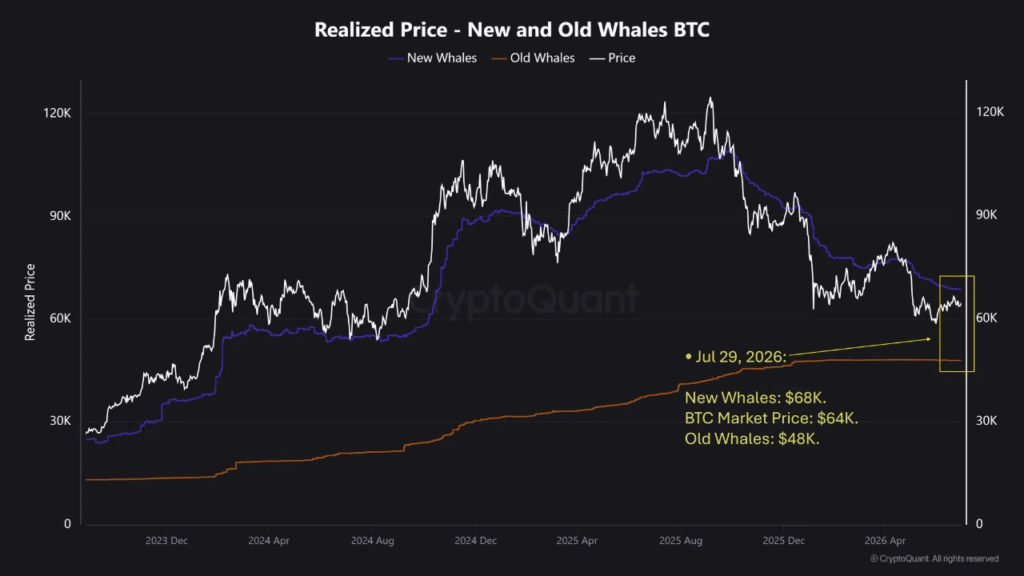
Why Realized Price Suggests a Late-Stage Bear Market
Realized price is the second half of CryptoQuant’s argument, and it is simpler than it sounds. It estimates what the average holder paid for their coins, based on the price each one last moved on the blockchain, so comparing it with the market price shows whether the typical holder is sitting on a profit or a loss.
The two largest crypto assets are in different positions. Bitcoin traded at about $63,935 against a realized price of $52,900, so the typical holder remains in profit. Ethereum traded at roughly $1,858 against a realized price near $2,450, meaning the average holder is underwater.
That gap matters because bear markets have historically ended when large numbers of holders are sitting on losses and stop selling. On this measure Ethereum is closer to that point than Bitcoin.
Whales Buying: What This Means for Traders
Whale accumulation is a signal rather than a bottom, and CryptoQuant frames it that way. The firm said rising whale balances into price weakness is the clearest smart-money tell it tracks, and noted the pattern has come before past market lows, but it also warned in the same report that the market remains exposed to further downside.
Other analysts have set specific tests. 10x Research said Bitcoin would need a monthly close above $63,000 to confirm a bottom, while K33 noted in July that Bitcoin has historically reached its lowest point of a cycle within weeks of more than half its supply being held at a loss.
Neither market has moved much while this played out. Bitcoin traded near $64,082 and Ethereum near $1,867 on Wednesday, both up less than one percent over 24 hours, so the accumulation is showing up in wallet balances rather than in price.
The short answer to whether the bear market is ending is that nobody can say yet. The markers worth following are whether whale balances keep climbing, whether Ethereum recovers toward its $2,450 realized price, and whether Bitcoin closes a month above $63,000. A monthly close simply means the price on the final day of the month, which analysts treat as more reliable than a brief intraday move. None of the three has happened.
FAQs
1. What is a crypto whale?
A whale is a wallet holding enough crypto assets to influence the market when it buys or sells. CryptoQuant tracks these balances excluding exchanges and mining pools, so the numbers reflect long-term holders.
2. Does whale accumulation mean the bear market is over?
No, whale accumulation do not mean the bear market is over. CryptoQuant says the pattern has preceded past bottoms, but it also warns that prices could fall further. No bottom has been confirmed by any of the analysts cited.
3. What does the realized price tell you?
The realized price estimates what the average holder paid for their coins. When the market price falls below it, the typical holder is sitting on a loss, a condition that has often appeared near the end of past bear markets.
4. Why is Ethereum below its realized price when Bitcoin is above?
Ethereum has fallen further from its highs than Bitcoin has, so more ETH was bought at prices above where it trades now. At roughly $1,858 against a realized price near $2,450, the average Ethereum holder is underwater
Disclaimer: Crypto products and NFTs are unregulated and can be highly risky. There may be no regulatory recourse for any loss from such transactions. This article is for informational purposes only and does not constitute financial, investment or trading advice. Conduct your own research before making any investment decision.