
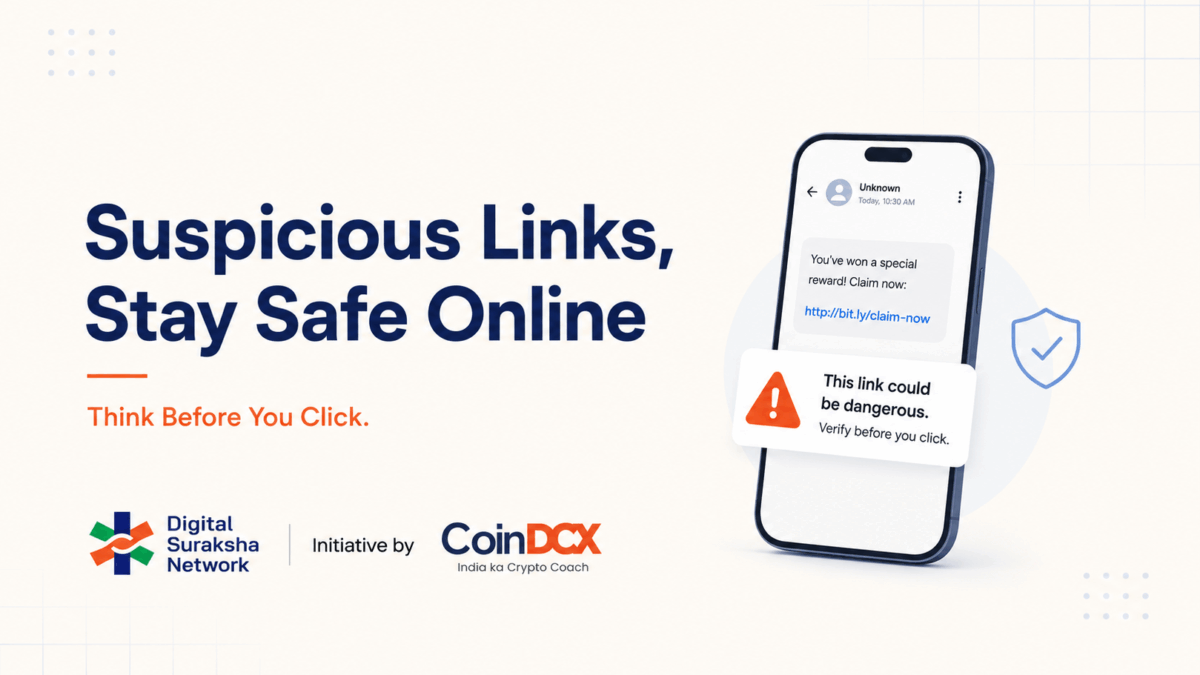


An urgent payment request. A delivery update asking you to confirm your address. A message warning that your account will be blocked. Or an offer that seems too good to ignore. Many online scams begin with something ordinary: a link and a reason to click it quickly.
These links can arrive through SMS, WhatsApp, email, social media, advertisements or even messages that appear to come from a familiar person or organisation. And as scam tactics become more convincing, identifying what is genuine is not always straightforward.
That is why one of the simplest digital safety habits is also one of the most important:
Pause. Check. Then click.
Why Suspicious Links Can Be Difficult to Spot
Not every fraudulent link looks obviously fake.
Scammers may imitate the name, branding or communication style of a legitimate organisation. A website address might differ from the real one by only a character. A message may refer to a delivery you are expecting, an account you actually use or an offer designed to create urgency.
The objective is often to make you act before you have time to question what you are seeing.
A suspicious link may lead to a fake website designed to collect passwords, OTPs, PINs, payment information or other sensitive details. In other cases, it may attempt to get you to download malicious software or make a payment.
The message may change, but the safest response remains the same: verify before you act.
Before You Click: Look for These Warning Signs
A few quick checks can help you identify whether a message or link deserves more scrutiny.
1. Check the URL carefully
Look at the complete website address, not just the brand name displayed in the message. Misspellings, additional characters, unfamiliar domains or URLs designed to resemble legitimate websites can be warning signs.
2. Be cautious of urgency and pressure
“Act now.”
“Your account will be blocked.”
“Complete payment immediately.”
“You have only 10 minutes left.”
Messages that create fear, excitement or urgency can push people into acting without verifying. If something appears unusually urgent, independently check it through the organisation’s official website, app or verified communication channel.
3. Never share sensitive information through an unexpected link
Passwords, OTPs, PINs and other confidential credentials should never be shared simply because a message asks for them. A professional-looking website is not proof that the website is genuine.
4. Treat unexpected messages carefully
A message can appear to come from a familiar organisation, or even someone you know, and still deserve verification.If you were not expecting the communication, avoid using the link provided in the message. Instead, access the service independently through its official website or app.
5. Question offers that seem unusually good
Guaranteed rewards, unexpected refunds, prizes, investment opportunities or exclusive offers can be used to encourage immediate action. Before proceeding, ask a simple question: Can I verify this independently?
Building simple habits around staying alert to digital scams can help people recognise suspicious interactions before acting on them.
This is also the focus of CoinDCX’s Satark Campaign in partnership with the Indian Cyber Crime Coordination Centre (I4C) under the Ministry of Home Affairs, Government of India, which aims to strengthen public awareness around cyber fraud and encourage safer digital behaviour.
What If You’re Unsure About a Link?
You do not have to determine whether every suspicious message is a scam yourself. If something feels unusual, don’t click immediately. Search for the organisation independently, use its official app or website, or contact it through a verified channel.
If you believe you have encountered cyber fraud, use the appropriate official cybercrime reporting channels rather than continuing to engage with the sender. The important habit is to create a gap between receiving a message and acting on it.
That small pause gives you time to verify.
Cyber Safety Is Becoming an Everyday Habit
Digital safety is no longer relevant only when making a large payment or accessing an important account. We receive links throughout the day, to pay bills, track deliveries, access documents, confirm bookings, log in to accounts and communicate with businesses. As digital interactions increase, so does the importance of knowing what to trust and what to verify.
Cyber safety, therefore, should not begin after something goes wrong. It starts with everyday behaviours: checking where a link leads, questioning unexpected requests, protecting sensitive information and verifying before taking action.
This thinking is also central to CoinDCX’s Digital Suraksha Network (DSN), a ₹100 crore commitment aimed at strengthening cyber safety, consumer awareness and protection against digital financial fraud in India.
Through DSN, CoinDCX has outlined efforts spanning consumer education, fraud intelligence, law-enforcement support and broader industry collaboration, built around the idea that preventing digital fraud requires awareness as well as stronger systems.
Making Verification Easier
Knowing that you should verify something is one thing. Knowing how to verify it quickly when a suspicious link lands on your phone is another.
That is an area where digital safety needs to become simpler, more accessible and more useful in the moment people need it. At CoinDCX, we believe safer digital participation begins before the click, and we’re working on ways to help make that moment of verification easier.
More on that soon.
Until then, remember: Pause before you click. Verify before you trust.