

Digital India has transformed the way we live, work, invest, transact, and communicate. From UPI payments to online banking, digital assets, e-commerce, and social media, millions of Indians are now participating in the digital economy on a daily basis.
But as digital adoption grows, so does the need for digital safety.
Cybercriminals today are becoming more sophisticated. A fraud attempt no longer looks like an obvious scam. It can come disguised as a customer support call, a fake investment opportunity, a phishing link, a delivery update, a job offer, or even a message from someone pretending to be a trusted institution.
In such an environment, awareness is not optional. It is the first line of defence.
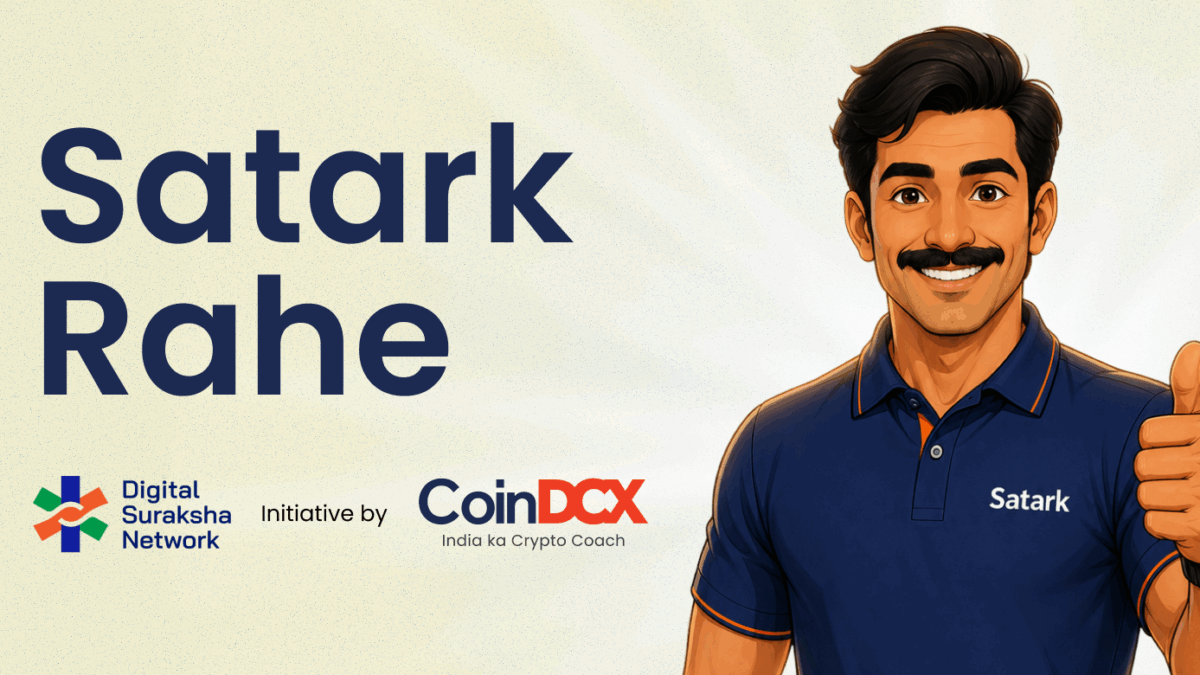
This is the thought behind Satark Rahe, a cyber safety awareness campaign launched by CoinDCX’s Digital Suraksha Network, in association with Cyber Dost, Ministry of Home Affairs, and the Indian Cyber Crime Coordination Centre (I4C).
The objective is simple: to help every Indian stay alert, pause before acting, and make safer digital decisions.
Why Satark Rahe Matters
At CoinDCX, we have always believed that building the future of finance goes beyond technology. It requires trust, education, and responsible participation.
As India’s digital economy expands, people are interacting with more apps, platforms, payment systems, and investment products than ever before. While this creates enormous opportunity, it also makes digital safety a shared responsibility.
Moreover, cybercrime is not a challenge that any one company, platform, or institution can solve alone. It requires collaboration between government, industry, and citizens.
The Government of India, through I4C under the Ministry of Home Affairs, has been doing extensive work to build cyber awareness across the country. Initiatives like Cyber Dost have played a key role in helping citizens understand cybercrime risks and adopt safer digital habits.
With Satark Rahe, CoinDCX is adding its voice and reach to this national awareness effort.
Satark Rahe: Making Cyber Safety Simple and Relatable
Most people do not fall for scams because they lack intelligence. They fall for scams because fraudsters create urgency, fear, greed, confusion, or emotional pressure.
A message may say your account will be blocked.
A caller may say your KYC is incomplete.
A link may promise quick returns.
A fake profile may pretend to be someone you trust.
In that moment, the most powerful action is often the simplest one: pause.
That is why the central message of Satark Rahe is “Brake Lagao”.
Before clicking a link, brake lagao.
Before sharing an OTP, brake lagao.
Before transferring money, brake lagao.
Before trusting a too-good-to-be-true opportunity, brake lagao.
Pause, verify, and only then act.
Digital Suraksha Network: Our ₹100 Crore Commitment to Cybersecurity
Satark Rahe is part of CoinDCX’s larger Digital Suraksha Network, a ₹100 crore commitment to strengthening cyber safety infrastructure, consumer awareness, and protection against digital financial fraud.
The Digital Suraksha Network was created with a clear belief: as digital finance grows, user protection must grow with it.
The Digital Suraksha Network is not just a platform-level safety initiative. It is designed as a wider cyber safety movement to help strengthen the infrastructure between citizens, platforms, and law enforcement.
Through DSN, CoinDCX aims to support large-scale consumer education, fraud awareness, and stronger coordination across the digital finance ecosystem. This includes initiatives such as “Caution Before Transaction,” multilingual cyber safety education, fraud intelligence sharing, support for law enforcement training, and industry collaboration on cyber safety standards.
The idea is simple: fraud prevention cannot depend only on users reacting after something goes wrong. India needs systems, awareness, and shared intelligence that help people identify risks before they transact.
For us, security is not limited to platform-level safeguards. It also includes education, awareness, and helping users recognise risks before harm happens.
A secure ecosystem is built not only by stronger systems, but also by more informed users.
Cyber Safety Is a Behavioural Habit
One of the biggest challenges with cyber safety is that people often think it applies only to someone else.
But scams do not target only first-time internet users. They target students, working professionals, investors, entrepreneurs, parents, senior citizens, and even digitally savvy individuals.
The format keeps changing, but the pattern is often the same: urgency, pressure, impersonation, and a request to act quickly.
This is why cyber safety must become a daily habit.
Just like we look both ways before crossing a road, we must learn to pause before responding to a suspicious message, clicking a link, downloading an app, sharing credentials, or making a payment.
That small pause can prevent a major financial or emotional loss.
A Shared Mission for a Safer Digital India
India’s digital growth story is one of the most exciting transformations in the world. But for this growth to be sustainable, digital trust must remain at the centre.
This is where public-private collaboration becomes important.
The work being done by I4C, the Ministry of Home Affairs, and Cyber Dost has created a strong foundation for cyber awareness in India. Through initiatives like Satark Rahe, we hope to amplify this message and take it to more people in a format that is easy to engage with and easy to act on.
Because cyber safety should not feel complicated.
It should feel like common sense.
And common sense begins with one simple habit: Brake Lagao.