

India’s crypto market is growing exponentially with over 100 million users actively buying, selling, and holding digital assets. As crypto adoption matures in 2026, the focus for Indian investors is shifting from where to buy crypto to how to store it safely.
Many Indian users still keep their holdings on exchanges or payment apps. While this may feel convenient, it’s also risky. If you don’t control your private keys, you don’t truly own your crypto. Your funds could be frozen, mismanaged, or even lost in a hack.
That’s why choosing the right wallet is essential. In this guide, we break down how crypto wallets work, explain the differences between hardware and software wallets, and list the 10 best crypto wallets in India for 2026, based on security, ease of use, and compatibility with today’s Web3 ecosystem.
What Is a Crypto Wallet and How Does It Work?
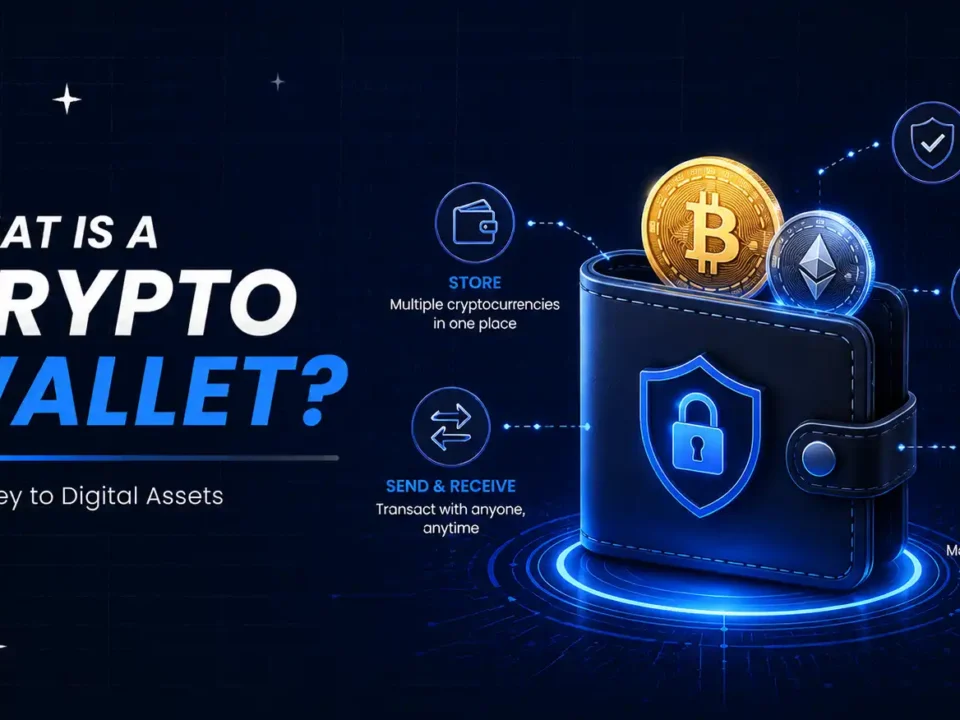
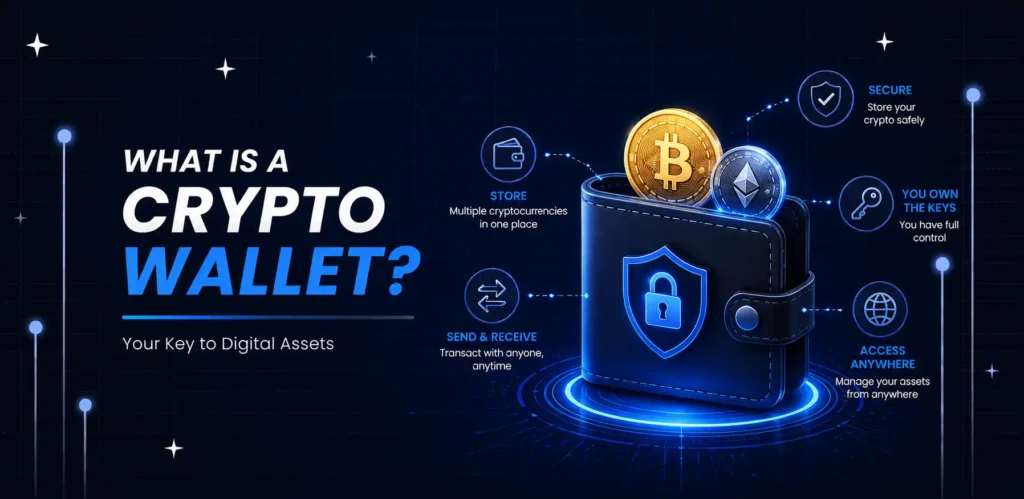
A crypto wallet is like your digital keychain. Just as your physical wallet holds your cash and cards, a crypto wallet stores the public and private keys that let you interact with blockchains.
With a wallet, you can send, receive, and securely store cryptos. You also use it to authorize transactions, whether that’s buying Bitcoin, staking Solana, or minting NFTs.
According to a 2024 Chainalysis report, India has ranked #1 globally in crypto adoption for two consecutive years, showing how important wallets have become for both new and experienced users. While wallets themselves are not regulated, Indian users must comply with KYC and tax rules when moving INR into or out of a wallet via exchanges or apps.
Hardware Wallet vs. Software Wallet
When discussing wallets, you’ll often hear terms like hardware, software, hot, and cold. Let’s clear up the confusion:

Read our article on Hot Wallets vs Cold Wallets in crypto to understand the key differences between them.
Seedless Crypto Wallets, A Growing Trend in 2026
Seedless wallets are gaining popularity in 2026 as users look for simpler and safer ways to manage crypto. Unlike traditional wallets that rely on a recovery phrase, seedless wallets use technologies like Multi-Party Computation or MPC or secure hardware pairing to protect private keys.
Wallets like Tangem and Zengo eliminate the risk of users losing or exposing their seed phrase, one of the most common reasons for permanent crypto loss. While seedless wallets improve usability, users should understand recovery mechanisms carefully, as access is often tied to devices or backup cards.
List of Top Crypto Wallets in India for Beginners
Here is the list of popular hardware and software crypto wallets in India for 2026, shortlisted based on security, compatibility, and features:
| Sr. No. | Best Crypto Wallet | Wallet Type |
| 1 | Ledger Stax | Hardware |
| 2 | Tangem | Hardware |
| 3 | Keystone Pro | Hardware |
| 4 | Trezor Safe 3 | Hardware |
| 5 | Safepal S1 | Hardware |
| 6 | Meta Mask | Software |
| 7 | Phantom | Software |
| 8 | Solflare | Software |
| 9 | Exodus | Software |
| 10 | Backpack | Software |
While wallets are ideal for self-custody, crypto exchanges remain essential for buying, selling, and converting crypto into INR.
Trade Crypto in INR on 
Deposit and withdraw in INR (₹).
No Conversion to Crypto Required.

Best Hardware Crypto Wallets in India for 2026
Hardware wallets are the safest choice for beginners who want long-term security. Here are the top five hardware crypto wallet options available:
1. Ledger Stax
Ledger Stax is a premium hardware wallet designed for users who want strong security with a modern interface. It features a curved E-Ink touchscreen, Bluetooth connectivity, and a certified Secure Element chip (EAL6+), making it suitable for long-term crypto storage.
Features:
- EAL6+ Secure Element chip for private key protection
- 2.8” curved E-Ink touchscreen
- Bluetooth, NFC, and USB-C connectivity
- Works with Ledger Live and third-party apps
- Supports thousands of assets across multiple blockchains.
Pros & Cons:
- Pros: Excellent security, multi-chain support, modern design
- Cons: Expensive, limited availability in India
2. Tangem
Tangem is a card-based cold wallet designed for everyday simplicity. Unlike traditional wallets, Tangem does not require a seed phrase, using a secure chip and NFC-based authentication instead. It’s ideal for beginners who want cold storage without complex setup.
Features:
- Secure Element chip embedded in NFC card
- No screen or cables; tap-to-phone operation
- Seedless backup using paired cards
- Works with the Tangem mobile app (iOS & Android)
- Multi-chain asset support
Pros & Cons:
- Pros: Easy to use, portable card design, quick setup
- Cons: Limited features vs. advanced wallets, mobile-only access
3. Keystone Pro
Keystone Pro is an air-gapped crypto wallet that uses QR signing to keep private keys fully offline. It features a 4″ touchscreen, an EAL5+ secure element, and works with multi-sig and third-party apps for advanced users. Its USB-C port is for charging only, enhancing safety against malware.
Features:
- Secure element chip (EAL5+).
- 4” touchscreen with intuitive navigation.
- Air-gapped operation (QR signing).
- USB only for charging (not data).
- Works with the Keystone app and 3rd-party integrations.
Pros & Cons:
- Pros: Fully air-gapped, strong security, large screen
- Cons: Slightly bulky, less beginner-friendly
4. Trezor Safe 3
Trezor Safe 3 is one of the top open-source crypto wallets. It is focused on transparency and usability, with a touchscreen interface and support for Trezor Suite on desktop and Android. Instead of a dedicated secure element, it uses a microcontroller-based design but still ensures robust safety for everyday users.
Features:
- Touchscreen device with a focus on open-source transparency.
- Uses a microcontroller architecture instead of a dedicated Secure Element chip.
- Works with Trezor Suite on desktop and Android.
Pros & Cons:
- Pros: Open-source, great UI, wide coin support
- Cons: Lacks secure element, not as compact as rivals
5. SafePal S1
SafePal S1 is an air-gapped hardware crypto wallet that signs transactions via QR codes and has a self-destruct mechanism if tampered with. It supports multiple blockchains through the SafePal app and is designed for users seeking high security with affordable pricing.
Features:
- An air-gapped hardware wallet that signs transactions using QR codes.
- Features a self-destruct mechanism if tampered with.
- Supports multiple blockchains via the SafePal mobile app.
Pros & Cons:
- Pros: Strong security features, affordable, supports many chains
- Cons: Small screen, navigation less smooth
Best Software Crypto Wallets in India for 2026
Software wallets are better for daily use and smaller amounts of crypto. Beginners often start with them because they’re easy to set up. Here are the top 5 software crypto wallets in India:
1. MetaMask
MetaMask is one of the best non-custodial hot crypto wallets popular for Ethereum and EVM chains, with browser extensions and mobile apps. It integrates with DeFi platforms, NFTs, and swaps, making it a go-to for Web3 users. Easy to set up, but best for small balances due to online risks.
Features:
- This is one of the most popular Ethereum wallets.
- Works on browsers like Chrome, Firefox, Brave, Edge and mobile.
- Supports Ethereum, Polygon, Solana, and more.
- Frequently targeted by hackers, this option is best for small balances only.
Pros & Cons:
- Pros: Widely supported, seamless DeFi/NFT access
- Cons: Frequent phishing risks, limited built-in features
2. Phantom
Phantom started as a Solana wallet but now supports Ethereum, Polygon, and Bitcoin, making it multi-chain friendly. It offers NFT storage, swaps, and native SOL staking with a clean interface on web and mobile. It is best for users active in the Solana ecosystem.
Features:
- Originally built for Solana, now supports Ethereum, Polygon, and Bitcoin.
- Offers NFT support and native staking of Solana (SOL).
Pros & Cons:
- Pros: Smooth UI, built-in staking and swaps
- Cons: Solana-centric, not ideal for long-term storage
3. Solflare
Solflare is a Solana-focused top crypto wallet that supports memecoins, NFTs, staking, and bridging directly in-app. Available on mobile and browser, it’s perfect for traders and NFT users who want quick Solana transactions. Security comes from its non-custodial design.
Features:
- Solana-focused wallet with support for memecoins and NFTs.
- Direct token purchases and staking are available in-app.
Pros & Cons:
- Pros: Great for Solana DeFi/NFTs, easy in-app staking
- Cons: Limited to Solana, fewer features vs. multi-chain wallets
4. Exodus
Exodus is a multi-chain wallet supporting 50+ blockchains, including Bitcoin, Ethereum, and Solana. It offers staking, swaps, and NFT storage across desktop, mobile, and browsers, with a visually appealing interface. It is best for users wanting an all-in-one wallet experience.
Features:
- Multi-chain wallet supporting over 50 blockchains, including Bitcoin and Ethereum.
- Available on desktop, mobile, and browsers.
Pros & Cons:
- Pros: Multi-chain support, beautiful and beginner-friendly UI
- Cons: Closed-source code, higher swap fees
5. Backpack
Backpack is a multi-chain crypto wallet supporting Solana, Ethereum, Arbitrum, Optimism, and Polygon. It offers staking, NFT support, and smooth browser/mobile use, making it a solid choice for multi-chain explorers. Its design is modern and tailored for Web3 users.
Features:
- Multi-chain wallet available on browsers and mobile.
- Supports Solana, Ethereum, Optimism, Arbitrum, and Polygon.
Pros & Cons:
- Pros: Supports multiple networks, NFT-friendly
- Cons: Still new, smaller user base than MetaMask/Phantom
Comparison of the Top Wallets in India
Let’s compare these best crypto wallets based on security, connectivity, compatibility, and more—so you can choose the right wallet for your needs
Hardware Crypto Wallets:
| Wallet | Secure Element | Screen / Input | Connectivity | Mobile Use | Works With |
| Ledger Stax | Yes (EAL6+) | 2.8″ E-Ink touchscreen | USB-C, Bluetooth, NFC | iOS/Android via Ledger Live | Ledger Live + 3rd-party apps |
| Tangem | Yes (SE in card) | No screen (card) | NFC (tap-to-phone) | Mobile app (iOS/Android) | Tangem App |
| Keystone Pro | Yes (EAL5+) | 4″ touchscreen | QR signing (air-gapped), USB (charge only) | Keystone App (iOS/Android), 3rd-party | Keystone, PSBT, multisig |
| Trezor Safe 3 | No dedicated SE for keys (MCU-based) | Touchscreen | USB-C (wired) | Android (OTG), desktop | Trezor Suite, 3rd-party |
| SafePal S1 | Yes (EAL5+, self-destruct) | 1.3″ screen + D-pad | USB (charge only),QR (camera) | Mobile (iOS/Android) | SafePal App |
Software Crypto Wallets:
| Wallet | Type / Custody | Networks Supported | Staking / DeFi Options | NFT Support | Platforms |
| MetaMask | Non-custodial (hot) | Ethereum, Polygon, Solana (via Snaps), and other EVM chains | DeFi dapps, swaps | EVM NFTs | iOS, Android, Browser Extensions |
| Phantom | Non-custodial (hot) | Solana, Ethereum, Polygon, Bitcoin | Native SOL staking, swaps | Solana + Ordinals | iOS, Android, Browser Extensions |
| Solflare | Non-custodial (hot) | Solana (SPL tokens, memecoins, NFTs) | SOL staking, swaps, bridge | Solana NFTs | iOS, Android, Browser Extensions |
| Exodus | Non-custodial (hot) | 50+ blockchains including Bitcoin, Ethereum, Solana | Multi-chain staking, swaps | Multi-chain NFTs | iOS, Android, Desktop, Browser Extensions |
| Backpack | Non-custodial (hot) | Solana, Ethereum, Arbitrum,Optimism, Polygon | SOL staking (bpSOL tokens) | Solana + Multi-chain NFTs | iOS, Android, Browser Extensions |
Do Crypto Wallets Affect Taxes in India?
Crypto wallets themselves are not taxed in India, but the transactions you make using them can be. Any profits earned from selling, swapping, or transferring crypto are subject to a flat 30% tax, along with 1% TDS on applicable transfers.
When crypto is moved between wallets and exchanges, especially during INR deposits or withdrawals, transactions may be reported through exchange records, bank trails, and AIS disclosures.
For a complete breakdown of crypto taxation, filing rules, and compliance requirements, refer to our Crypto Tax in India guide.
Privacy vs Compliance: What Wallet Users Should Know in 2026
In 2026, crypto users must balance self-custody and privacy with growing regulatory oversight. While non-custodial wallets do not require KYC, any interaction with exchanges, payment gateways, or fiat on-ramps is subject to compliance and reporting rules.
This means that even if your wallet is private, your transactions may not be once they intersect with regulated platforms. Understanding this distinction is crucial for Indian users navigating taxes, audits, and future global reporting frameworks.
Conclusion
India is leading global crypto adoption, and millions of investors are exploring Bitcoin, Ethereum, and other assets. But with hacks and frauds still common, choosing the right crypto wallet is non-negotiable.
For beginners in 2026, the best strategy is to use a hardware wallet for large savings while keeping a software wallet for daily activity. Custodial wallets on exchanges are also a convenient and reliable option for trading, especially when backed by strong security measures.