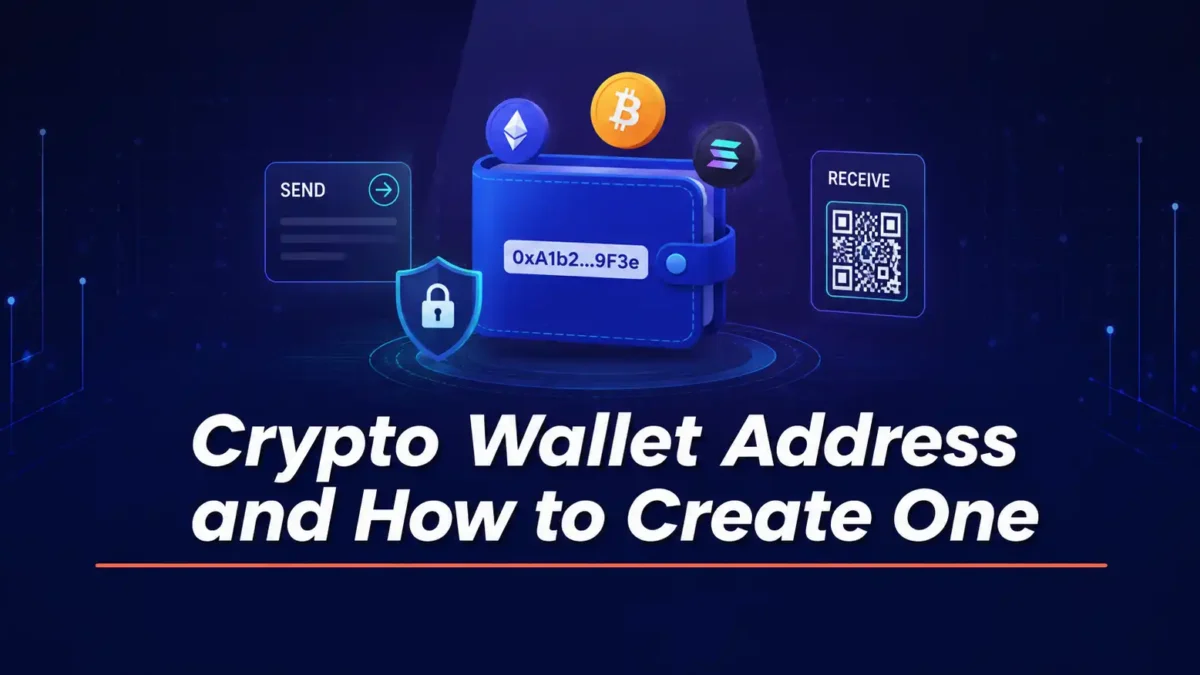


Crypto transactions depend on clear digital identifiers to function seamlessly across decentralized networks. A crypto wallet address acts as this identifier on a blockchain, ensuring that digital assets reach the correct destination. It indicates where crypto should be sent and where it originates during a transaction. Every crypto transfer requires a valid wallet address to be processed and confirmed. Without it, blockchain transactions cannot be executed, recorded, or verified on the ledger.
In this article, we’ll explore what a wallet address is, how it works, and how to set up and find one.
Key Takeaways
- A crypto wallet address is used to send and receive assets on a blockchain.
- Wallet addresses are network-specific, so selecting the correct blockchain is important.
- Wallet addresses are public, but private keys must always remain confidential.
- Crypto transactions are irreversible, so accuracy is essential.
- Address formats vary across blockchains like Bitcoin and Ethereum.
- Most wallets create addresses automatically without personal information.
- Test transfers help reduce the risk of sending funds incorrectly.
What is a Crypto Wallet Address?
A crypto wallet address is a unique string of letters and numbers generated through cryptographic processes. It serves as both a destination and a source for crypto transactions on a blockchain network. This address allows users to send and receive digital assets securely without relying on a central authority.
Each wallet address is tied to a specific blockchain, which means it only works within that network. While it functions like a bank account number, it does not store funds directly. Instead, it points to entries on the blockchain ledger that record balances and transaction history. These records are publicly visible and can be verified by anyone.
Although wallet addresses are public, they do not reveal personal identity or private information. They only show how funds move between addresses on the blockchain. Different blockchains use different address formats to avoid confusion and ensure network accuracy. For example, Bitcoin addresses may begin with “1,” “3,” or “bc1,” while Ethereum addresses usually start with “0x.” These format differences help systems identify the correct network for a transaction. Sending crypto to an incompatible address can result in irreversible loss. Understanding address formats is therefore essential for safe and accurate transactions.
How Wallet Addresses Work
Wallet addresses work using a system called public-key cryptography. Each crypto wallet contains two important elements. One is the public key, and the other is the private key. The wallet address is generated from the public key. This address can be shared freely to receive crypto.
The private key remains secret and controls access to funds. When a user sends crypto, the transaction is signed using the private key. This signature proves ownership without revealing the key itself. The blockchain network verifies this signature before confirming the transaction. Once confirmed, the transaction becomes permanent and immutable. Anyone can view the transaction on the blockchain. However, only the private key holder can spend the funds. Losing the private key permanently means losing access. This is why secure storage of private keys is critical. Wallet addresses may be visible, but control always lies with the private key.
Types of Wallet Addresses
Different blockchains use different wallet address formats. These formats are designed to match the technical rules of each network. Understanding address types helps users avoid network errors.
1) Bitcoin Addresses
These are used only on the Bitcoin blockchain. They come in several formats based on protocol upgrades. Legacy addresses start with “1.” Pay-to-Script-Hash addresses start with “3.” SegWit addresses begin with “bc1.” Each format improves efficiency or security in different ways. Bitcoin addresses only support Bitcoin transactions. Sending other cryptos to a Bitcoin address will not work.
2) Ethereum Addresses
It is used on the Ethereum network and compatible blockchains. They are 42 characters long and begin with “0x.” Ethereum addresses support Ether and many tokens built on Ethereum standards. These addresses are also used in decentralized applications. Smart contracts interact directly with Ethereum addresses. Because many blockchains are Ethereum-compatible, users must select the correct network before sending assets.
3) Multi-chain Addresses
These are managed by wallets that support multiple blockchains. These wallets generate separate addresses for each network internally. The interface may look unified, but the addresses remain network-specific. This setup improves convenience but still requires user attention. Selecting the wrong network can still result in loss. Multi-chain wallets are useful for users managing multiple assets across ecosystems.
How to Create a Crypto Wallet Address Using a Self-Custody Wallet
Creating a crypto wallet address is simple. The wallet generates an address using cryptographic methods, so you don’t need to provide personal information. What’s important is picking the right wallet type, securely saving your recovery phrase, and making sure you select the correct network before using it. Follow the step-by-step process below to create your wallet address.
1) Choose the wallet type based on your usage:
Mobile wallets are well-suited for daily use and quick access. Desktop wallets work well for regular laptop users. Hardware wallets are well-suited to long-term storage and higher security needs. Web wallets are convenient, but you must verify the provider carefully.
2) Download or set up the wallet from a trusted source:
Use the official app store listing or the wallet provider’s official website. Avoid files shared through messages, ads, or unknown links. Fake wallets are a common risk for beginners.
3) Create a new wallet inside the app:
Most wallets will show options like “Create new wallet” or “Get started.” Once you proceed, the wallet begins generating your key set. This is the step that leads to the creation of an address.
4) Write down the recovery phrase and store it offline:
The wallet will show a recovery phrase, often 12 or 24 words. Write it on paper and store it in a safe place. Do not save it as screenshots, in notes apps, in email drafts, or in cloud drives. Anyone with this phrase can access your funds.
5) Set a strong password and enable security features:
Many wallets support app passwords, biometrics, or PINs for access. Use these features to reduce the risk of unwanted access. This does not replace the recovery phrase, but it adds an extra layer of protection.
6) Choose the crypto to generate the correct wallet address
Most wallets support multiple assets, and each asset has a different address format. Tap “Receive” and choose the asset, like BTC or ETH. The wallet will show your address and a QR code.
7) Confirm the network before using the address:
This step prevents a major mistake. For example, an Ethereum address may appear similar across networks, but sending assets to the wrong network can result in loss. Always match the network the sender uses to your wallet’s network.
8) Use a test transfer before sending a large amount:
Send a small amount first to confirm the address and network. Once the test amount arrives, you can proceed with the full transfer. This habit reduces risk for beginners.
Also Read: How to create a crypto wallet
How to Get a Wallet Address on CoinDCX for Deposits
CoinDCX provides wallet addresses for supported assets when users want to deposit crypto into their account. This is useful for beginners because the platform clearly shows the correct address and network options, and users do not need to manage private keys directly within the exchange account.
- Log in to your CoinDCX account: Open the app or website and sign in securely. Use strong authentication settings if available.
- Go to the crypto deposit section: Navigate to the wallet, balances, or deposit area depending on the interface. Choose the option that allows crypto deposits.
- Select the crypto you want to deposit: Pick the exact asset you plan to transfer. Do not assume two assets share the same address format.
- Select the correct network shown for that asset: CoinDCX will display available networks for the selected asset. Choose the same network you will use to send funds from the external wallet. If you choose the wrong network, the transfer may fail or become unrecoverable.
- Copy the generated deposit address or use the QR code: CoinDCX will show a wallet address linked to your account for that asset and network. Copy it carefully and avoid typing it manually. QR code scanning can reduce errors.
- Paste the address into the sending wallet, then review the details: Before you confirm the transfer, re-check the network, address, and any required memo or tag. Some assets require an extra code for deposits.
- Track the transaction status if needed: After sending, you can monitor transaction progress in your sending wallet and also in your CoinDCX transaction history. Blockchain confirmations can take time depending on the network.
Are Wallet Addresses Safe to Share?
Wallet addresses are designed to be public. Sharing a wallet address is generally safe. It allows others to send crypto to that address. Wallet addresses do not give control over funds. They only show transaction activity on the blockchain.
Anyone can view balances and transfers linked to an address. However, this transparency does not reveal identity details. The real risk lies in sharing private keys. Private keys must never be shared with anyone. They provide full access to funds. If compromised, assets can be transferred without consent.
On CoinDCX, users do not handle private keys directly. The platform manages custody and security systems. This reduces the risk of accidental exposure. Understanding this distinction helps users protect their assets effectively.
Why Understanding Digital Wallet Addresses Truly Matters
Understanding crypto wallet addresses is important because they ensure secure transactions on blockchain networks. Each address is unique and linked to a specific network, so accuracy is essential. A good understanding of wallet addresses helps avoid mistakes and reduces loss. While addresses are public and can be shared for receiving crypto, private keys must remain confidential. By developing good habits and using platforms like CoinDCX, beginners can manage their crypto transactions with confidence and security.
FAQs
Q1: Can a wallet address be traced?
Yes, a wallet address can be traced on a public blockchain. Every transaction linked to that address is permanently recorded and visible through blockchain explorers. This includes transaction amounts, timestamps, and wallet interactions. However, a wallet address does not directly reveal personal identity details. Identity is usually linked only if the user discloses it elsewhere.
Q2: Can I change my wallet address?
Some wallets generate new wallet addresses automatically to improve privacy. These wallets allow users to receive funds on fresh addresses while keeping older ones active. Previously generated addresses usually remain valid and usable. The ability to change or generate new addresses depends on the wallet provider. Exchange wallets may offer fixed addresses for certain cryptos.
Q3. How do I find my general crypto wallet address?
To find your wallet address, open your wallet app and select the asset you want to receive. Then choose the “Receive” or “Deposit” option, and copy the address shown. Be sure to select the correct asset and network to avoid any mistakes.
Q4. How to find your CoinDCX crypto wallet address?
To find your wallet address on CoinDCX, simply log into your account, navigate to the deposit section, and choose the desired crypto and network. Copy the displayed address and any required tag or memo, then paste it into your sending wallet. Always double-check the network to ensure a smooth transaction.
Q5: What happens if I send crypto to the wrong address?
Crypto transactions cannot be reversed once confirmed on the blockchain. If funds are sent to an incorrect or incompatible address, they are generally lost permanently. There is no central authority that can undo the transaction. Recovery is possible only in rare cases where the recipient controls the destination address. This is why verifying details before sending is critical.
Q6: Are wallet addresses case-sensitive?
Some wallet addresses are case-sensitive, depending on the blockchain network. Entering an address with incorrect capitalization can cause a transaction to fail or be misdirected. Copying and pasting the address directly from the wallet is the safest approach. Using QR codes further reduces the risk of manual entry errors.
Q7: Can one wallet have multiple addresses?
Yes, many crypto wallets support multiple addresses for the same user. This helps protect privacy by reducing the reuse of a single address. It also allows better organization of transactions and asset tracking. All generated addresses remain linked to the same wallet and funds. The availability of this feature depends on the wallet type and blockchain.