



Bitcoin mining continues to attract new users every year, but one question remains constant: Is Bitcoin mining legal? The short answer is yes, Bitcoin mining is legal in most powerful computers that validate transactions and secure the Bitcoin network. However, the process uses significant electricity, many countries regulate how and where it can operate. Some regions, like the U.S., allow it with state-level rules. India allows crypto mining but monitors digital assets while others, like China, prohibit it entirely.
Different countries classify digital assets, determine how they tax mining rewards, and shape mining activity through local power rules. Understanding these differences helps miners stay compliant and avoid costly mistakes.
What Is Bitcoin Mining?
Bitcoin mining is the process that secures the Bitcoin network and confirms new transactions. Miners use high-end computers to solve mathematical tasks that help create new blocks. Each block stores verified transactions, and once it is added to the chain, the miner earns Bitcoin as a reward.
Mining is essential for:
- Network security
- Transaction processing
- Decentralization
This reward mechanism also introduces new Bitcoin into circulation.
Read more: A Guide to Crypto Mining
Why Is Bitcoin Mining Considered Controversial?
Bitcoin mining has sparked debates worldwide for several reasons. These concerns come from energy use, evolving rules, and the impact of mining farms on local communities. Here are the key points that shape the controversy.
1. High Energy Use: Bitcoin mining rigs run continuously, requiring large amounts of electricity. Countries with limited power supply may restrict mining to protect their grids and reduce environmental impact.
2. Complex Regulations: Crypto is still new, and laws evolve quickly. Governments frequently update tax rules, licensing guidelines. This creates uncertainty for miners planning long-term operations.
3. Decentralization: Bitcoin’s decentralized nature challenges traditional financial monitoring. Some authorities prefer tighter controls, which influences mining rules.
4. Noise and Local Impact: Large mining farms create heat and noise. Some areas enforce zoning rules for mining farms to protect their residential communities.
5. Fraud and Illegal Setups: Fake mining farms and power theft damage the reputation of real miners. These practices lead to strict inspections and legal action, which gives mining a negative image in some regions.
Despite these challenges, Bitcoin mining remains legal in most countries. Many governments prefer to regulate mining rather than ban it. Clear rules around taxation, power use, and safety help maintain balance while supporting innovation.
Legal Status of Bitcoin Mining Across Countries
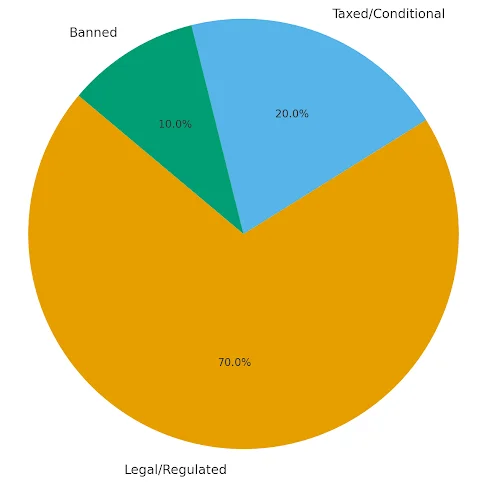
Most nations allow Bitcoin mining, but each region sets its own rules around taxes, electricity use, business registration, and safety standards. These differences shape how easy or difficult mining becomes in each country. Here is a clear, up-to-date look at how major nations treat Bitcoin mining in 2025.
| Country | Bitcoin Mining Legal Status | Key Rules | Tax Treatment |
| USA | Legal | State-level rules | Taxed as income |
| India | Legal | Power + compliance rules | 30% tax |
| China | Banned | No mining allowed | – |
| Canada | Legal | Environmental rules | Taxed |
| Germany | Legal | Energy & zoning rules | Taxed |
| UAE | Legal | Business registration | Taxed |
Also Read: Crypto Legal Status In India
Is Bitcoin Mining Legal in the USA?
Yes, Bitcoin mining is legal across the US, but rules vary by state. For instance, Texas welcomes miners due to cheap energy. Some states limit mining during peak power demand. Mining rewards are taxed as income. Large firms must comply with local business and environmental regulations. The US also monitors large farms that use high-power lines. The country hosts many top global mining firms. Clear rules and strong infrastructure help miners plan stable, long-term operations.
Bitcoin Mining Status In USA: Legal but Regulated
Is Bitcoin mining Legal in India?
The answer is Yes, Bitcoin mining is legal in India. There is no ban on mining, but profits from crypto mining fall under the 30% tax slab, and miners must follow local electricity rules and standard business laws. The government keeps track of digital assets and may refine policies with time. For now, Bitcoin mining in India is allowed, but users must comply with power and tax regulations. Platforms like CoinDCX help beginners understand safe crypto practices and stay updated on India’s evolving digital asset landscape.
Bitcoin Mining Status In India: Legal and Taxed
Is Mining Bitcoin Illegal in China?
Yes, it is illegal to mine Bitcoin in China as the nation banned BTC mining in 2021 due to pressure on power grids, carbon-emissions goals, and strict control over its financial system. All major mining farms shut down or shifted to regions like the US, Kazakhstan, and Russia. Mining remains illegal in China even in 2025. Owning Bitcoin is allowed, but mining or running any mining infrastructure is not permitted.
Bitcoin Mining Status In China: Banned
Is Bitcoin Mining Legal in Canada?
Canada allows Bitcoin mining across many regions, and its cool climate helps manage heat from mining rigs. However, rules differ by province. Some areas restrict large farms to protect local grids, while others enforce strict environmental checks. Miners must register, follow safety protocols, and pay taxes on the coins they mine. Canada remains a friendly but tightly regulated space for miners due to high standards and energy rules.
Bitcoin Mining Status In Canada: Legal with Strong Rules
Is Bitcoin Mining Legal in Germany?
Germany permits Bitcoin mining, but high power costs make home mining rare. Users pay taxes on mined Bitcoin, and the nation treats Bitcoin as private money, which offers clear legal status. Miners must comply with business laws, local zoning rules, and environmental standards, especially in densely populated urban areas. Germany supports blockchain innovation but maintains strong climate and energy policies to balance progress and sustainability.
Bitcoin Mining Status In Germany: Legal and Regulated
Is Bitcoin Mining Illegal in UAE?
The UAE is a fast-growing global crypto hub where Bitcoin mining is legal and supported through structured regulations. Dubai and Abu Dhabi operate specialised zones that encourage the development of blockchain and digital assets. Miners must comply with business licensing requirements, pay taxes where applicable, and use approved energy sources. The UAE’s forward-focused tech policies attract global mining firms and help build a strong, secure crypto ecosystem.
Bitcoin Mining Status In Germany: Legal and Structured
Also Read: Top Bitcoin Mining Softwares
Why Bitcoin Mining Is Legal in Most Nations
Most countries do not ban crypto mining because it fits within normal laws and supports economic activity. Clear rules, structured taxes, and personal rights make mining easy to regulate. Here are the key reasons explained in simple terms.
- Ownership Rights: People can use private machines for computation. Mining runs on this same idea. Users control their own hardware and choose how they use it. Governments see this as a basic right. Mining becomes a personal or business activity, not a restricted one.
- Digital Asset Laws: Many nations accept digital assets as part of their financial system. They treat mined coins as taxable income rather than illegal money. This reduces confusion and supports legal clarity. Clear tax structures make mining safe and transparent. CoinDCX often shares updates that help beginners understand these evolving laws.
- Economic Value: Mining creates new jobs, supports data infrastructure, and drives hardware innovation. Some regions use leftover or renewable energy to support mining farms. This reduces waste and boosts clean-energy projects. Countries gain added economic activity without major risk. This positive impact encourages governments to allow mining with standard rules.
- Innovation Focus: Governments want to lead in tech innovation. Blockchain growth depends on secure networks, and mining supports this system. By allowing mining, countries support research, digital skills, and new business models. This helps build strong tech ecosystems.
- Tax Revenue: Mining rewards create taxable income. This gives governments steady revenue without major policy changes. With clear rules, miners report profits and stay compliant. This benefit leads regulators to prefer structured taxation over bans. As long as miners pay the required taxes, the system stays open and legal.
Mining remains legal in most regions because it aligns with personal rights, supports innovation, and contributes to the economy. When miners follow power rules, business laws, and tax norms, their activities fit cleanly into existing legal systems worldwide.
Read more: Is Bitcoin Mining Profitable
Risks of Illegal Crypto Mining Operations
Mining is legal in many countries, but illegal setups create serious risks. These risks affect users, communities, and local power systems. Understanding these problems helps beginners stay safe and compliant.

- Tax Evasion: Mining rewards count as taxable income in most countries. Not reporting this income is a legal offense. Authorities track digital asset movement through audits and reporting systems. Avoiding taxes leads to fines, penalties, or long-term scrutiny. Clear reporting helps miners stay safe and compliant. Illegal mining harms users and the wider ecosystem. Staying compliant with tax rules, power regulations, and safety standards protects miners and supports a healthier crypto environment.
- Environmental Violations: Some regions restrict power-heavy operations due to noise, heat, or strain on local grids. Illegal miners often exceed these limits. This can disrupt communities and harm local infrastructure. Breaking these rules leads to penalties or shutdowns. Legal miners must use regulated power sources and maintain safe noise and heat levels.
- Fraud and Scams: Fake mining schemes target beginners with false reward claims or fake hardware plans. They promise high returns but deliver nothing. Many users lose funds to such scams. Trusted platforms like CoinDCX help users learn safe practices, verify real information, and avoid suspicious offers.
- Data Center Violations: Mining farms must meet building, safety, and fire standards. Illegal farms often ignore these rules. This leads to unsafe wiring, overheating, and structural risks. Authorities can seal such setups and impose heavy fines. Safe mining requires proper ventilation, licensed spaces, and compliance with local codes.
- Electricity Theft: Some illegal mining groups steal power to run machines. This is a criminal act with strict penalties. Electricity theft damages local grids and causes voltage drops. It can even pose a fire hazard in crowded areas. Legal miners must use approved power sources and follow local supply rules.
Understanding the Legal Landscape of Bitcoin Mining
Bitcoin mining plays a vital role in securing the network and shaping the digital economy. The question “Is Bitcoin Mining Legal?” gets a clear answer in many regions, but each country sets its own rules. India allows mining but taxes it. The United States regulates it at the state level. China bans it completely, while Europe and the UAE maintain structured frameworks. This mix of rules makes it important for beginners to understand local laws, power use, tax duties, and safety needs. Tools like BTC Mining Calculator help users plan costs, estimate returns, and evaluate risks before getting started.
FAQs
Q1: Can you still mine Bitcoin at home?
Yes, you can still mine Bitcoin at home, but it needs planning. Power costs, heat, and noise can rise quickly, so beginners must consider setup size and airflow. Many new users start with small devices to learn the basics before scaling. Understanding the environment and cost is the key to safe home mining.
Q2: Is mining profitable in 2025?
Profit depends on power rates, hardware strength, and Bitcoin’s market value. Some regions with cheap energy see better returns than others. A Bitcoin mining calculator helps estimate costs and rewards with more clarity. Beginners should review all expenses before choosing any setup.
Q3: Do miners pay taxes?
Yes, miners must pay taxes on the coins they mine in most countries. Mining rewards are treated as income and are subject to local tax laws. In India, gains are taxed at 30% under the current framework. Proper reporting helps avoid penalties and keeps mining fully compliant.
Q4: What happens if I mine illegally?
Illegal mining setups can lead to serious consequences, including fines, penalties, and power cuts. Authorities act quickly against electricity theft or unsafe data center setups. Mining must comply with safety norms, tax laws, and power regulations to remain legal. Compliant operations protect both the user and the wider community.
Q5: Can India ban Bitcoin mining?
There is no sign of a ban as of now. India monitors digital assets and adjusts rules when needed, but mining stays legal with taxes. Users must stay up to date on policy changes to remain compliant. Clear guidelines help miners operate with confidence and safety.