
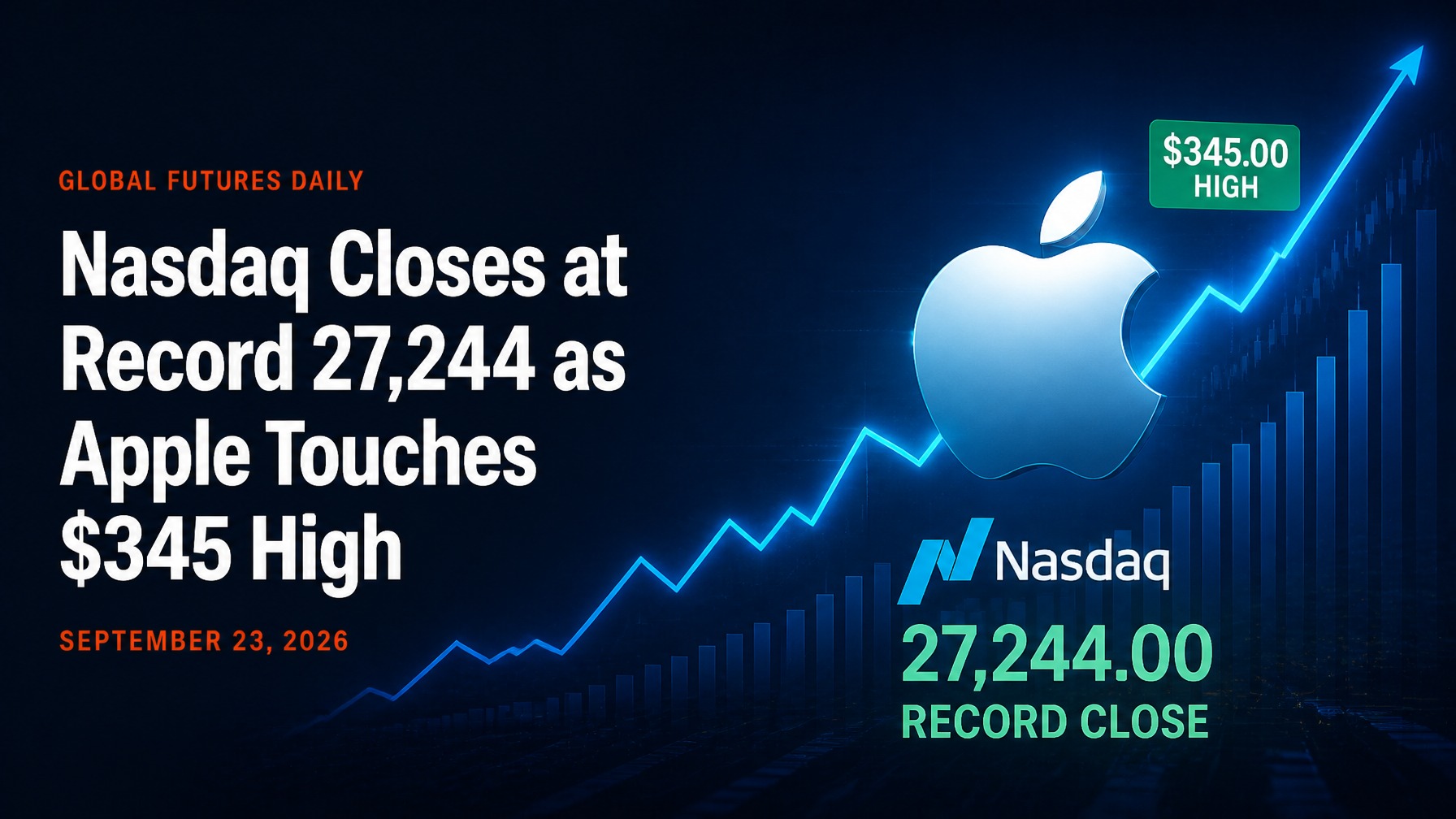
Tesla beats Q2 revenue at $28.24B but EPS misses by 35% and capex jumps 142%. Alphabet capex hike sparks Kospi rally. Intel reports today.
TLDR
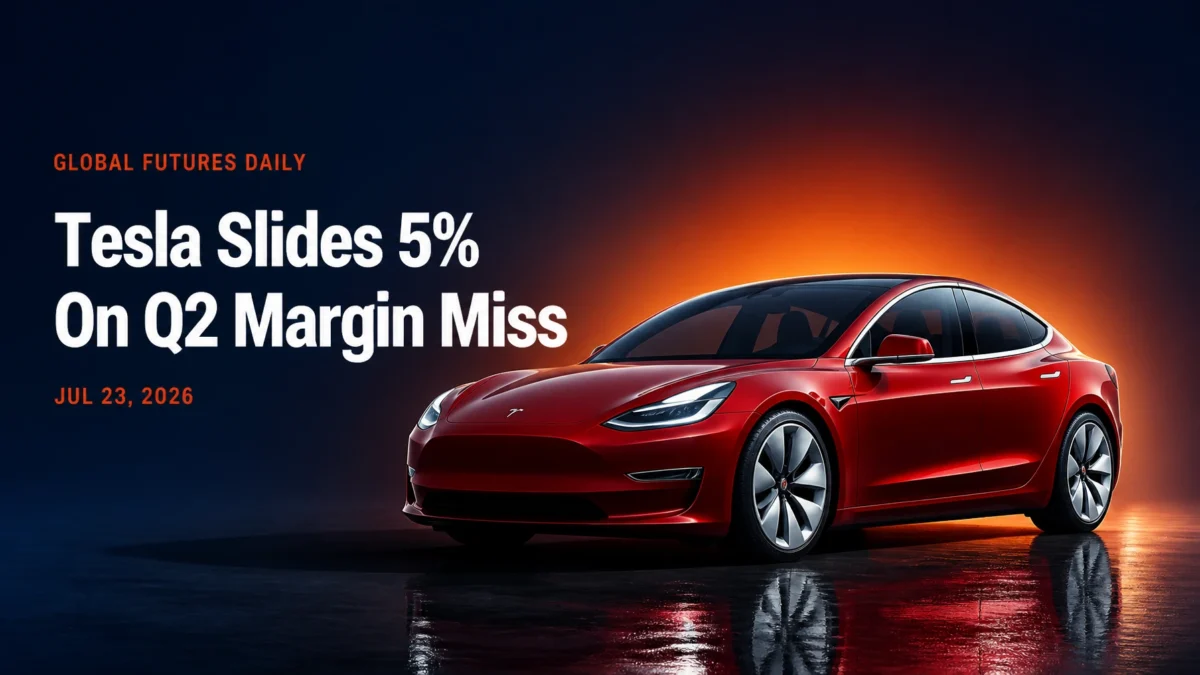
- Tesla reported Q2 2026 revenue of $28.24 billion, a beat on the top line, but adjusted EPS of $0.33 missed the $0.51 consensus and shares are down 5% in Thursday premarket at around $345.
- Alphabet beat on both revenue and cloud growth but hiked full-year capex to $195 to $205 billion from $175 to $185 billion, sending GOOGL down 3 to 4% in extended trade even as Asian chipmakers rallied.
- Kospi surged 3.7% overnight, led by Samsung and SK Hynix up more than 3% each, as investors read the Alphabet capex hike as durable demand for AI memory and advanced logic.
- Intel reports Q2 after the US close today with options pricing a 12 to 15% swing; consensus is $14.42 billion revenue and $0.21 non-GAAP EPS, with 18A foundry commentary the swing factor.
- Brent crude sits near $94 on the eleventh straight round of US strikes against Iran, keeping an inflation overlay on next week’s FOMC decision on 29 July.
Market Regime
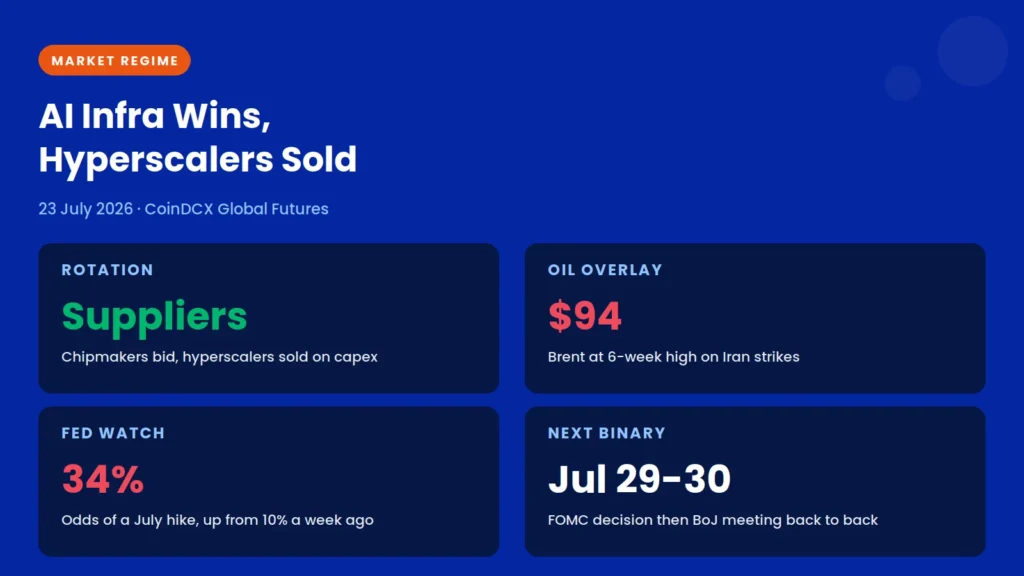
The market is now split cleanly into two trades. The AI infrastructure trade is stronger than ever, with Alphabet raising 2026 capex by roughly $20 billion, Google Cloud growing 82% year over year, and Asian semiconductor names ripping overnight. The AI hyperscaler trade, meanwhile, is exhausted; Alphabet, Tesla and IBM have all delivered top-line beats this week yet each is trading lower on cash flow, margin, or guidance concerns. Capital is rotating out of the customers of AI infrastructure and into the suppliers.
Layered on top is an oil and rates overlay that keeps the tape defensive. Brent is at a six-week high above $94 on Iran tensions, fed funds futures now price a roughly 34% probability of a July hike versus 10% a week ago, and the yen has weakened to 163 per dollar, its lowest since 1986. The 29 July FOMC decision and 30 July BoJ meeting are now the two biggest binary events on the calendar.
Bullish Factors
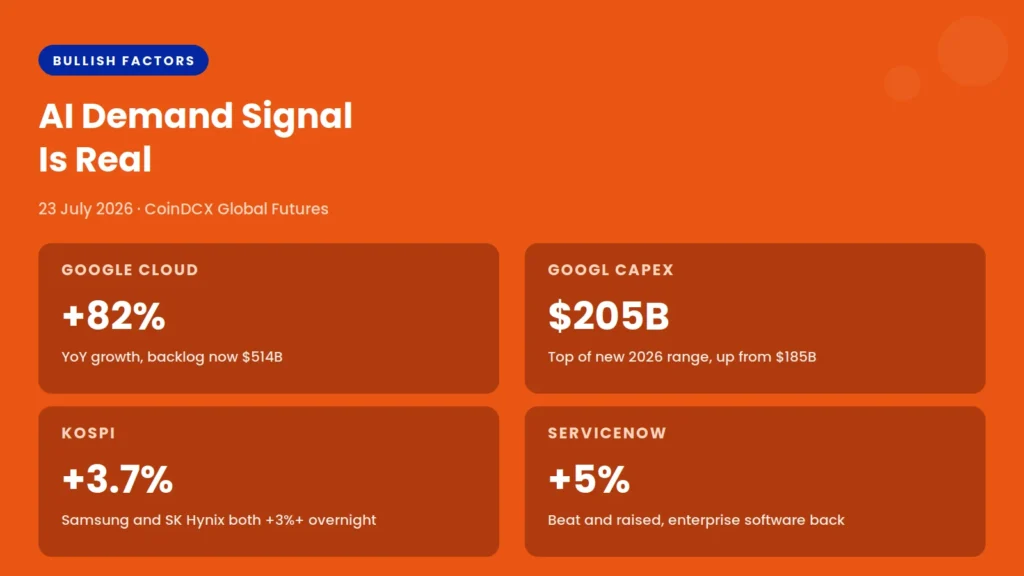
- Google Cloud grew 82% year over year to $24.8 billion with backlog at $514 billion, evidence that enterprise AI demand is not slowing.
- Alphabet’s 2026 capex guide raised to $195 to $205 billion is a direct pipeline into memory, advanced logic, and networking suppliers.
- Kospi +3.7% overnight, with Samsung and SK Hynix both up more than 3%, confirms the AI supply-chain trade remains the strongest global setup.
- ServiceNow beat and raised, up more than 5% after hours, extending the enterprise software recovery.
- Texas Instruments posted a 23% revenue jump to $5.46 billion and shares gained more than 1% in late trade, another semiconductor tell.
- IBM software revenue grew 5% with recurring software up 8% and Red Hat up 11%, softening the blow from the earlier guidance cut.
- Semiconductor index bounced Wednesday, closing higher for a third straight session after last week’s bear-market confirmation.
Bearish Factors
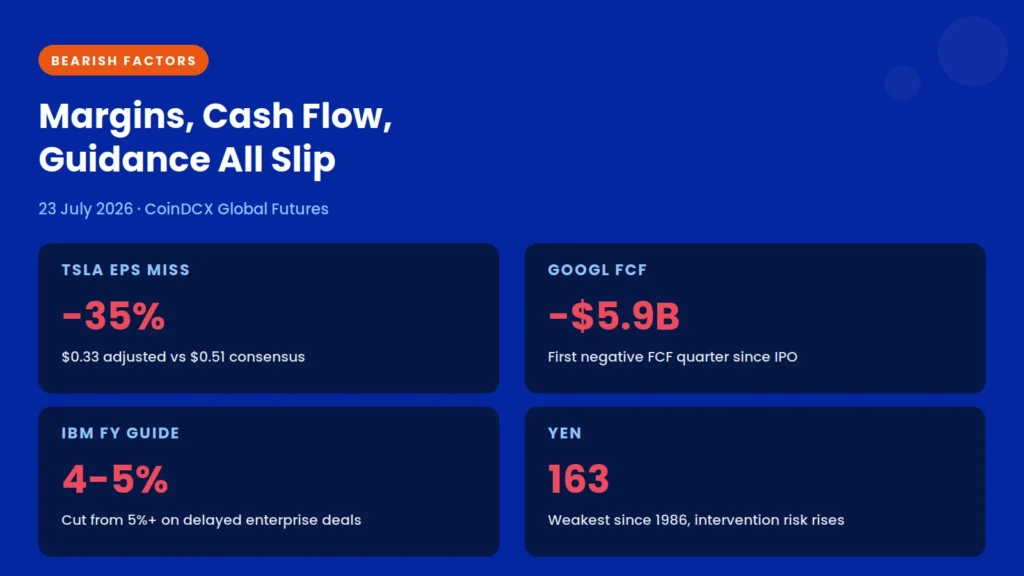
- Tesla adjusted EPS of $0.33 missed the $0.51 consensus by 35%, GAAP operating margin collapsed to 1.4% from 4.1% a year ago, and free cash flow swung to a $1.09 billion deficit.
- Alphabet reported its first ever negative quarterly free cash flow at -$5.9 billion as capex hit $44.9 billion, roughly double the year-ago figure.
- IBM lowered full-year 2026 constant currency revenue growth to 4 to 5% from a prior 5%+, and cited delayed enterprise deals as customers shifted budgets to AI hardware.
- Brent crude at $94 and WTI at $87 are the highest since mid-June and are already showing up in headline inflation expectations.
- Fed funds futures now price roughly 34% odds of a July hike versus 10% a week ago, a sharp hawkish repricing that has not yet reflected in equities.
- The yen at 163 per dollar is the weakest since 1986 and has raised intervention risk into the 30 July BoJ decision.
- Reddit fell 9% on a WSJ report that the company is considering shutting off Google’s access to its content for AI training, adding to broader data-licensing overhang.
Asian Markets This Morning
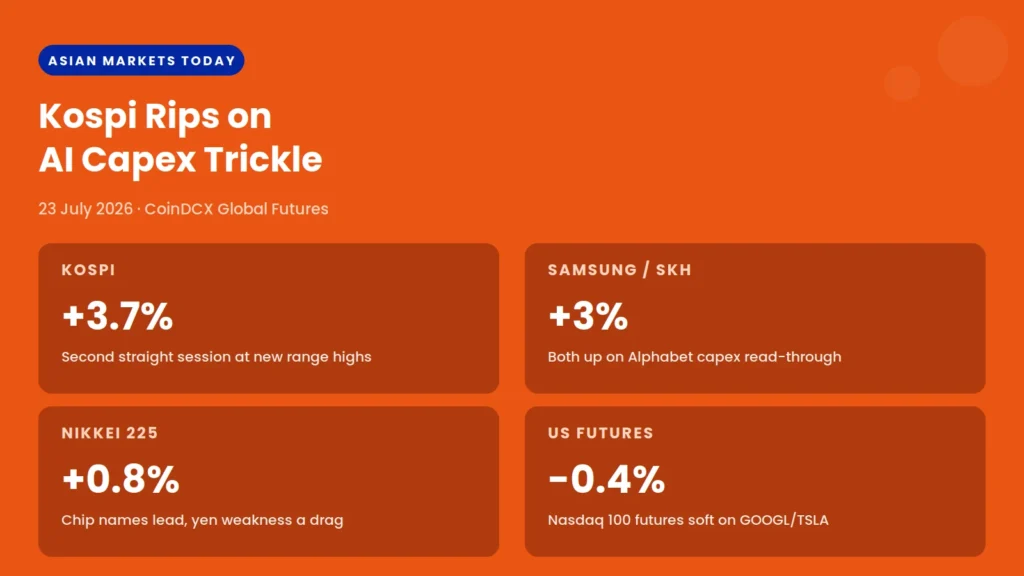
South Korea’s Kospi leads Asia with a 3.7% overnight gain, extending Wednesday’s rally to a second session. Samsung Electronics and SK Hynix are each up more than 3%, with the market reading the Alphabet capex hike as a direct demand signal for HBM3E and advanced foundry. The Kospi is now trading near its highest level of 2026.
Japan’s Nikkei 225 is up between 0.5% and 1%, supported by chip-adjacent names but held back by a weaker yen at 163.23 per dollar. MSCI Asia Pacific gained 1% broadly. India’s Nifty 50 is the notable underperformer, trading lower on caution ahead of the US session and elevated crude. US futures point to a red open with S&P 500 futures down 0.3% and Nasdaq 100 futures down 0.4%.
What Moved Wall Street Yesterday
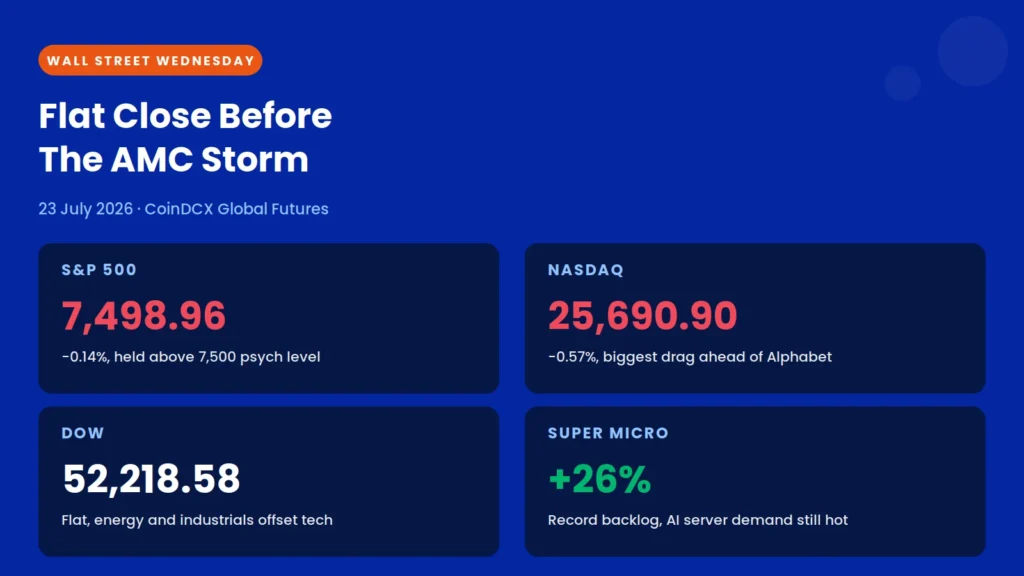
The S&P 500 closed Wednesday down 0.14% at 7,498.96, the Nasdaq Composite fell 0.57% to 25,690.90, and the Dow was almost unchanged at 52,218.58. Communication Services and Health Care were the biggest sector drags ahead of the Alphabet print, while Energy outperformed on the crude rally.
Individual moves included Super Micro Computer up 26% on a record backlog, AT&T up 4% on an earnings beat, Reddit down 9% on the Google access story, and GE Vernova down more than 7% despite a Q2 beat. The Philadelphia Semiconductor Index bounced for a third straight session as investors positioned for AI-linked chip beneficiaries into the Alphabet print. Volume was light and breadth was defensive, a classic pre-print setup.
Assets in Focus
TSLA
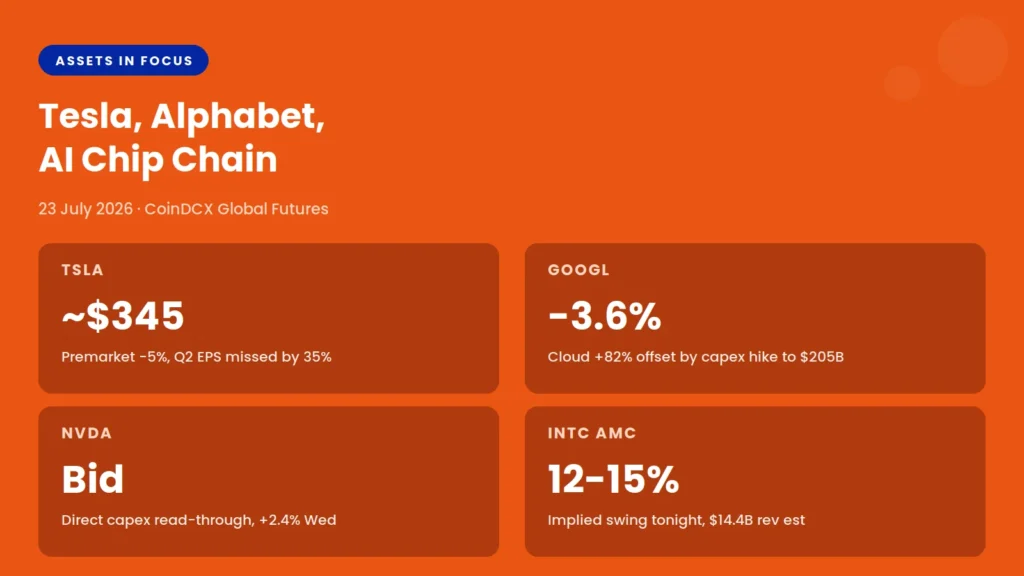
Tesla reported Q2 2026 revenue of $28.24 billion, up 26% year over year and above the $25.71 billion consensus, but adjusted EPS of $0.33 missed the $0.51 consensus by 35%. Record deliveries of 480,126 vehicles did not translate to profitability. Automotive gross margin ex-regulatory credits was 16.3% and GAAP operating margin fell to 1.4% from 4.1% a year ago. Capital expenditure jumped 142% year over year to $5.79 billion and free cash flow swung to a $1.09 billion deficit. Musk framed this as Tesla’s “largest and most exciting period of investment” with capex expected to keep rising for two to three years. Shares closed at $332.56 pre-print and are indicated near $345 in premarket after moving as low as $328. The stock is down 17% year to date and 11% for July. Options-implied swing was 7.6%, and the actual move is running roughly in line.
GOOGL
Alphabet reported Q2 2026 revenue of $119.8 billion, up 24% year over year and above the $116.9 billion consensus. Google Cloud grew 82% year over year to $24.8 billion, a sharp acceleration from Q1’s 63%, with cloud backlog at $514 billion. Reported EPS of $9.11 was inflated by a roughly $99 billion unrealized gain on SpaceX and other equity investments and is not comparable to the $2.87 estimate. The market focus is on capex, which was raised to a $195 to $205 billion FY26 range from $175 to $185 billion. Q2 capex alone was $44.9 billion, roughly double last year. Free cash flow was negative $5.9 billion for the quarter, the first negative print since IPO. Shares are down between 3.6% and 5% in premarket depending on where you look, with the debate now framed as “AI monetisation strong, AI investment intensity higher for longer.”
NVDA and the AI supply chain
The Alphabet capex hike is the cleanest read-through of the print for Nvidia, AMD, and the broader semiconductor complex. Alphabet’s incremental $20 billion of 2026 spend flows disproportionately into GPUs, custom TPUs, HBM3E memory, and networking. The Kospi rally, led by Samsung and SK Hynix up more than 3%, is the first indication that Asian supply-chain names are being repriced on that math. Nvidia gained 2.4% Wednesday and closed near recent range highs. The next scheduled catalyst for the AI chip complex is Intel’s AMC print today, and then the Microsoft, Meta, and AMD reports next week. Nvidia itself does not report until 26 August.
Index Levels to Watch
These are reference points for context, not entry or exit signals.
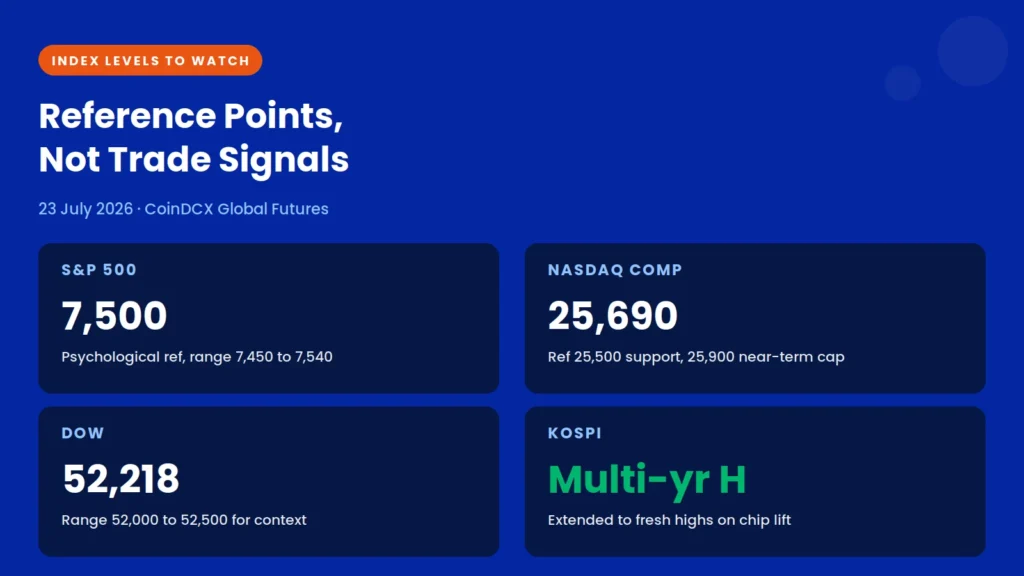
Kospi: leading Asia with a 3.7% gain overnight. The index is now at multi-year range highs after Samsung and SK Hynix moved together on Alphabet’s capex read-through.
S&P 500: closed 7,498.96 down 0.14%. Reference range 7,450 support and 7,540 recent range high. The 7,500 level is a psychological reference point that traders will watch on the open.
Nasdaq Composite: closed 25,690.90 down 0.57%. Reference range 25,500 support and 25,900 near-term overhead. Futures indicate a soft open near 25,600.
Dow Jones Industrial Average: closed 52,218.58 essentially flat. Reference range 52,000 support and 52,500 resistance.
Nikkei 225: closed near 41,800 on the current session, up between 0.5% and 1% intraday. 42,000 is the near-term reference level.
Disclaimer
This article is for educational and informational purposes only. It is not investment advice and should not be treated as a buy, sell, or hold recommendation for any security or financial product. Trading in futures and similar instruments involves significant risk including the potential loss of capital. Past performance is not indicative of future results.
Crypto products and NFTs are unregulated and can be highly risky. There may be no regulatory recourse for any loss from such transactions. For any queries, visit support.coindcx.com.
Frequently Asked Questions
Q1. Why did Tesla stock fall after Q2 2026 earnings?
Tesla beat revenue at $28.24 billion but missed on adjusted EPS by 35%, at $0.33 versus a $0.51 consensus. Auto gross margin ex-regulatory credits was 16.3%, GAAP operating margin was 1.4%, and free cash flow turned negative at -$1.09 billion. Capex rose 142% year over year. The record delivery number was already priced in from the 2 July report, so the market focused on the margin and cash flow prints, sending the stock down around 5% in premarket.
Q2. Why is Alphabet stock down despite beating Q2 estimates?
Alphabet beat on revenue, Cloud grew 82%, and Search grew 17%, but the company raised full-year 2026 capex guidance to $195 to $205 billion from $175 to $185 billion, and posted its first ever quarterly free cash flow deficit at -$5.9 billion. The market is now debating whether AI capex intensity will continue to outrun revenue for another year, sending shares 3 to 5% lower in extended trade.
Q3. What time does Intel report Q2 2026 earnings today?
Intel reports Q2 2026 earnings after the US market close on Thursday, 23 July 2026. The earnings release lands around 4:00 PM ET and the conference call begins at 5:00 PM ET, or 2:30 AM IST early Friday. Consensus is revenue of $14.42 billion and non-GAAP EPS of $0.21. Options are pricing a 12 to 15% post-earnings move.
Q4. Why is the Kospi rallying today?
South Korea's Kospi is up 3.7% because Samsung Electronics and SK Hynix, the two largest index constituents, are each up more than 3%. The move is a direct response to Alphabet's decision to raise 2026 capex by roughly $20 billion, which is expected to flow into HBM3E memory and advanced foundry orders. This is the second consecutive strong session for the Kospi.
Q5. What are US stock futures indicating for the Thursday open?
S&P 500 futures are down about 0.3% and Nasdaq 100 futures are down about 0.4% ahead of the Thursday open. Dow futures are near flat. The premarket weakness is being driven by Alphabet and Tesla, offset partly by strength in ServiceNow and Texas Instruments, and by an oil market that continues to sit at six-week highs.