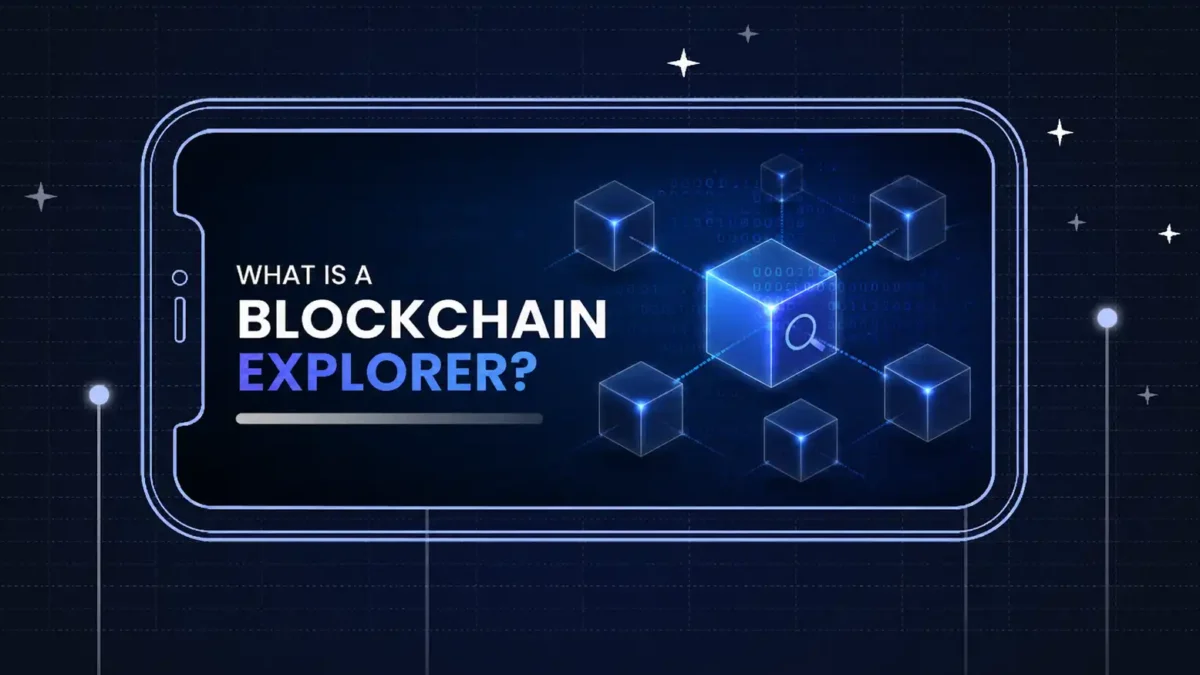


Blockchain technology has transformed how digital transactions work. It offers a decentralised system with permanent, transparent records. But this transparency only delivers value when users can easily access and interpret the data. That’s where blockchain explorers come in. These tools convert complex blockchain data into clear, readable information, making it accessible to everyone. As crypto adoption grows rapidly in India, understanding how to use explorers is becoming essential. They give you the ability to verify transactions and take full control of your digital assets — independently.
Key Takeaways
- A blockchain explorer is a public tool that displays blockchain data, including transactions, wallet balances, blocks, and overall network activity.
- Users can verify transactions using transaction IDs or wallet addresses without relying on third parties.
- Explorers improve transparency by allowing anyone to view and analyse activity across decentralised blockchain networks.
- Different blockchains use their own dedicated explorers designed specifically for their network structure.
- Wallet addresses remain pseudonymous, meaning explorers show transaction data without revealing personal identities.
- These tools also help users analyse blockchain statistics and monitor overall network performance.
What Is a Blockchain Explorer?
A blockchain explorer works like a search engine. It lets you view all information on a blockchain. You can see every transaction, wallet address, block, or smart contract. These explorers retrieve data from blockchain nodes and present it in user-friendly formats with organised tables.
These platforms make complex cryptographic data accessible to beginners. Each blockchain network has unique explorers reflecting its varied data structures. Blockchain explorers are typically free. They require no registration at all. Anyone with internet access can look up any transaction on public blockchains. This transparency is blockchain’s core principle, distinguishing it from traditional financial systems with private records.
Also Read: What is Blockchain Technology
What Information Can You See on a Blockchain Explorer?
Blockchain explorers provide a wealth of information for every crypto transaction like sender, recipient, amount, and fee—alongside wallet balances, block confirmations, and even smart contract interactions.
Understanding what data you can access helps. Here are the primary types of information available.
Transaction History
Every transaction ever made is recorded and can be accessed through explorers. When you search for a transaction ID, the explorer clearly shows complete details. The page displays the sender’s wallet address and the recipient’s wallet address. It also shows the transferred amount and the transaction fee paid. A timestamp indicates when the transaction was recorded on the blockchain. The explorer also displays the block number containing that transaction. This transparency allows users to track fund movements clearly. You can see where the transaction originated and where funds moved next. Each transaction becomes part of a permanent and verifiable audit trail. This visibility helps users confirm transfers without relying on intermediaries.
Also Read: What is Blockchain Transactions
Wallet Balances
Enter any wallet address into an explorer to view the balance. Transaction history appears alongside the wallet address information. The current balance of crypto held in that address becomes visible. The explorer also shows the total value received by the address. It also displays the total value sent from that wallet address. The number of transactions associated with the address is listed. Token holdings also appear on networks that support multiple tokens. This feature helps users verify available funds before sending transactions. Users can clearly check the balance stored in a wallet address. However, explorers do not reveal the wallet owner’s identity. Wallet addresses remain pseudonymous rather than completely anonymous.
Block Confirmations
Blocks group multiple transactions recorded together on the blockchain. Explorers show details about each block in the network. Block height shows the block’s position within the chain. A timestamp indicates when the block was created. The explorer also lists the number of transactions inside it. Block rewards paid to miners or validators appear in the details. Block size and difficulty information also appear on the page. The block hash links the block to its predecessor. Block confirmations show how many blocks were added afterward. More confirmations usually mean stronger transaction finality. Many platforms require confirmations before accepting a transaction. Bitcoin transactions usually require about six confirmations. Ethereum transactions often require several confirmations, depending on the platform.
Additional Data Points
Modern blockchain explorers offer sophisticated information. Smart contract details appear for blockchains like Ethereum. You can view contract code, interactions, or token information. Gas fees show real-time data on transaction costs. Network statistics display hash rate, difficulty, or active addresses. Rich lists rank addresses by balance. Mining pool information shows which pools are mining blocks.
Popular Blockchain Explorers
Each blockchain network usually has its own dedicated explorer tool. These explorers are designed according to the structure of that network. They help users easily search transactions, blocks, and wallet activity. Below are some widely used blockchain explorers that many crypto users rely on.
1) Etherscan
Etherscan is one of the most widely used blockchain explorers today. It focuses entirely on the Ethereum blockchain network. Launched in 2015, it became a trusted tool for Ethereum users. The explorer allows users to track ETH transactions and wallet balances. It also shows token transfers across ERC-20 and ERC-721 tokens. Users can view smart contract details and verified source code. A real-time gas tracker helps users estimate transaction fees. Developers can also access blockchain data through Etherscan APIs. The interface remains simple enough for beginners to navigate.
2) Blockchain.com Explorer
Blockchain.com is one of the earliest blockchain explorers created. It initially focused on tracking Bitcoin transactions and block data. The platform later expanded to support Ethereum and Bitcoin Cash. Users can easily search transactions, wallet addresses, or block information. Price charts and market data appear alongside transaction records. The explorer also shows pending transactions through mempool visualisation. Mining statistics and network activity data are also available. Its clean interface makes it accessible for new crypto users.
3) Solscan
Solscan is a widely used explorer for the Solana blockchain. Solana became popular due to its high-speed transaction processing. Solscan allows users to track transactions and wallet activity in real time. The explorer also displays NFT collections and marketplace activity. Validator performance metrics appear for users studying network performance. Token analytics show distribution patterns across different wallet holders. Solscan helps users understand activity across Solana’s growing ecosystem.
Other Substantial Explorers
Depending on which blockchain you’re using, these explorers are worth knowing. BscScan handles Binance Smart Chain transactions. Polygonscan covers the Polygon network, favoured for lower-fee Ethereum transactions. Blockchair is a multi-blockchain explorer supporting seventeen networks. Tronscan serves the TRON blockchain exclusively. Explore these options to find the one that matches your needs.
Also Read: How Crypto Assets and Blockchain Differ
Why Blockchain Explorers Matter
Blockchain explorers aren’t just convenient tools. They’re fundamental to the entire ecosystem. Understanding their importance helps you appreciate why transparency is a core principle.
Transparency
Traditional financial systems operate behind closed doors. When you send money through a bank, you trust the institution. You can’t independently verify what happens. Blockchain explorers change this paradigm entirely. Every transaction becomes publicly transparent. This transparency serves different purposes. It prevents fraud by detecting suspicious activity. Anyone can trace it immediately. It builds trust in the system because users don’t need intermediaries. They can verify everything themselves. Indian users who have experienced challenges with traditional banking systems gain unprecedented control and visibility over their digital assets through this level of transparency. Transparency also enables accountability in the system. If a platform claims to have certain reserves, blockchain explorers allow users to independently verify these claims. This “don’t trust, verify” approach is fundamental to blockchain’s value proposition.
Transaction Verification
One of the most practical uses of a blockchain explorer is verifying transactions. When you send crypto to someone, you share the transaction ID, which can be checked on the explorer immediately, eliminating disputes entirely. It also provides instant proof of payments, making it easier to keep track.
Businesses accepting crypto payments in India benefit greatly. Explorers provide a reliable way to confirm payments, so you don’t wait for email notifications or rely on third-party payment processors. The transaction is either on the blockchain or it isn’t. Verification also helps identify issues quickly. If a transaction takes longer than expected, you check the explorer. You see if it’s pending or stuck. You learn if insufficient fees were paid. This diagnostic capability helps users troubleshoot problems independently.
Auditability
Blockchain explorers create a permanent audit trail that provides a solid digital record of every transaction. They are not only timestamped automatically but also linked to previous transactions. This creates an unbreakable chain of evidence. Auditability has profound implications for diverse use cases.
For tax purposes, Indian crypto users can generate complete transaction histories. They show all crypto activity throughout the financial year. This documentation is increasingly important as tax authorities develop clearer guidelines. For businesses, blockchain explorers enable clear accounting. Companies can prove their reserves using blockchain explorers, which can demonstrate how customer funds are managed and provide stakeholders with verifiable financial data. This level of auditability exceeds what’s possible with traditional systems. For regulatory compliance, explorers help authorities track illegal activities. User privacy gets preserved simultaneously. Law enforcement can follow transaction flows. They don’t need permission from any centralized entity. Blockchain becomes both traceable and resistant to censorship.
How to Use a Blockchain Explorer (Step-by-Step Guide)
Using a blockchain explorer is straightforward. Understanding the basics helps you navigate these tools.
Step 1: Choose the Right Explorer
First, identify which blockchain network you need. If you’re dealing with Bitcoin, use Blockchain.com. For Ethereum transactions, Etherscan is your best choice. Make sure you’re using the correct explorer. Searching for a Bitcoin transaction on Etherscan won’t yield results.
Step 2: Navigate to the Explorer Website
Open your web browser and go to a blockchain explorer website. Visit etherscan.io for Ethereum transactions or blockchain.com/explorer for Bitcoin. These sites are free and don’t require registration. They’re freely welcoming to everyone.
Step 3: Enter Your Search Query
Blockchain explorers have a prominent search bar. It usually sits at the top. You can search using assorted types of information. The transaction ID is a long string of letters. It uniquely identifies a transaction completely. The wallet address is the public address of a sender. Block number specifies the block you want. The token name helps find information about tokens. Simply paste your query into the search bar. Press enter to see results. The explorer will automatically detect what you’ve entered. It displays the relevant information immediately.
Step 4: Review Transaction Details
When viewing a transaction, you’ll see sections. Basic information includes the transaction hash. Status shows success or failure. Block number appears alongside timestamp. The addresses involved are listed clearly. Check the status first to confirm completion. Value appears alongside fees paid. You’ll see the amount transferred. The transaction fee paid is shown. On Ethereum, this includes gas price. Gas used appears too. Understanding these fees helps you optimize future transactions. Confirmations show how many blocks were added. More confirmations mean greater finality. For small transactions, one or two confirmations suffice. Larger amounts typically require six confirmations.
Step 5: Check Wallet Address Information
When searching for a wallet address, you see the current balance. Its value in fiat currency appears. Complete transaction history displays in chronological order. Token holdings appear if applicable. The total number of transactions is shown. You can click on individual transactions. This views their details completely. It’s useful for tracking the source of funds. You see where they went after leaving.
Step 6: Explore Block Information
Clicking on a block number shows you all transactions. You see, when it was mined. You also learn who mined it. Technical details like block size appear. Difficulty ratings are shown as well. This information is more relevant for advanced users. It helps you understand the broader context.
Step 7: Use Additional Features
Most explorers offer advanced features. Charts display network health. Transaction volume appears alongside fee trends. Token trackers let you explore tokens. Their holders are listed too. For Ethereum, view the smart contract code. Verify it directly on the platform. Developers can access API documentation. They integrate explorer data into applications.
Practical Example:
Let’s say you sent ETH to a friend. You want to verify it arrived. Your wallet gives you a transaction hash. It looks like a long string of characters. You should go to etherscan.io first. Paste the transaction hash into the search bar. Press enter to view the transaction details. Check that the status clearly shows “Success”. Verify the recipient address matches your friend’s address. Confirm the amount shows the correct ETH. Note the number of confirmations shown. Twelve confirmations are ideal for Ethereum transactions. Your friend can do the same verification. This creates mutual confidence that the transaction was completed correctly.
Limitations of Blockchain Explorers
Blockchain explorers are powerful tools. They have certain limitations, though. Users should understand these to set appropriate expectations.
No Identity Details
One of the most significant limitations is identity. Blockchain explorers cannot reveal real-world identities. They can only display public wallet addresses. Wallet addresses appear only as long pseudonymous strings without personal identification attached. Unless users disclose ownership through exchanges, public statements, or investigations, the explorer cannot link an address to an individual. While this design protects user privacy, it can make verifying transaction legitimacy or tracing fraudulent activity to specific people more difficult.
Complex Interface for Beginners
Blockchain explorers often present a steep learning curve for new users. Their interfaces are typically data-heavy and filled with technical terminology such as hash rates, gas fees, nonce values, and transaction IDs. A single explorer page may contain multiple sections for blocks, tokens, contracts, and network charts. For users without technical backgrounds, this large volume of information can feel overwhelming and difficult to interpret. As a result, beginners may struggle to identify which details matter when simply trying to verify a transaction.
Conclusion
Blockchain explorers provide public visibility into blockchain activity and play an essential role in maintaining transparency across networks. They allow users to verify transactions independently, monitor network activity, and analyse blockchain data without relying on intermediaries. By offering access to publicly recorded information, explorers help maintain the integrity of decentralised ledgers.
Although blockchain explorers do not reveal personal identities and have certain privacy limitations, they remain important tools for anyone interacting with blockchain systems. Casual users often check transaction confirmations, developers analyse on-chain data when building decentralised applications, and researchers study network trends through these platforms. CoinDCX users can use transaction hashes to check confirmations, helping verify whether a transaction has been recorded on the blockchain.
FAQs
Q1. Are blockchain explorers free?
Yes, most blockchain explorers are free. They require no registration whatsoever. They generate revenue through advertising or donations. Premium API services for developers exist, too. Elementary exploration features remain inviting to everyone.
Q2. Can you track wallet owners on blockchain explorers?
No, blockchain explorers cannot reveal identities. They only display public addresses. Transaction data appears alongside them. Identities remain anonymous unless the owner discloses information. The address might be linked via external sources, such as exchanges.
Q3. Are blockchain explorers safe?
Yes, blockchain explorers are generally safe. They only display publicly available blockchain data. They don't require you to connect your wallet. Private keys never get shared with them. Always ensure you're using reputable explorers. This helps you avoid phishing sites.
Q4. Do explorers work for all blockchains?
No, each blockchain typically has committed explorers. Bitcoin transactions require Bitcoin explorers exclusively. Ethereum transactions need Ethereum explorers instead. Some multi-chain explorers support a handful of blockchains. No single explorer covers every blockchain network. Visit the explorer designed for your particular blockchain.
Q5. Can transactions be hidden on blockchain explorers?
No, transactions on public blockchains cannot be hidden. They're permanently recorded on the distributed ledger. Some privacy-focused cryptos use special protocols, though. These obscure transaction details while maintaining blockchain integrity. Check the specific blockchain's privacy features before transacting.