
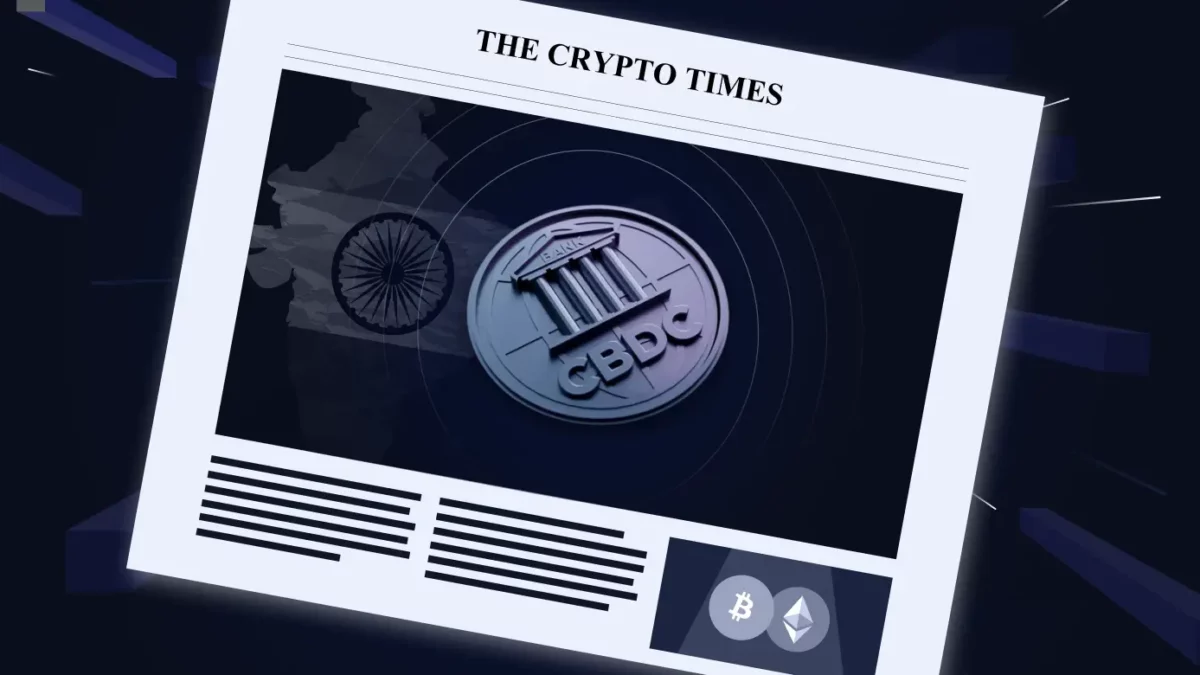


RBI to launch deposit tokenisation pilot on October 8, 2025, using blockchain-based settlement under the central bank’s digital rupee (CBDC) framework. The move aims to reduce crypto-related risks by offering a sovereign, regulated digital currency backed by the Reserve Bank of India.
For readers new to the concept, explore our detailed explainer on Central Bank Digital Currencies and how India’s CBDC fits into global trends.
India CBDC Launch Date Confirmed
The Reserve Bank of India (RBI) is set to roll out a pilot for deposit tokenisation under its digital currency initiative on October 8, 2025. This milestone marks a crucial phase in India’s CBDC roadmap and is already making headlines across India CBDC news updates.
The initiative aims to strengthen the country’s financial infrastructure, reduce crypto-related risks, and modernize blockchain-based settlements.
India Heading Toward a ‘Crypto-Ready’ Economy
The project highlights how India is bridging the gap between crypto innovation and regulatory control, introducing tokenized deposits under a regulated CBDC framework.
According to RBI officials, the pilot will initially involve select Indian banks, which will issue and settle tokenised deposits, digital representations of traditional deposits, on a secure blockchain platform. The infrastructure will build upon the wholesale CBDC framework first tested in 2022.
A Shift Toward Regulated Tokenisation
Unlike decentralized crypto assets like Bitcoin or Ethereum, the RBI-backed tokens will carry sovereign backing and full compliance with regulatory norms. The initiative reflects India’s cautious but progressive approach, encouraging innovation while maintaining control and stability.
“Tokenisation represents the next stage in India’s digital finance journey,” said a senior RBI official. “We’re focused on enabling innovation without compromising regulatory oversight or systemic safety.”
The pilot follows earlier CBDC rollouts in both retail and wholesale segments since late 2022. While India’s CBDC adoption among retail users remains gradual, tokenised deposits are expected to unlock real-time settlements, lower transaction costs, and improve liquidity management.
Government Endorsement and Market Interest
Union Commerce Minister Piyush Goyal recently reaffirmed the government’s support for India’s central bank digital currency while discouraging private, unregulated cryptos that carry systemic risk.
He emphasized that the digital rupee’s next phase could function like a regulated stablecoin, offering the speed of crypto with the trust of traditional banking.
JUST IN: 🇮🇳 Union Minister of Commerce & Industry Piyush Goyal on Crypto👇
– India doesn’t support private cryptos without govt backing
– Such assets are heavily taxed.
– India to launch RBI-backed digital currency #CBDC soon
– It’ll be safe, transparent & #blockchain-based pic.twitter.com/lFakwBXKkX— Bitinning (@bitinning) October 7, 2025
Fintechs are also aligning with this vision. Earlier in 2025, Cred partnered with YES Bank to integrate e-rupee wallets, while PayPal-backed Mintoak acquired CBDC startup Digiledge, signaling investor confidence in the regulated Indian digital currency ecosystem.
Curbing Crypto Risks Through Innovation
The RBI’s approach differs from blanket bans seen in other nations. Instead, it focuses on “use, innovate, and regulate”, a framework that integrates blockchain under RBI oversight. Experts say the India CBDC pilot could pave the way for broader integration into money markets, treasury bills, and cross-border settlements.
“This move strengthens India’s reputation as a cautious yet forward-looking digital economy,” said analyst Rachit Sharma. “It’s not anti-crypto, it’s pro-trust.”
For a deeper understanding of India’s evolving regulatory stance, read our detailed blog on Crypto Legal Status in India (2025)
What Comes Next
If successful, the pilot could expand into interbank settlements, cross-border transfers, and money market instruments, marking a full-scale rollout following the Indian digital currency launch date.
The RBI’s efforts align with India’s G20 commitments to promote secure digital public infrastructure (DPI) and enhance financial inclusion through blockchain-led innovation.
Conclusion
As India prepares for its next phase of digital finance transformation, the India CBDC launch date marks a new chapter in monetary innovation. The digital rupee not only symbolizes regulatory progress but also reinforces India’s position as a global leader in secure, tech-driven financial inclusion.
For a deeper look at how taxation, policy, and blockchain intersect, explore our Crypto Tax in India blog.
Stay updated on India’s CBDC journey and trade top digital assets securely.
Download the CoinDCX App below to explore the safest and most compliant way to invest in crypto in India.

Disclaimer: The information provided here is for educational purposes only and should not be considered investment or financial advice. Always follow official RBI and government announcements for the latest India CBDC news and regulatory updates.
FAQs
Is digital currency going to replace cash in India?
No, India’s digital currency (CBDC) is not meant to replace cash but to complement it. The RBI aims to provide a digital alternative that offers the convenience of crypto with the trust of central-bank-backed money. Physical cash will continue to exist, especially for offline and rural transactions where digital access is limited.
Is India ready for 100% digital currency?
Not yet. While India has made remarkable progress in digital payments through UPI, a full transition to a 100% digital currency system would require stronger infrastructure, cybersecurity, and financial literacy. The ongoing India CBDC pilot helps the RBI assess these readiness factors before wider rollout.
What is the difference between UPI and CBDC?
UPI is a payment interface that moves existing bank money between accounts, whereas the CBDC (Central Bank Digital Currency) is actual digital money issued by the RBI, a digital version of cash. With CBDC, transactions occur directly between wallets without the need for traditional bank intermediaries.
When is the Indian digital currency launch date?
The India CBDC launch date for the next pilot phase is October 8, 2025, when the RBI begins deposit tokenisation trials using blockchain settlement. This marks a key milestone in the digital rupee roadmap and could lead to a broader rollout in 2026 if successful.


