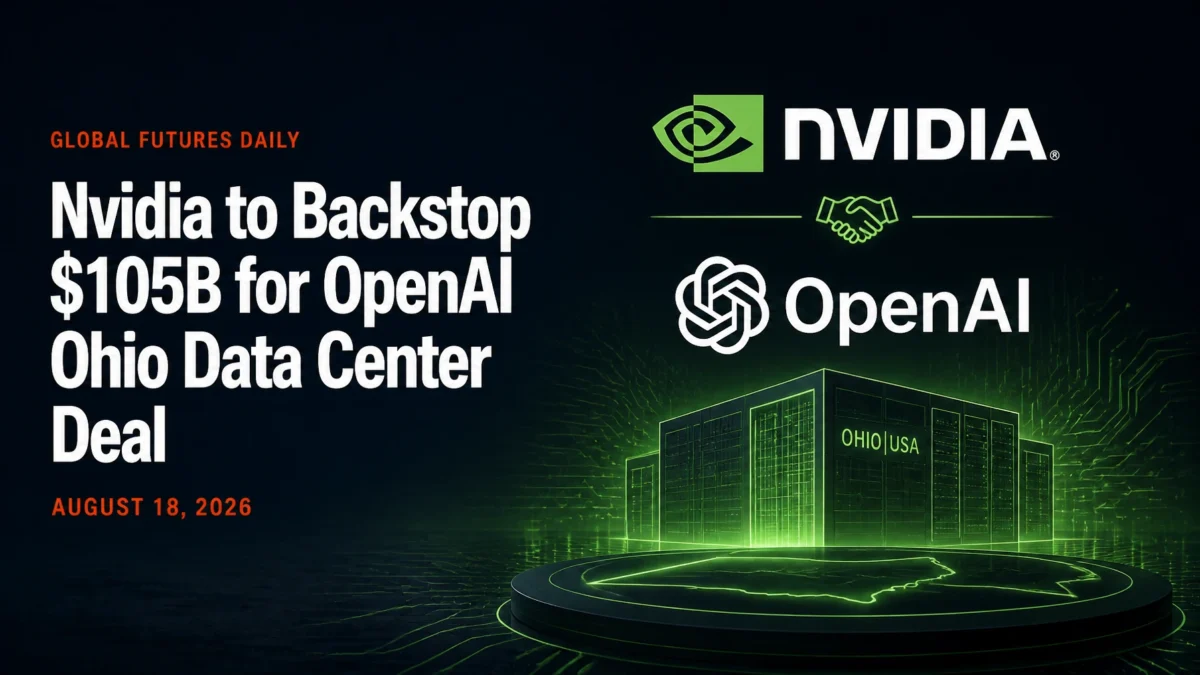


Nvidia agrees to backstop up to $105B for OpenAI’s Ohio data center. SanDisk rips 9% past $1,800. Brent tops $90 as US-Iran MOU expires and yields climb.
TLDR
Nvidia has agreed to guarantee up to $105 billion in lease and power obligations for OpenAI’s new data center campus in Pike County, Ohio, the largest financial backstop of its kind the chipmaker has ever put on a single project. SoftBank’s SB Energy will build and own the facility. OpenAI will lease it for 20 years. Nvidia is separately investing $1.5 billion in SB Energy. The first 4.25 gigawatts of computing capacity come online in 2028, with an option for another 3.75 gigawatts, and the site will exclusively use Nvidia GPUs, potentially 1.5 million chips generating $150 to $200 billion in chip revenue per generation.
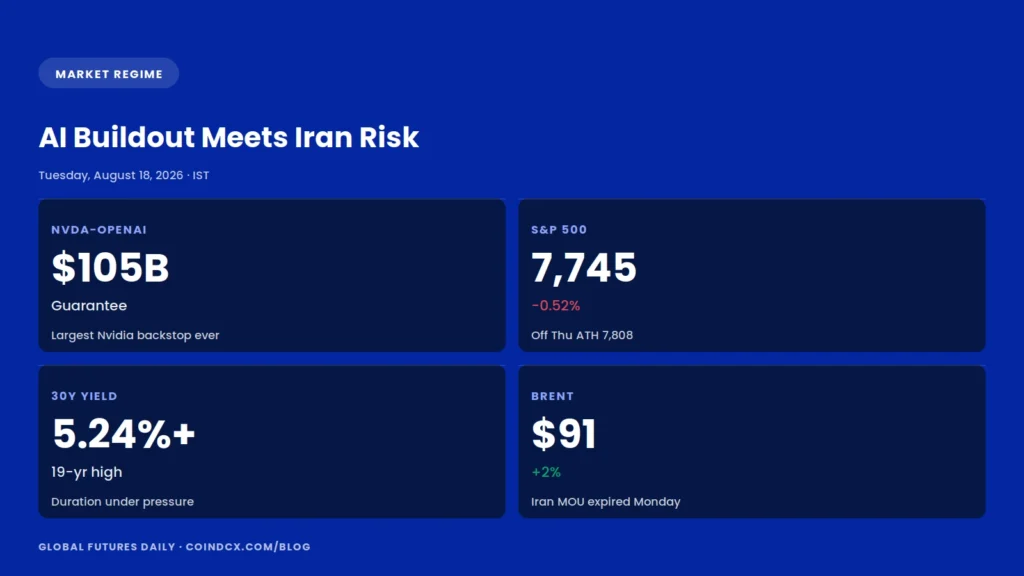
Wall Street pulled back from record highs as Brent crude jumped toward $91 and the 30-year Treasury yield hit its highest level since 2007. The S&P 500 fell 0.52% to 7,745.06. The Nasdaq Composite slipped 0.32% to 26,644.91. SanDisk led the tape with a 9% rally to $1,786.85 as the memory trade extended its five-day winning streak. SpaceX rose 4.45% after Bloomberg reported family offices from three continents had built a combined $3.8 billion stake in the company. FOMC minutes hit tomorrow. NVDA fiscal Q2 earnings land August 26.
Market Regime
The tape is threading a narrow path between two forces pulling in opposite directions. On one side, the AI infrastructure trade keeps getting a bigger fiscal shape. Nvidia’s $105 billion guarantee is not a headline dollar figure. It is a hard financial commitment filed with the SEC, larger than the company’s earlier CoreWeave backstop, and it extends Nvidia’s role from GPU supplier to bank for the entire AI buildout. Anthropic disclosing $11.5 billion in Q2 revenue this week only reinforces the point. Compute demand is real and it is compounding.
On the other side, macro is getting harder to ignore. The US-Iran memorandum of understanding expired Monday. Trump said publicly he does not see the war ending soon. Brent settled near $91. Iranian officials floated escalation in the Strait of Hormuz. The 30-year Treasury yield touched a 19-year high. Retail earnings from Walmart, Target, Home Depot, and Lowe’s hit this week alongside FOMC minutes that could show a hawkish tilt after three dissents at the July meeting. The AI trade is bidding structural demand. The oil and bond markets are pricing in a hotter, longer inflation path. The next two sessions decide which side wins the tape.
Bullish Factors
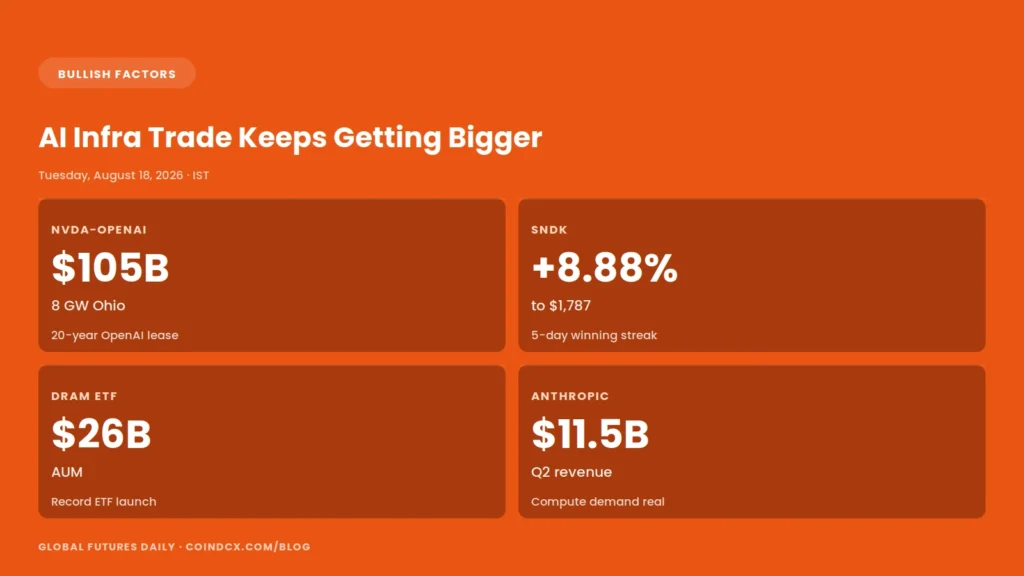
- Nvidia’s $105 billion Ohio backstop is the largest single-project financial guarantee in the company’s history and puts a floor under the AI infrastructure narrative through the end of the decade.
- SanDisk closed up 8.88% to $1,786.85 and traded above $1,800 after-hours, extending a five-day winning streak. The stock is up roughly 656% over the last twelve months and BofA reiterated a Buy on Micron with a path to $200 to $250 by fiscal 2030.
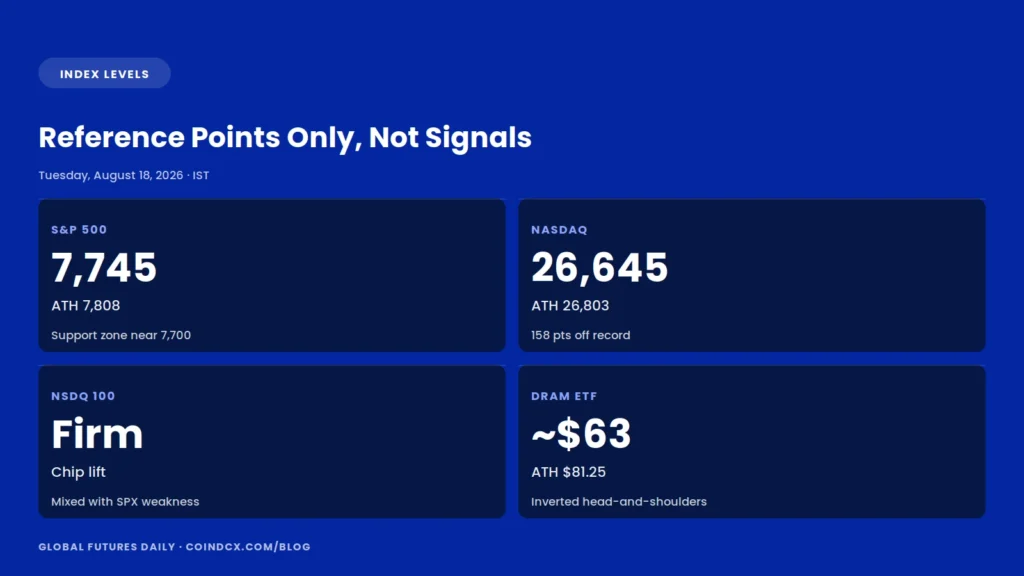
- The Roundhill Memory ETF (DRAM) has added $3.9 billion in the last 30 days and now sits at $26 billion in assets, making it one of the most successful ETF launches ever. The chart has formed an inverted head-and-shoulders pattern under the $81.25 all-time high.
- SpaceX gained 4.45% after Bloomberg 13F data showed family offices from the Americas, Europe, and the Middle East had built up a combined $3.8 billion stake. Hyatt heir Nick Pritzker’s family office holds $1.8 billion. Gina Rinehart’s Hancock Prospecting holds $1.4 billion.
- Anthropic disclosed Q2 revenue surged past $11.5 billion, validating that the AI compute cycle is still accelerating rather than plateauing.
- Kospi opened up over 2% at 7,127.77 this morning, reclaiming the 7,100 level after being closed Monday for the Liberation Day holiday. Tech and semiconductor hardware led the tape.
Bearish Factors
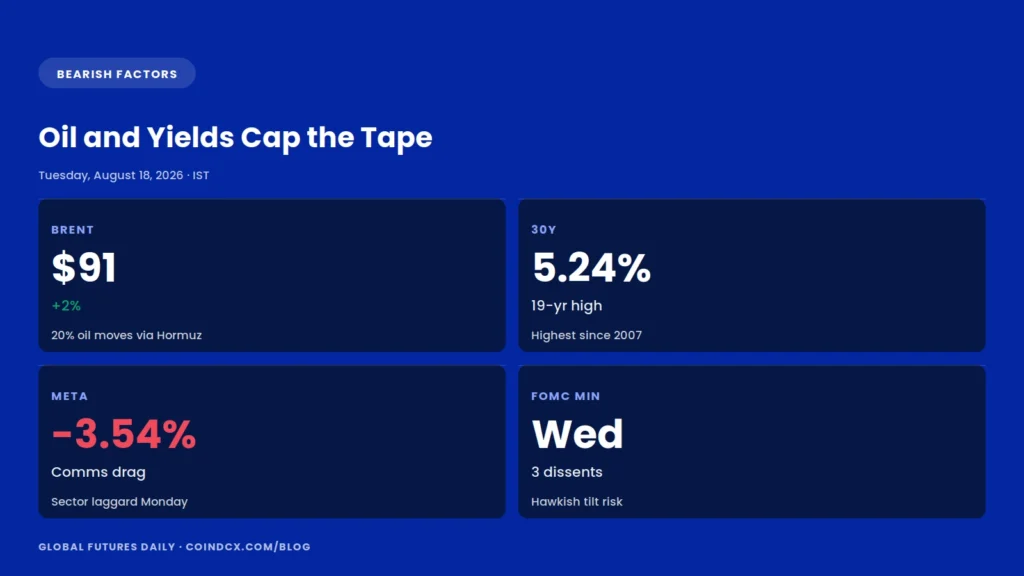
- The US-Iran memorandum of understanding expired Monday. Trump said he does not see the war ending anytime soon. Iranian officials suggested the country may shift from a defensive to an offensive posture and named the Strait of Hormuz as the escalation lever.
- Brent crude settled near $91 a barrel and WTI traded above $84. Every dollar of sustained oil above $85 feeds directly back into US CPI through fuel and freight.
- The 30-year Treasury yield hit its highest level since 2007. The 10-year rose 5 basis points to 4.68%. Rising long-end yields punish duration and pressure equity multiples.
- Meta Platforms fell 3.54% and dragged the communication services sector to the bottom of the S&P leaderboard. Carvana dropped 7.28% as the biggest single-name loser.
- FOMC minutes from the July 28 to 29 meeting release Wednesday. Three members dissented in favor of a hike. If the minutes read hawkish, September odds could move higher into the retail earnings week.
- Home Depot, Walmart, Target, and Lowe’s all report this week. Friday’s soft retail sales print already put a question mark next to the consumer. Any guide cut carries larger tape weight than usual.
Asian Markets This Morning
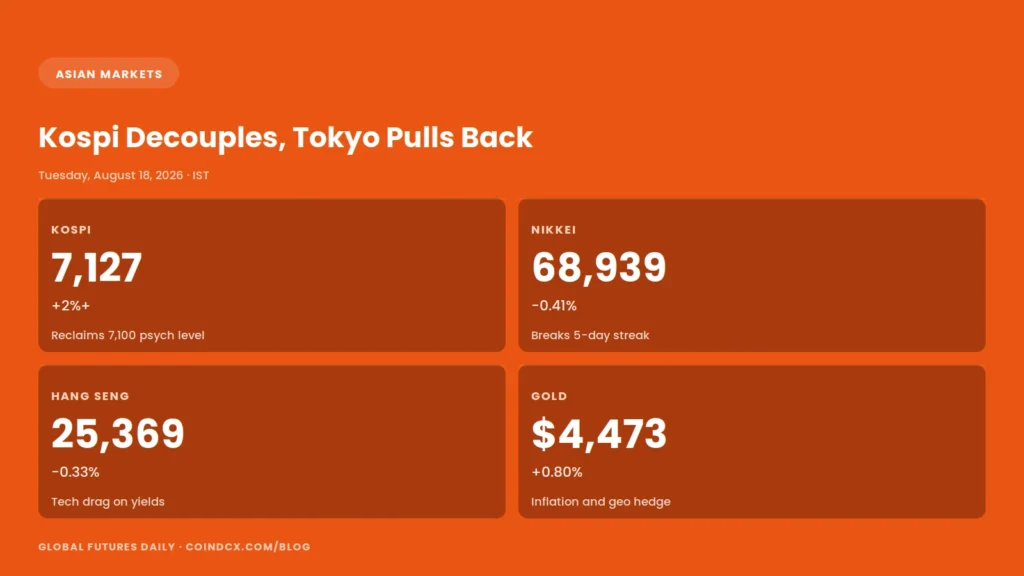
The Nikkei 225 opened down 372 points and is trading around 68,938.96, off 0.41%, breaking a five-day winning streak that had added over 3,600 points. Profit-taking and rising global yields pulled Tokyo lower after Wall Street’s Monday drift.
The Kospi is the standout, up more than 2% at 7,127.77 after being closed Monday for the Liberation Day substitute holiday. Semiconductor hardware and battery names led. The index decoupled cleanly from the weaker regional tape, extending the momentum from Friday’s 2.42% Kospi close of 6,977.94.
Hang Seng opened weaker at 25,368.87, off 0.33%, with tech under pressure from the higher US yield backdrop. Shanghai and the CSI 300 traded quietly. Australia’s ASX 200 was firmer.
What Moved Wall Street Yesterday
Nvidia’s SEC filing hit mid-morning and quickly became the anchor headline of the session. The market read the $105 billion guarantee as validation of AI capex sustainability, but the reaction on NVDA itself was muted, closing near flat as the broader chip complex absorbed the news. SanDisk gained 8.88% to $1,786.85 on continued memory strength and a fresh BofA note. Micron rose 2%. The DRAM ETF added roughly 4%.
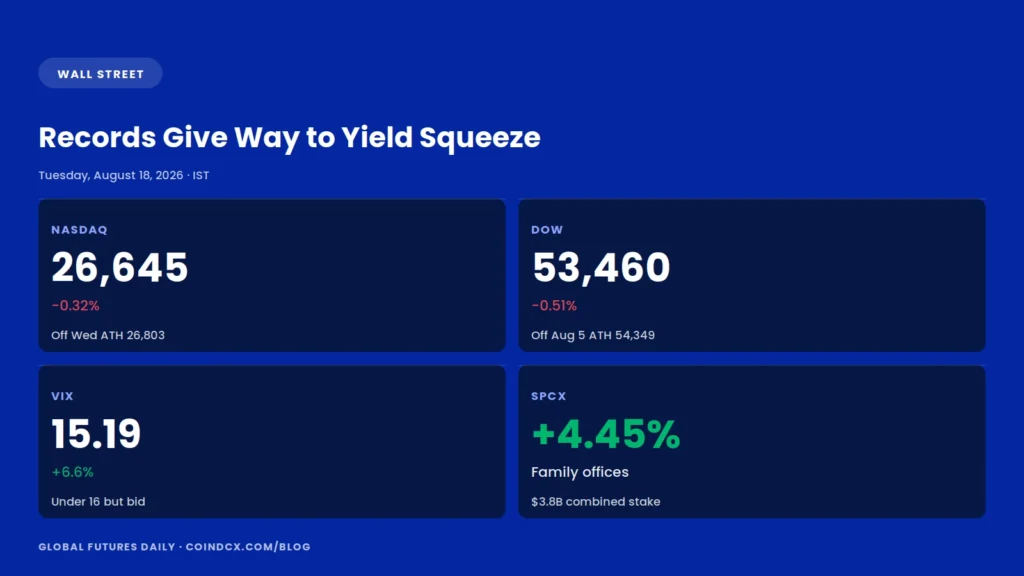
Oil was the counter-story. Brent jumped toward $91 on the Iran MOU expiration and fresh escalation rhetoric. Energy names outperformed. The 30-year yield touched its highest level since 2007. The 10-year yield climbed 5 basis points to 4.68%. The VIX rose to 15.19. Gold added 0.80% to $4,472.90 as investors added inflation and geopolitical hedges.
Losers were led by Meta at down 3.54% and Carvana at down 7.28%. Industrials led S&P sectors higher. Utilities and communication services lagged. The retail earnings ahead this week set the near-term consumer tone.
Assets in Focus
NVDA
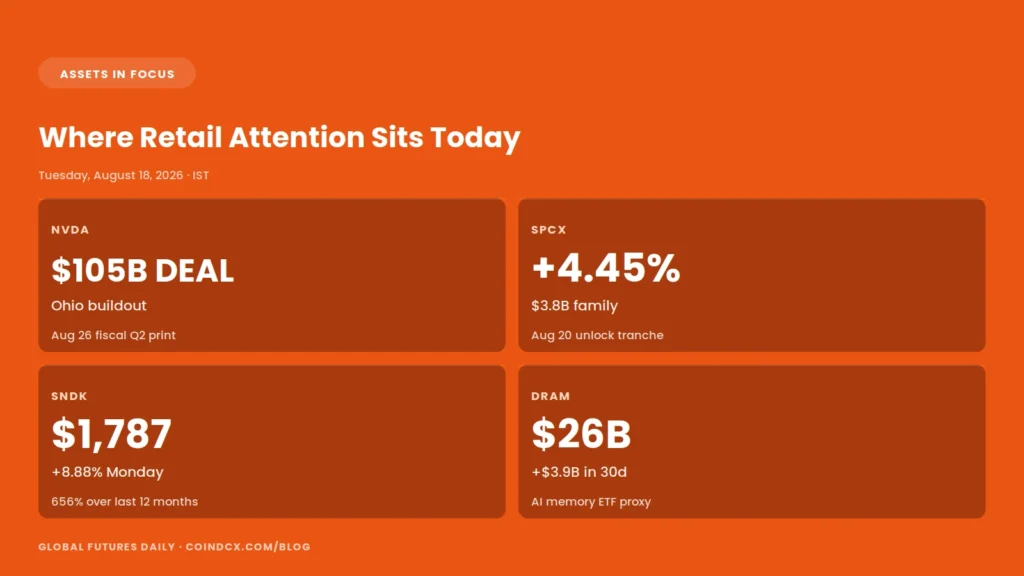
Nvidia closed roughly flat despite disclosing the $105 billion OpenAI Ohio backstop. The market has now digested the terms. Nvidia will guarantee up to $105 billion in lease and power obligations to SB Energy, provide the exclusive GPUs for a facility that could scale to 1.5 million chips, and invest a separate $1.5 billion in SB Energy. The tape is holding its breath for Nvidia’s own fiscal Q2 print on August 26, which is the biggest US earnings event of the quarter.
SPCX
SpaceX rose 4.45% on Monday. The move had two triggers. First, Bloomberg reported that family offices from three continents disclosed a combined $3.8 billion stake through 13F filings. Nick Pritzker’s family office holds $1.8 billion. Gina Rinehart’s Hancock Prospecting holds $1.4 billion. Second, fresh positive analyst notes hit ahead of the second lockup tranche expiration on August 20. The stock is holding above the $135 IPO price.
SNDK
SanDisk gained 8.88% to close at $1,786.85 and traded above $1,800 after-hours on Monday. That is a five-day winning streak. The 52-week range is $41 to $2,354. Volatility is running at 11%. The next scheduled catalyst is the Q1 fiscal 2027 print, expected around November 4. BofA reiterated Buy on Micron with a fiscal 2030 EPS target above $230.
DRAM
The Roundhill Memory ETF has become the tradable proxy for the AI memory cycle for retail. Assets are now $26 billion, up $3.9 billion in the last 30 days. It launched April 2, 2026. The core holdings are Samsung, SK Hynix, and Micron, roughly 70% of the fund. The chart has formed an inverted head-and-shoulders pattern under the $81.25 all-time high.
XLE
Energy is the leverage on the Iran story. Brent settled near $91 and every escalation headline on the Strait of Hormuz adds to the bid. The first 30 minutes of the US cash session is the tell. Flat or lower oil hands the day back to the AI and chip trade. Another 3% up in oil pulls the tape lower on inflation risk.
Index Levels to Watch
Brent crude: near $91. WTI: near $84.
S&P 500: closed 7,745.06. All-time intraday high was 7,808.42 last Thursday. Near-term reference sits around 7,700.
Nasdaq Composite: closed 26,644.91. All-time high was 26,803 last Wednesday.
Dow Jones: closed 53,459.78. All-time high 54,349.06 from August 5.
Russell 2000: closed 3,057.54. Small caps continue to underperform the mega caps.
VIX: 15.19, up 6.6%. Still below 16 but on the move.
10-year Treasury yield: 4.68%. 30-year yield: highest level since 2007.
Disclaimer
This blog is for information and market context only. Nothing here is trading advice, a recommendation, or a solicitation to buy or sell any security or futures contract. Trading in leveraged products carries significant risk, including potential loss beyond your initial margin. Prices and levels referenced are as of publication and change constantly. Consult a SEBI-registered advisor before making investment decisions. CoinDCX Global Futures allows Indian traders to access US stock perpetuals in INR under FEMA-compliant frameworks.
Frequently Asked Questions
Q1. What does the $105 billion Nvidia and OpenAI deal actually mean for Nvidia stock?
The deal is a financial guarantee, not upfront cash. Nvidia agreed to backstop up to $105 billion in OpenAI's lease and power obligations to SB Energy over the 20-year lease. In exchange, the Ohio site will use only Nvidia GPUs, which the company said could translate into 1.5 million chips and $150 to $200 billion of Nvidia revenue per chip generation deployed there through 2030. It is the largest arrangement of its kind Nvidia has ever put on a single project. The stock reaction Monday was muted because the market wants to see how the guarantee is treated on Nvidia's balance sheet at the August 26 earnings print.
Q2. Why is oil jumping today?
The US-Iran memorandum of understanding expired Monday. Trump said publicly he does not see the war ending soon. An Iranian official told Reuters the country may shift from a defensive to an offensive policy if diplomacy fails and named the Strait of Hormuz. Brent settled near $91. Roughly 20% of global oil trade moves through the strait.
Q3. What is the DRAM ETF and why does it matter right now?
The Roundhill Memory ETF, ticker DRAM, launched April 2, 2026 and now holds $26 billion in assets, one of the most successful ETF launches ever. It is a concentrated play on AI memory names, with Samsung, SK Hynix, and Micron making up roughly 70% of the fund. Retail traders use it as a single-ticker way to track the AI memory cycle. It added $3.9 billion in the last 30 days alone.
Q4. When does Nvidia report earnings?
Nvidia reports fiscal Q2 2027 results after the US market close on Tuesday, August 26, which is early Wednesday morning IST. It is the largest single earnings event of this quarter for US equities.