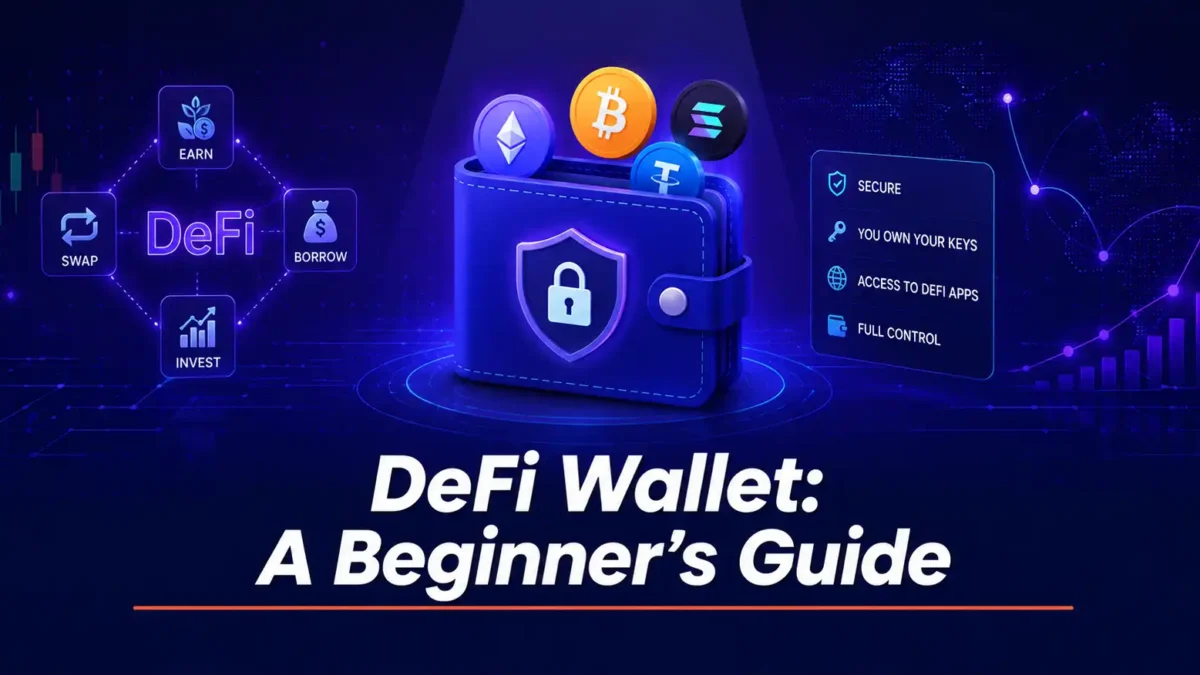


If you are involved in the crypto world, you have probably heard the term decentralised finance (Defi). The main goal of DeFi is safety, but how does it achieve this? Let me explain.
A DeFi wallet is different from a regular wallet. With a DeFi wallet, you control your money. You don’t need banks or platforms to manage your funds. You can also use it with apps called dApps to trade, stake, lend, or manage NFTs.
If you want to know everything about the Defi wallets, including how they work, their benefits, and risks, you are in the right place. Keep reading to learn more.
Key Takeaways:
- DeFi Wallet is a digital wallet for cryptocurrency.
- In DeFi Wallets you have full control of your private key and seed phrase.
- It works with decentralized apps (dApps) for trading, staking, lending, and NFTs.
- Security features like encryption and seed phrases help protect your funds.
- Using a DeFi wallet safely lets you manage crypto independently, without banks.
What is a DeFi Wallet?
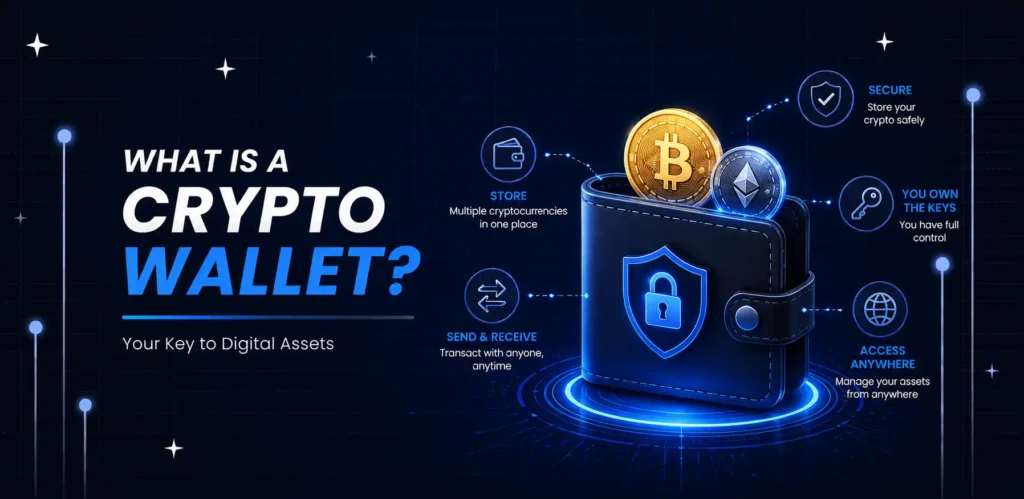
A DeFi wallet is a digital crypto wallet that allows users full control and ownership over their funds without requiring identity verification. Unlike exchange wallets, where the platform keeps your assets, a DeFi wallet grants access through a private key, a unique password known only to you, so no one else can use your money.
Fundamentally based on blockchain technology, it works as a public ledger, transparently recording all transactions such that users can track and manage their assets at any given time. DeFi wallets can connect to dApps (decentralized applications) for trading, lending, staking, or managing NFTs, among other possibilities. DeFi Wallets are a great option for new and advanced crypto users looking for financial independence and flexibility.
How Defi Wallets Work?
Now that you know what DeFi wallets are, let us understand how these decentralized wallets work:
1) Creating a DeFi Wallet:
When you create a DeFi wallet, it gives you two things — a private key and a seed phrase. These are like your digital keys that help you access your crypto and keep it safe. You don’t need to share any personal details or go through a bank. The wallet is fully in your control.
2) Private Key
The private key is a secret code that belongs only to you. It’s used to approve or “sign” your transactions on the blockchain. If someone gets your private key, they can use your wallet, so never share it with anyone.
3) Seed Phrase
The seed phrase is a set of 12 or 24 words that acts as your backup. If you ever lose your phone or delete the app, you can use this phrase to get your wallet back. Keep it written somewhere safe and never store it online.
4) Where Your Crypto Lives
Your crypto is not actually stored inside your wallet. It always stays on the blockchain. Your wallet only connects you to it using your private key and seed phrase.
5) Using Your Wallet
You can send and receive tokens, connect to dApps, or take part in DeFi protocols using your wallet. It’s like your all-in-one access point to the crypto world.
6) Multi-Chain Wallets
Some wallets support multiple blockchains, including Ethereum, BNB Chain, and Polygon. That means you can manage all your assets in one place without switching apps. It makes everything easier and saves a lot of time.
Features of a DeFi Wallet
Now you know how a DeFi wallet works and what it includes. Let’s look at the features of a DeFi wallet:
- Private Key Ownership: In Defi Wallets, you are the only one who controls your private key. No one else, not even the wallet company, can access your funds without it. This means your crypto always stays in your hands, not in someone else’s control.
- Supports Multiple Blockchains: Most DeFi wallets work with different blockchains like Ethereum, Binance Smart Chain, and Polygon. You can hold all your tokens in one place instead of switching between apps. It saves time and keeps everything neatly organized.
- Works With dApps: DeFi wallets can connect with dApps (decentralized apps) easily. You can trade, stake, lend, borrow, or even use NFTs directly from the wallet. It’s like having a complete DeFi world at your fingertips without leaving your app.
- Security Tools
Your wallet comes with built-in security features like seed phrases, encryption, and fingerprint or face ID. These add extra layers of safety to protect your assets from hackers. Even if you lose your device, your seed phrase can bring your wallet back. - Portfolio Overview
Most Defi wallets show your entire portfolio in one place. You can see your token balances, past transactions, and rewards easily. Some even help you track your profits and losses automatically. - Easy to Use: DeFi wallets are made for everyone, even beginners. The design is simple, clean, and easy to understand. Sending or receiving crypto takes just a few taps, no technical skills needed.
Also Read: Guide to Ethereum DApps
Benefits and Risks of a DeFi Wallet
From the previous discussion, you know what a DeFi wallet offers to users. However, like anything else, a DeFi wallet has several benefits and risks. Let’s talk about them.
| Feature / Aspect | Benefits | Risks |
| Control | You manage your private keys and funds | Lose your key or seed phrase = lose crypto forever |
| Privacy | No personal information needed | Mistakes are public on the blockchain |
| Access to DeFi | Trade, stake, lend, and manage NFTs | Malicious apps may steal funds |
| Security | Strong security if used correctly | Hot wallets can be hacked |
| Flexibility | Multi-chain and multi-token | It may be confusing for beginners |
| Fees | Usually, only network fees | Gas fees can be high |
| Recovery | Seed phrase allows backup | No support if mistakes happen |
Also Read: Hot Wallet and Cold Wallet Differences
How to Set Up a Defi Wallet
After learning about the features, benefits, and risks of a DeFi wallet, you might be curious about how to begin. Here is a step-by-step guide to setting up a DeFi wallet.
- Step 1: Choose a Wallet – Pick one you trust, like MetaMask, Trust Wallet, or Coinbase Wallet. Make sure it supports the tokens you want.
- Step 2: Install the App – Download from official sources only. Don’t use unknown links.
- Step 3: Create a Wallet – Click “Create New Wallet.” The app will give a seed phrase (12-24 words). This is very important.
- Step 4: Save Your Seed Phrase – Write it on paper. Keep it safe. Don’t store it online. Never share it.
- Step 5: Set a Password or PIN – Make a strong password. Use fingerprint or face ID if available.
- Step 6: Add Crypto: Send crypto from exchanges or other wallets. Double-check addresses. Mistakes cannot be undone.
- Step 7: Connect to dApps (Optional): Only use trusted apps. Approve transactions carefully.
- Step 8: Check Your Wallet Regularly: Watch your balances, rewards, and transactions.
- Step 9: Stay Safe: Log out after use. Avoid public Wi-Fi. Verify websites or apps before connecting.
Also Read: Step-by-Step Guide to Create a Crypto Wallet
How to Choose the Right DeFi Wallet?
When you start exploring DeFi, your wallet becomes your main tool. It’s where you keep your crypto, connect to apps, and make trades. But not all wallets work the same way. Here’s what you should look for:
1. Full Control
Choose a non-custodial wallet. This means you own your crypto, not an exchange or company. You have full control over your assets at all times.
2. Security Setup
Always check what security features the wallet offers. Good wallets offer features such as passwords, two-factor authentication, and recovery phrases. These features protect your wallet and keep your funds safe from unwanted access.
3. Simple Design
If you’re just starting out, go for a wallet that looks clean and easy to use. Avoid complicated designs that feel too technical. A simple layout helps you learn faster and avoid mistakes.
4. Network Support
Make sure your wallet supports the blockchain you plan to use — like Ethereum, Base, or BNB Chain. A wallet that works across multiple networks will give you more flexibility. You won’t need to switch apps just to manage different tokens.
5. Backup Options
Always choose a wallet that lets you recover your funds if something goes wrong. Your seed phrase or recovery phrase is your lifeline if you lose your device. Without it, you won’t be able to access your crypto again.
Also Read: Best Crypto Wallets For Beginners
DeFi Wallets vs Custodial Wallets
It is also important to understand how DeFi wallets differ from Custodial wallets, so it is easier for you to choose. Here’s a simple comparison between the two:
| Aspect | DeFi Wallets (Non-Custodial) | Custodial Wallets |
| Control | You own and control your private keys. | The platform holds your private keys. |
| Access | Full access anytime, anywhere. | Access depends on the service provider. |
| Security | Safer from hacks if you store keys properly. | Risk of hacks or misuse by the custodian. |
| Recovery | Lose keys = lose funds permanently. | Can recover account through customer support. |
| Ease of Use | Needs basic crypto knowledge. | Easier for beginners. |
| Transactions | Fully decentralized and transparent. | Centralized, depends on company policies. |
| Privacy | More private, no KYC in many cases. | Usually requires KYC and identity verification. |
| Examples | MetaMask, Trust Wallet, Coinbase Wallet. | Binance, Coinbase Exchange, Kraken. |
Conclusion
A DeFi wallet is like your personal bank on the internet. You control your money, not a bank or company. You can trade, stake, lend, or manage NFTs safely. Keep your private key and seed phrase safe. Then you can use crypto freely without worry. It’s the easiest way to manage digital money safely and independently.
FAQs
Q1. What DeFi Wallets are Good to Use?
Popular DeFi wallets include MetaMask, Trust Wallet, and Coinbase Wallet. They are easy to use and support many blockchains. For stronger security, you can try Ledger or Trezor hardware wallets.
Q2. Are DeFi wallets safe to use?
Yes, DeFi wallets are safe. Always remember to keep your seed phrase safe and never click on unknown or suspicious links.
Q3. How do I withdraw from a DeFi wallet?
To withdraw, connect your DeFi wallet to an exchange or dApp, select the token you wish to send, enter the receiver’s address, and then confirm the transaction. You’ll need to pay a small network fee in crypto for it to process.
Q4. What is the purpose of a DeFi wallet?
A DeFi wallet lets you store, send, and manage crypto without any bank or middleman. It gives you full control of your digital assets and connects you directly to DeFi apps for trading, staking, and more.
Q5. How is a DeFi wallet different from a normal wallet?
A DeFi wallet is non-custodial, meaning you control your keys and funds. In normal wallets (like on exchanges), the company holds your keys. DeFi wallets offer more privacy and control, but also require you to keep your recovery phrase safe.