


Sumit Gupta, Co-founder, CoinDCX
The Global Fintech Fest has set the tone for what comes next in financial markets. Prime Minister Shri Narendra Modiji has repeatedly positioned India’s digital public infrastructure as a foundation for the next generation of financial services. Now, the country is beginning to extend that architecture to capital markets.
The launch of “Demat 2.0” by the Reserve Bank of India and the Securities and Exchange Board of India marks an important step: testing tokenised corporate bonds alongside the digital rupee and distributed-ledger technology. The significance goes beyond a new way of holding a bond. It is an early experiment in redesigning how securities are issued, transferred, settled and serviced.
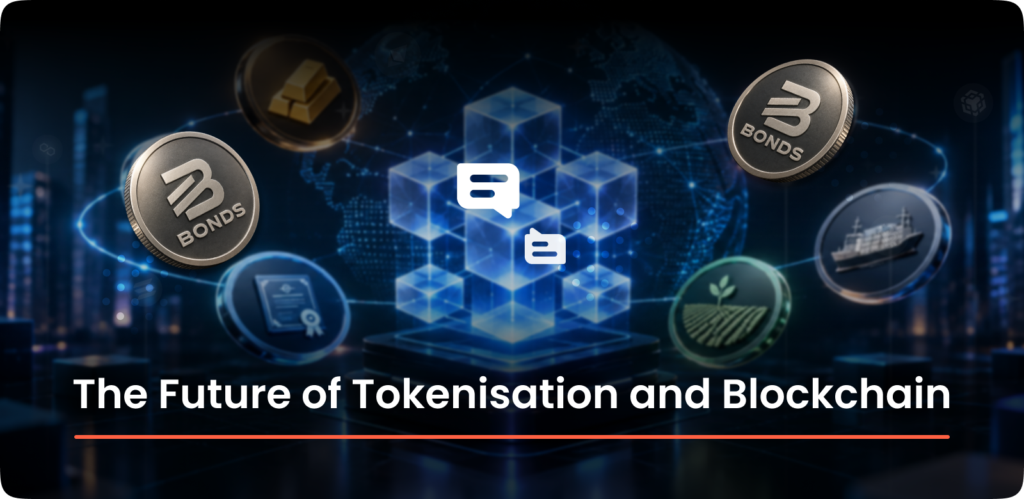
A tokenised bond is, at its core, a conventional bond represented on a digital ledger. The innovation lies not in changing the economic promise of the bond, but in changing the infrastructure around it. Ownership can be recorded digitally, settlement can move closer to real time, and functions such as interest payments, transfers and corporate actions can increasingly become programmable.
I have been bullish on blockchain and tokenisation for a long time now, not because every financial asset needs to move on-chain, but because I believe the technology has the potential to solve two persistent challenges in financial markets: speed and transparency. Every major technology takes time to find its way from infrastructure to the retail user. The internet, mobile payments and digital banking all followed that trajectory. Blockchain may well be on a similar path with the institutional infrastructure being built first, before the benefits become increasingly visible to everyday investors.
That matters because fixed income remains one of the world’s largest financial markets, yet much of its infrastructure still depends on layers of intermediaries, reconciliation and fragmented records. Tokenisation offers the possibility of bringing the security leg and the cash leg of a transaction closer together. India’s Demat 2.0 pilot is explicitly testing this through tokenised securities, smart contracts and CBDC settlement.
India is not alone. The evidence that tokenisation is moving beyond experimentation is now visible in the size of the assets already operating on-chain. Tokenised U.S. Treasuries and Treasury-focused funds have grown to more than $10 billion in distributed value, with over 55,000 holders globally. BlackRock’s BUIDL has become the world’s largest tokenised fund, while Franklin Templeton’s OnChain U.S. Government Money Fund has grown to more than $720 million in assets.
JPMorgan, meanwhile, has built Kinexys into an institutional blockchain platform spanning tokenisation, programmable payments and near-real-time settlement. The significance is not simply that established financial institutions are putting existing products on-chain. It is that they are beginning to build the infrastructure around them for a financial system in which assets, cash and transactions can move on programmable rails.
Over time, we should expect three shifts.
- First, settlement will become increasingly atomic: delivery of the security and payment can occur simultaneously, reducing settlement and counterparty risk.
- Second, bonds will become more composable. A tokenised bond could move more seamlessly between trading, collateral, lending and treasury-management systems, rather than sitting in a siloed account until maturity.
- Third, the bond market could become more continuous. Smaller denominations, automated servicing and digital distribution can broaden participation, while programmable infrastructure could eventually allow fixed-income instruments to move across a wider range of venues and operating hours.
But tokenisation should not be mistaken for financial alchemy. Putting a bond on a blockchain does not improve its credit quality, eliminate duration risk or manufacture liquidity. The legal claim, investor protections and underlying economics remain paramount.
That is why India’s approach is significant. Demat 2.0 is not replacing the architecture that has made India’s securities markets trusted; it is testing whether that architecture can evolve. The real opportunity is to combine the trust of regulated capital markets with the efficiency of programmable infrastructure.
The first Demat revolution turned paper securities into electronic records. The next could turn those records into programmable financial assets.
If India gets the infrastructure right, tokenised bonds may ultimately prove to be less about blockchain than about something much more consequential: building a faster, more interoperable and more efficient financial market for the decades ahead.
Getting there will depend as much on regulation as on technology. India has already run this experiment once, in payments, and the outcome offers a useful template.
The lesson from UPI is that technology alone does not create scale. UPI worked because the innovation was built within clear guardrails: regulated participants, common standards, defined responsibilities, interoperability and a trusted institutional framework.
Tokenisation will require the same discipline. The objective should not be to create a parallel financial system outside existing market structures, but to connect programmable digital infrastructure with the legal, regulatory and institutional rails that already govern securities. The Demat 2.0 pilot is an important example of this approach, using a regulatory sandbox to test tokenised corporate bonds, distributed-ledger technology and digital-rupee settlement within the existing financial architecture.
The next phase, therefore, should be progressive regulation. India will need clear rules on what a token legally represents, who holds the underlying asset, how ownership and investor rights are enforced, how custody and settlement work, and who is responsible when something goes wrong. At the same time, the framework should be technology-neutral and risk-sensitive, allowing experimentation where the risks are contained and tightening requirements as products reach greater scale and complexity. Just as UPI’s guardrails gave banks, fintechs and consumers the confidence to participate at scale, regulatory clarity can give tokenisation the trust required to move from pilots to a functioning market infrastructure.