

Search interest for future crypto predictions 2026 has jumped by 117%, reflecting growing curiosity about where the crypto market is headed beyond short-term price fluctuations. Traders are increasingly focused on understanding the broader direction of the industry rather than chasing temporary moves.
For traders and market players, this means a market increasingly shaped by ETF flows, macro liquidity, regulation, and sector-level narratives, not just speculative momentum.
This guide explores multiple dimensions, including crypto adoption, major token trends, and regulation, to understand the future of crypto in 2026.
Crypto Predictions 2026, Trader Snapshot
Here’s a brief snapshot of the key market trends shaping crypto in 2026.
- Institutional capital will increasingly influence price direction and volatility
- Bitcoin will be traded more like a macro asset than a pure risk play.
- Stablecoins and RWAs will drive volume, not mere hype tokens.
- Regulation will reduce sudden market shocks but limit easy upside.
- Trading strategy will evolve from predicting prices to identifying early shifts in market themes.
Institutional Crypto Adoption Will Shape Market Structure
One of the most important aspects of the future of crypto is the growth of institutional crypto adoption, and traders are already seeing its impact. Crypto ETF flows, custodial products, and regulated derivatives are increasingly influencing the flow of liquidity in the market.
In 2025, regulated products such as spot Bitcoin ETFs reportedly grow to over $115 billion in assets under management, led by major financial firms, reflecting meaningful institutional allocation rather than short-term speculative flows. Global crypto exchange-traded products have also attracted tens of billions in net inflows, indicating that capital is moving into crypto via regulated channels.
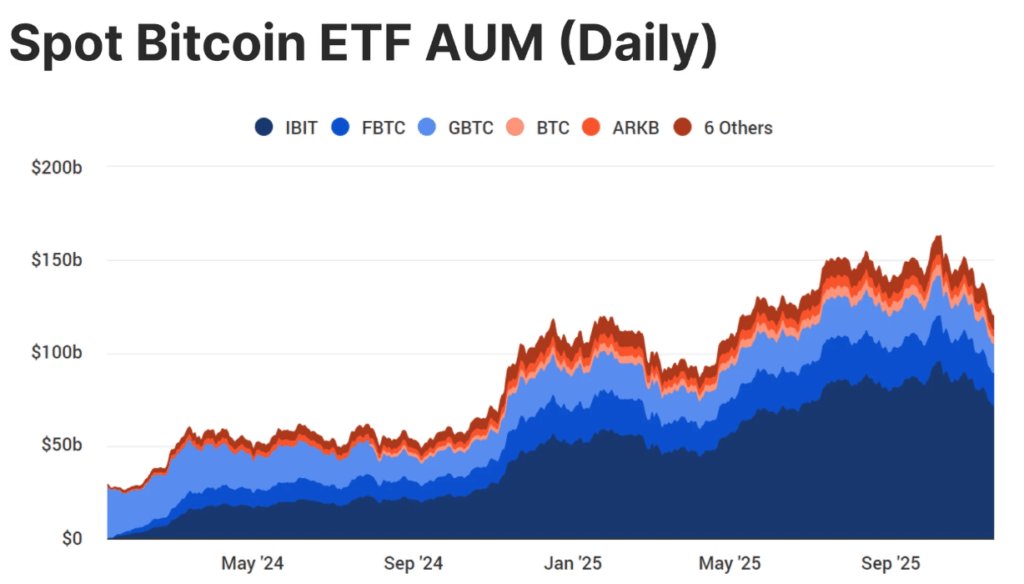
Bitcoin Spot ETF Flow, Source: b2broker
Adoption metrics such as the Global Crypto Adoption Index further highlight that ecosystem usage is expanding across key markets, not just price momentum. Data from Chainalysis, confirms that countries like the United States and India lead in on-chain transaction volume and web engagement, signifying increased institutional and retail ecosystem integration globally (not just price speculation)
These trends mean price moves are becoming more flow-based and reactive to macro data, making it important for traders to monitor: This means traders need to pay closer attention to:
- ETF inflow/outflow trends
- Interest rate expectations
- Large wallet and fund positioning
Trade Crypto in INR on 
Deposit and withdraw in INR (₹).
No Conversion to Crypto Required.

Bitcoin in 2026, A Macro Asset, Not a Meme Trade
When traders ask “what will be the next Bitcoin”, it is noteworthy to mention that Bitcoin itself is becoming harder to trade like a high-beta altcoin.
In 2026, Bitcoin’s role will evolve into:
- A macro-sensitive asset
- A benchmark for risk sentiment
- A liquidity anchor for the broader crypto market
Instead of chasing parabolic moves, traders are increasingly using BTC to gauge market direction, hedge alt exposure, and understand institutional risk appetite.
This explains why Bitcoin volatility is diminishing even as participation grows, a classic sign of crypto market maturation.
Also Read: Bitcoin Price Prediction
Stablecoins Will Drive Volume, Not Speculation
Another realistic crypto prediction for 2026 is that stablecoins will dominate trading volume, even if they don’t dominate headlines. As per coinmarketcap data, since late 2025, stablecoin market capitalization has exceeded $300 billion, with leading assets like USDT accounting for the largest share of circulating stablecoin value (~$170 billion), and stablecoin transfers charting multi-trillion-dollar volumes across major blockchains.
Stablecoins also made up about 30 % of total crypto transaction volume in global analysis through mid-2025, reflecting their expanding influence on market activity and trade settlement.
For traders, stablecoins are no longer just parking tools. They enable:
- Faster capital rotation
- On-chain arbitrage
- Cross-border liquidity without FX friction
As stablecoin regulation improves, traders can expect more consistent liquidity and fewer disruptions during high-volatility periods, a net positive for execution and spreads.
Also Read: Top Stablecoins to Invest
Real-World Asset Tokenization Will Create New Tradeable Narratives
One of the clearest sector-level crypto predictions for 2026 is the real-world asset (RWA) tokenization. Per Markets.com, Tokenized real-world assets have grown into a meaningful on-chain segment, with total RWA values around $18 billion as of late 2025. Forecasts from Cantor Fitzgerald suggest this figure could exceed $50B by 2026 as more financial institutions test on-chain settlement.
Specific segments such as tokenized treasuries have expanded sharply, and broader initiatives have driven year-over-year growth of 350 %+ in RWA products on networks like Ethereum, BNB Chain and Solana.
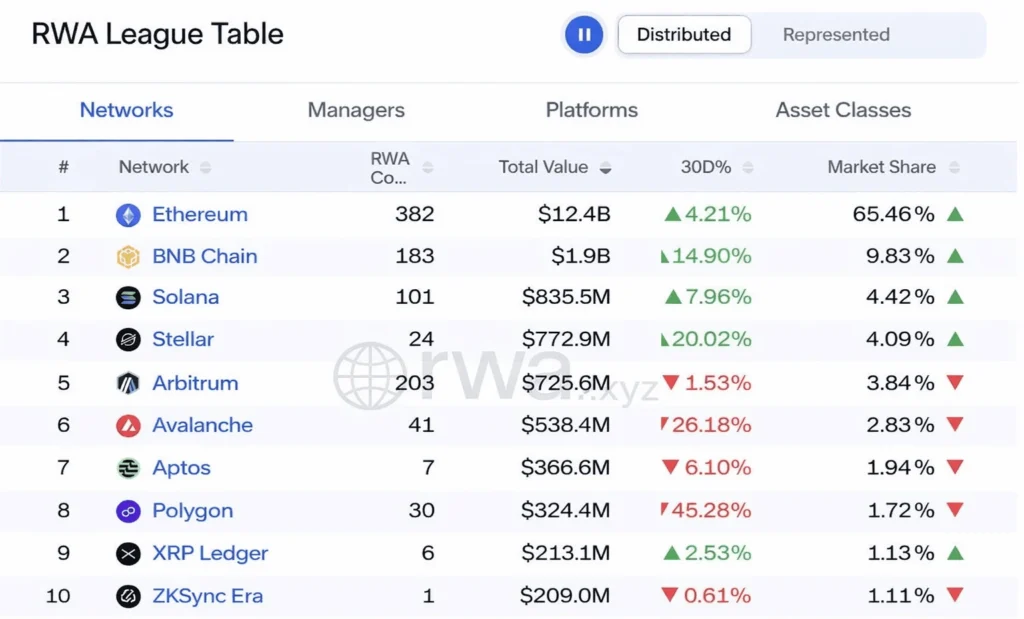
Independent reports also indicate tokenized assets across blockchain ecosystems have surpassed $30 billion, including Treasury-backed instruments, reflecting increasing institutional participation
Rather than chasing low-liquidity tokens, traders are increasingly monitoring narratives tied to:
- Tokenized treasuries
- On-chain yield products
- Institutional-grade assets moving on-chain
These themes matter because they attract longer-duration capital, which often leads to more sustained trends rather than one-day pumps.
Also Read: Best Real World Assets (RWA) Tokens in 2026
Top Crypto Narratives Traders Are Watching in 2026
This table highlights why certain large-cap crypto assets matter in 2026, from a trading and market-structure perspective.
Top Crypto Assets & 2026 Trading Narratives
| Crypto Asset | Why Traders Are Watching in 2026 | Market Role |
| Bitcoin (BTC) | ETF flows, macro sensitivity, liquidity benchmark | Market direction & risk gauge |
| Ethereum (ETH) | Layer-2 growth, staking dynamics, DeFi volume | Core smart-contract liquidity |
| XRP | Payments narrative, institutional corridors | Cross-border volume proxy |
| Solana (SOL) | High-throughput trading, retail activity | High-beta ecosystem trades |
| Chainlink (LINK) | RWA data feeds, institutional integrations | Infrastructure & RWA exposure |
Read More: Best Crypto to Invest in 2026
Regulation Will Change How Traders Take Risk
Another key factor that matters for the future of crypto is regulatory normalization. While this may reduce extreme upside, it also:
- Lowers counterparty risk
- Improves capital safety
- Makes position sizing more predictable
For traders, this means fewer black-swan events, but also less tolerance for low-quality crypto projects. Liquidity will concentrate faster, and tokens with weak narratives will fade quickly.
Read More: Crypto Legal Status in India
What Will Crypto Look Like in 2026 and the Next 5 Years?
By 2026, crypto is expected to look less like a speculative playground and more like a financial and technological layer running in the background. For users asking about the future of crypto in the next five years, the answer lies in integration rather than explosion.
Over the coming years, crypto adoption is likely to be driven by institutions, governments, and enterprises, not just retail traders. The future of Blockchain technology will increasingly expand to power payments, settlements, identity systems, and asset tokenization, often without users directly interacting with tokens.
While price volatility will remain, markets are expected to become more selective and disciplined. Low-utility projects may lose credibility, and infrastructure-friendly platforms, and real-world use cases will gain relevancy. For both new and established traders, this points to a market where understanding narratives and adoption trends matters more than chasing hype cycles.
What Crypto Predictions 2026 Mean for Active Traders
For traders, 2026 is less about guessing tops and bottoms and more about:
- Reading liquidity flows
- Understanding sector rotation
- Managing risk in slower, more deliberate markets
The biggest edge will come from context, not just indicators.
Conclusion
Crypto predictions for 2026 point to a market that rewards discipline over aggression. Volatility still exists, but it is increasingly shaped by institutions, macro signals, and sector-level adoption rather than speculative frenzy.
For traders on CoinDCX, this shift creates opportunities, not through blind optimism, but through better structure, cleaner liquidity, and clearer narratives.
Disclaimer: This article is for informational purposes only and does not constitute financial or trading advice. Crypto markets are volatile. Always manage risk and conduct independent research.